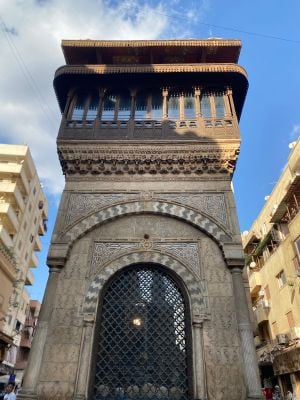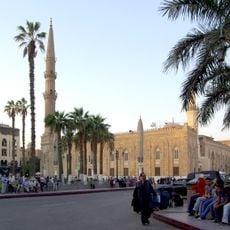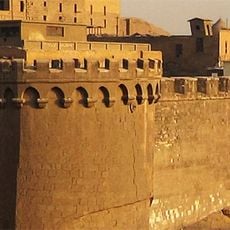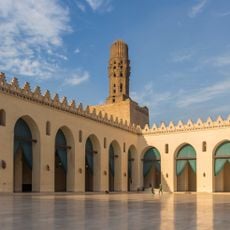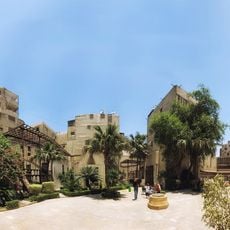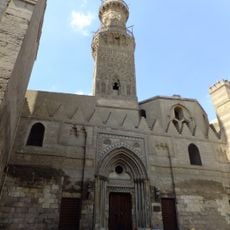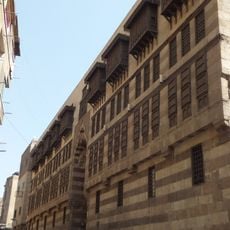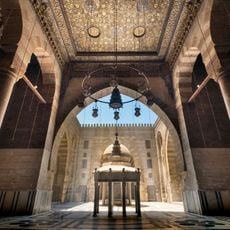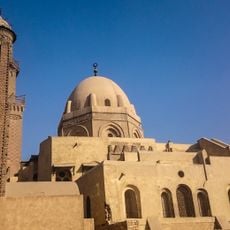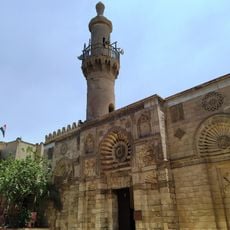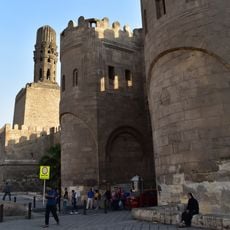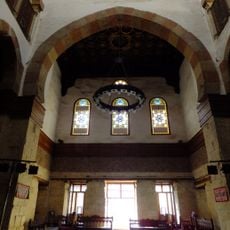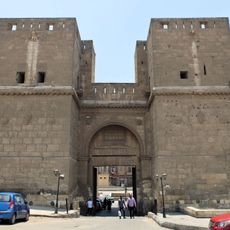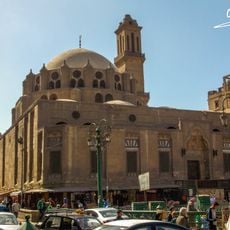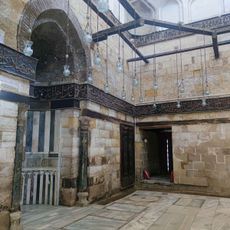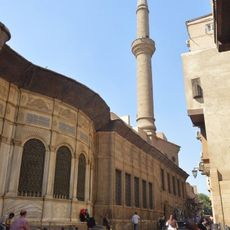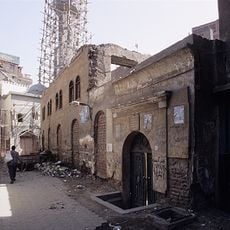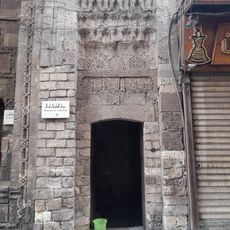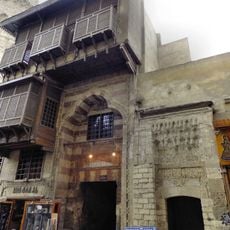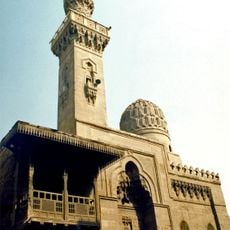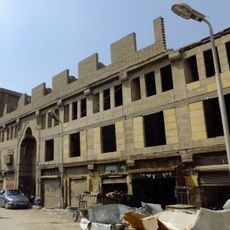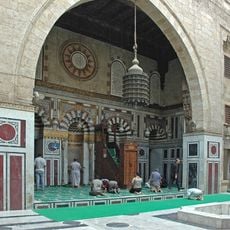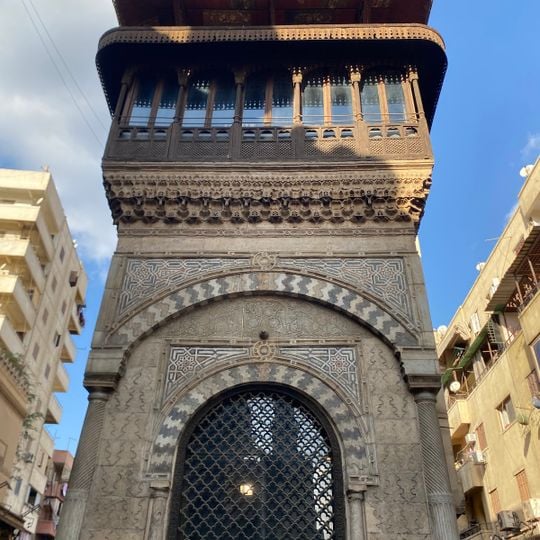
Sabil-Kuttab Abd El Rahman Katkhuda, Educational institution and fountain in Al-Muizz Street, Egypt.
The Sabil-Kuttab Abd El Rahman Katkhuda is a combined water fountain and school building on Al-Muizz Street with a distinctive three-sided structure. The building holds a fountain room decorated with marble reliefs and a classroom area supported by five marble columns beneath ornately carved ceilings.
The building was constructed in 1744 by Abd al-Rahman Katkhuda during Ottoman rule. It blends architectural features from both Mamluk and Ottoman periods, showing how design traditions mixed during this era.
The name honors its founder and shows how wealthy citizens supported their communities through architecture. Combining a water source with a school was a common way to improve daily life by providing two essential services in one place.
The building sits on a busy street and can be viewed from outside, with details like carved doors and ceramic works clearly visible. The best way to understand the structure is to distinguish between its different functional areas and observe the finely executed elements.
Copper mesh screens cover the drinking openings, a distinctive feature that protected the water from contamination while displaying the craftsmanship of the period. This practical solution blends function with aesthetic refinement in a subtle way.
Location: Cairo Governorate
Inception: 1744
Elevation above the sea: 31 m
GPS coordinates: 30.05070,31.26160
Latest update: December 6, 2025 17:42
Cairo preserves an architectural heritage spanning over fifteen centuries. This collection includes religious buildings, traditional houses, and utilitarian structures that reflect the Fatimid, Mamluk, and Ottoman periods. Mosques such as Sultan Hassan with its 68-meter minaret stand alongside ancient homes with mashrabiya windows, while the 9th-century Nilometer highlights the river's importance in Egyptian society. The route passes through various historic districts, from El Khalifa with its medieval monuments to Ottoman houses from the 16th and 17th centuries like Bayt Al-Suhaymi or those housing the Gayer-Anderson Museum. Aqsunqur Mosque stands out with its Iznik tiles showcasing floral motifs, a legacy of Ottoman influence. The City of the Dead, a cemetery stretching four kilometers, illustrates the continuity between burial sites and inhabited areas. Green spaces like Al-Azhar Park offer views of a dense city where traditions blend with everyday life.
Al-Azhar Mosque
564 m
Khan el-Khalili
331 m
Al-Hussein Mosque
354 m
Islamic Cairo
534 m
Al-Hakim Mosque
472 m
Al-Suhaymi House
188 m
Al-Mansour Qalawun Complex
146 m
Madrassa of Al-Nasir Muhammad
118 m
Sultan Al-Ghuri Complex
548 m
Mosque-Madrassa of Sultan Barquq
88 m
Al-Aqmar Mosque
115 m
Bab al-Futuh
562 m
Beshtak Palace
35 m
Bab al-Nasr
491 m
Wikalet Al-Ghuri
564 m
Muhammad Bek Abu El Dahab Complex
531 m
Salihiyya Madrasa
176 m
Mosque-Sabil of Sulayman Agha al-Silahdar
196 m
Maimonides Synagogue
318 m
Hammam of Inal
45 m
Madrasah Al Kamiliya
47 m
Tiring department store
589 m
Mosque of Taghribirdi
265 m
Wikala of Qaytbay
476 m
Gamal Eddin Youssef Istadar Mosque
152 m
Wikala of Qawsun
355 m
Egyptian Textile Museum
84 m
Wekalet of Sultan al-Ghuri – Arts Center
535 mReviews
Visited this place? Tap the stars to rate it and share your experience / photos with the community! Try now! You can cancel it anytime.
Discover hidden gems everywhere you go!
From secret cafés to breathtaking viewpoints, skip the crowded tourist spots and find places that match your style. Our app makes it easy with voice search, smart filtering, route optimization, and insider tips from travelers worldwide. Download now for the complete mobile experience.
A unique approach to discovering new places❞
— Le Figaro
All the places worth exploring❞
— France Info
A tailor-made excursion in just a few clicks❞
— 20 Minutes