See the monuments around you in AROpen chests in the app
Around Us is built for your phone — point your camera at the streets and discover the monuments and places around you in augmented reality.Around Us is built for your phone — chests unlock when you walk, explore and capture nearby places.
Architecture in Cairo: Mamluk mosques, Ottoman houses, and historic cemeteries
Cairo preserves an architectural heritage spanning over fifteen centuries. This collection includes religious buildings, traditional houses, and utilitarian structures that reflect the Fatimid, Mamluk, and Ottoman periods. Mosques such as Sultan Hassan with its 68-meter minaret stand alongside ancient homes with mashrabiya windows, while the 9th-century Nilometer highlights the river's importance in Egyptian society.
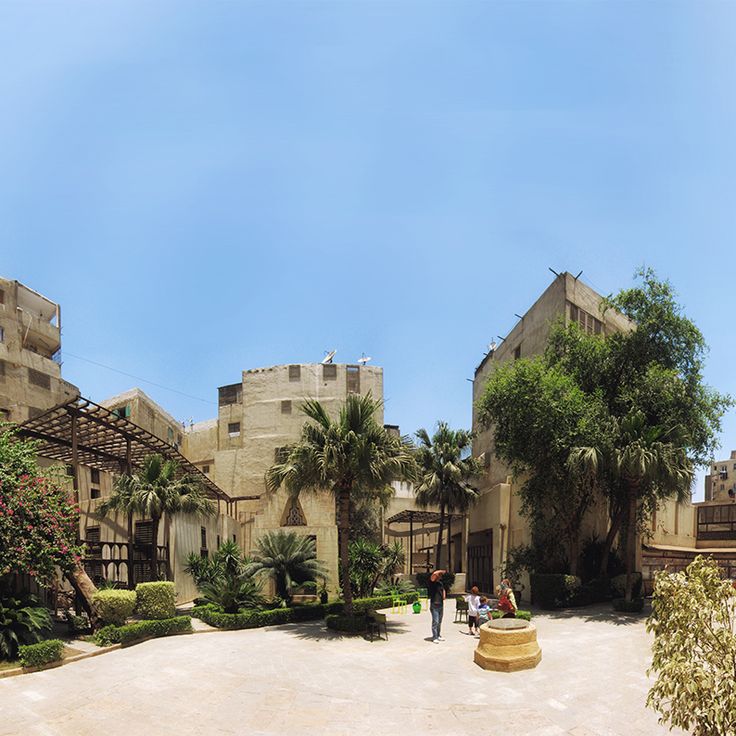
The route passes through various historic districts, from El Khalifa with its medieval monuments to Ottoman houses from the 16th and 17th centuries like Bayt Al-Suhaymi or those housing the Gayer-Anderson Museum. Aqsunqur Mosque stands out with its Iznik tiles showcasing floral motifs, a legacy of Ottoman influence. The City of the Dead, a cemetery stretching four kilometers, illustrates the continuity between burial sites and inhabited areas. Green spaces like Al-Azhar Park offer views of a dense city where traditions blend with everyday life.
Architecture in Cairo: Mamluk mosques, Ottoman houses, and historic cemeteries
Cairo preserves an architectural heritage spanning over fifteen centuries. This collection includes religious buildings, traditional houses, and utilitarian structures that reflect the Fatimid, Mamluk, and Ottoman periods. Mosques such as Sultan Hassan with its 68-meter minaret stand alongside ancient homes with mashrabiya windows, while the 9th-century Nilometer highlights the river's importance in Egyptian society.
The route passes through various historic districts, from El Khalifa with its medieval monuments to Ottoman houses from the 16th and 17th centuries like Bayt Al-Suhaymi or those housing the Gayer-Anderson Museum. Aqsunqur Mosque stands out with its Iznik tiles showcasing floral motifs, a legacy of Ottoman influence. The City of the Dead, a cemetery stretching four kilometers, illustrates the continuity between burial sites and inhabited areas. Green spaces like Al-Azhar Park offer views of a dense city where traditions blend with everyday life.
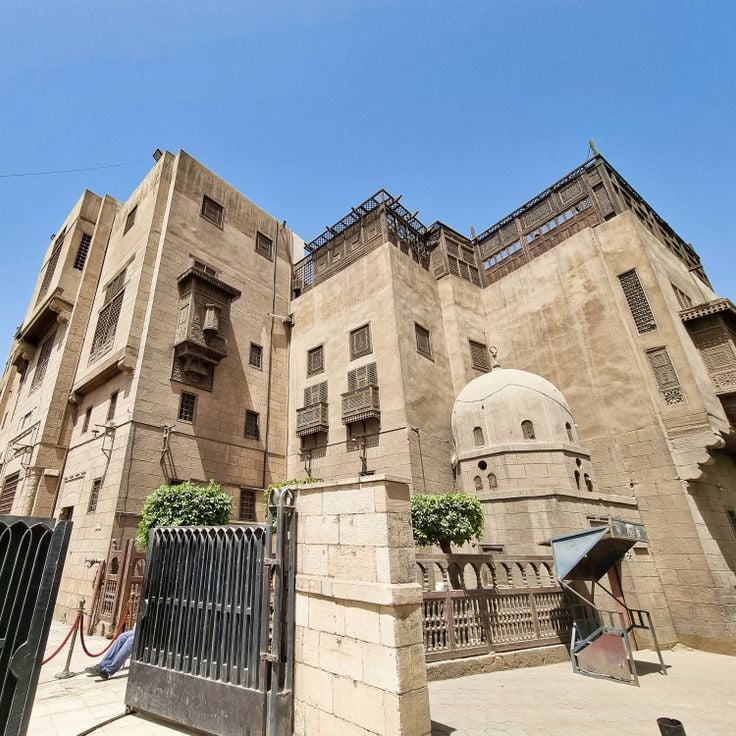
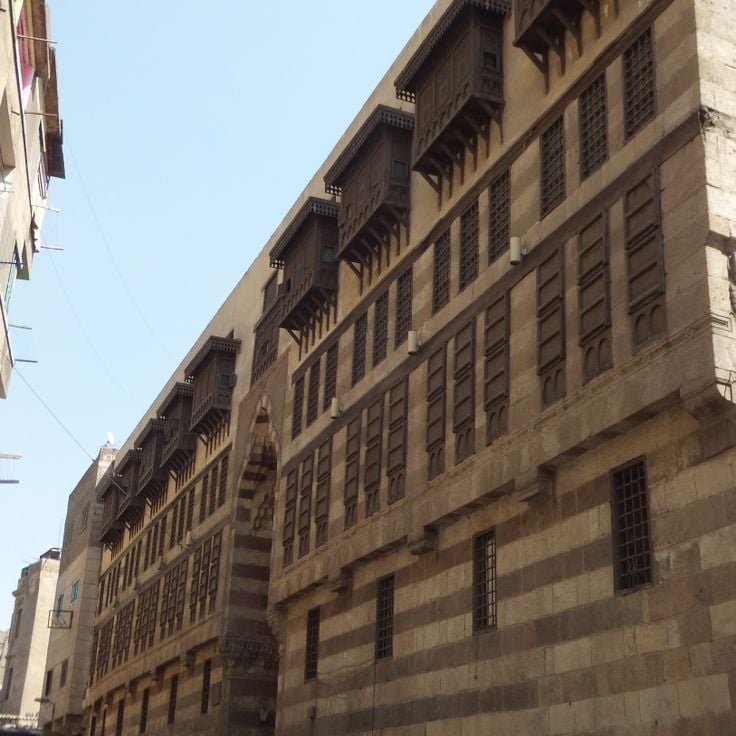
This 17th-century residence in Cairo demonstrates how Ottoman wealthy families arranged their homes. Bayt Al-Suhaymi features carved wooden mashrabiya windows that filter light through intricate patterns, two interior courtyards with fountains, and reception rooms decorated with painted wooden ceilings and ceramic tiles. The Islamic geometric patterns adorning the walls reflect the craftsmanship of the period. The house illustrates the separation of spaces for men and women, a key aspect of domestic organization during the Ottoman era.
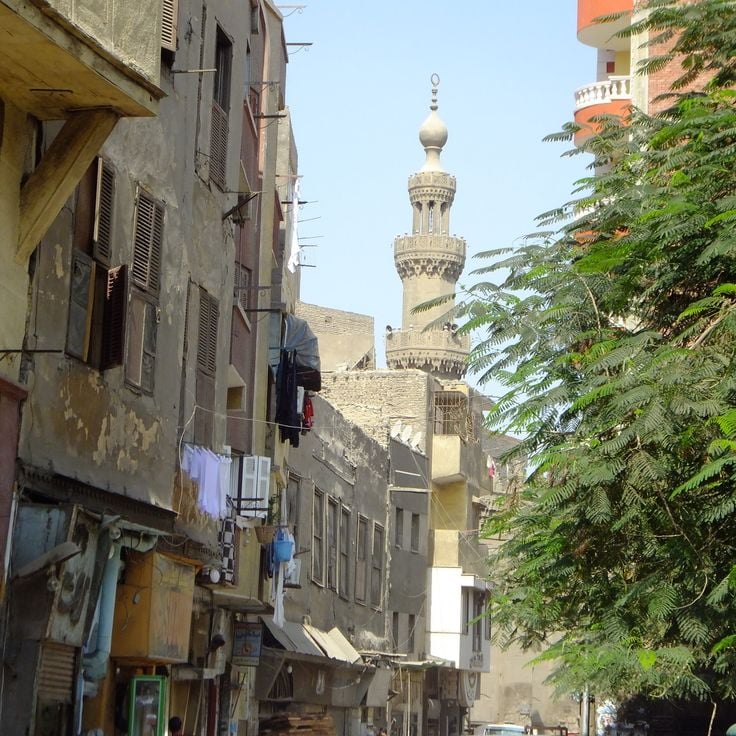
El Khalifa District preserves mosques and mausoleums from the Fatimid and Mamluk periods between the 10th and 15th centuries. The streets are narrow and winding, with buildings showing craftsmanship typical of these historical eras. This district is part of Cairo's broader architectural heritage, which spans over fifteen centuries and includes religious buildings, traditional houses, and structures from different periods. Walking through these streets, you see how medieval monuments remain part of the city's everyday life and rhythm.
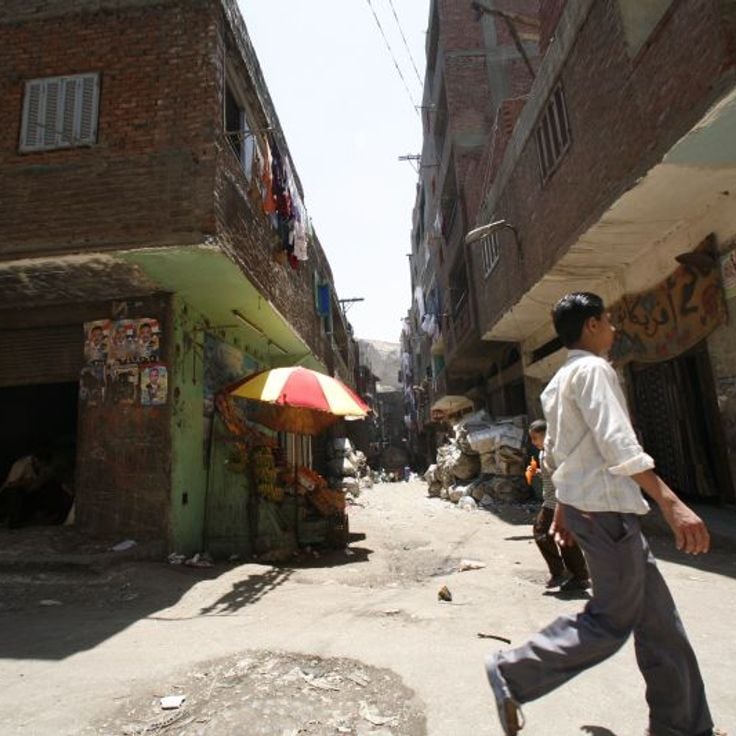
Garbage City in this collection shows how the Zabbaleen community collects and processes thousands of tons of Cairo's waste daily. With an 80 percent recycling rate, these workers play a vital role in the city's functioning. Their workshops and courtyards document practical solutions and craft skills passed down through generations. This place reveals the everyday structures that keep the city running.
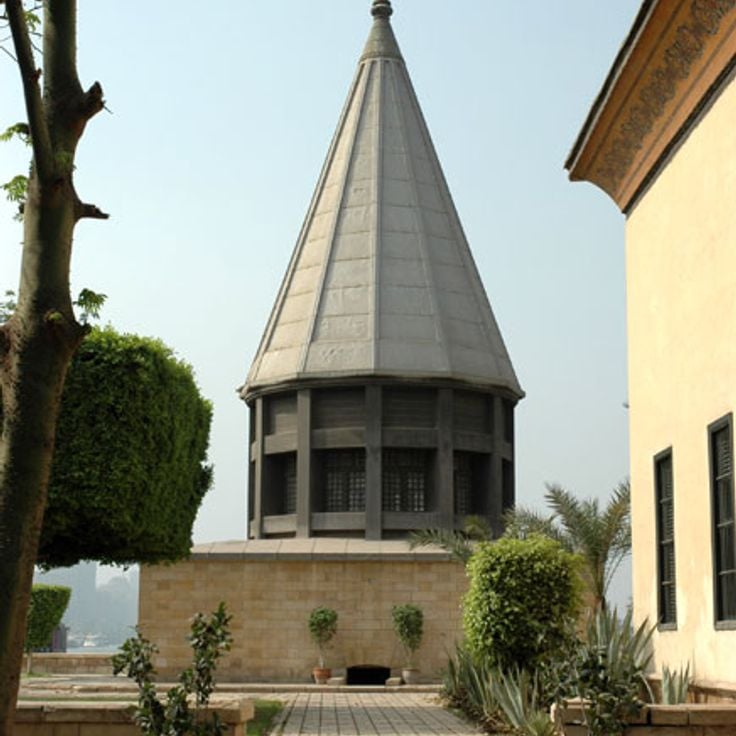
The Nilometer in Cairo is a 9th-century stone structure that measured the annual flood levels of the Nile using a central column with markings. In this collection of Cairo's architecture, the Nilometer shows how important the river was to Egyptian life. This building stands alongside mosques such as Sultan Hassan with its 68-meter minaret and traditional homes with mashrabiya windows. These structures reflect the Fatimid, Mamluk, and Ottoman periods across the city's historic districts.
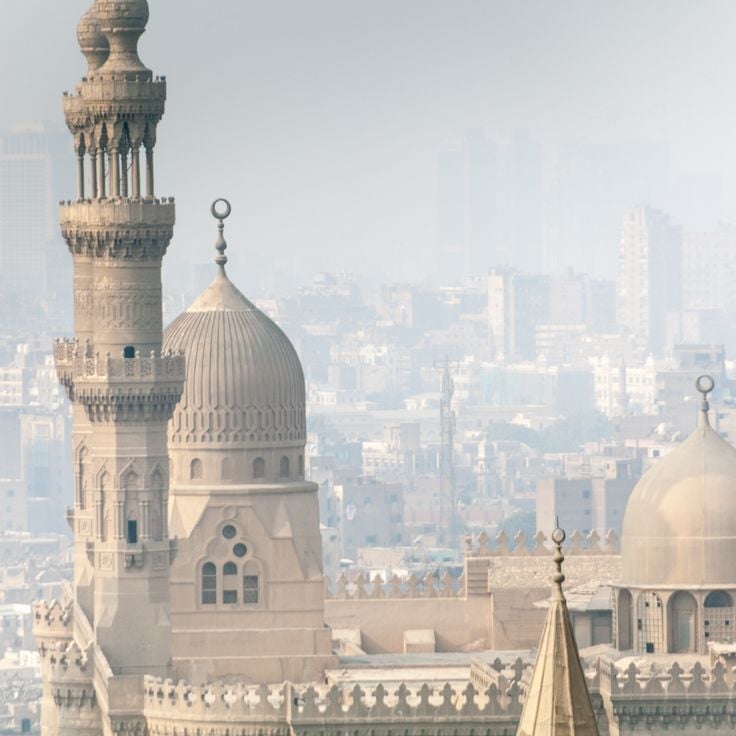
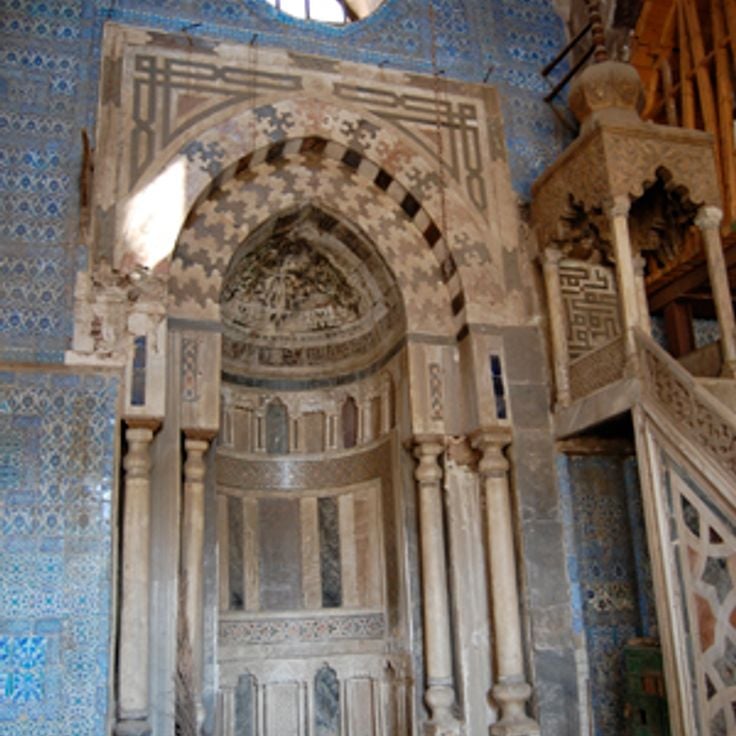
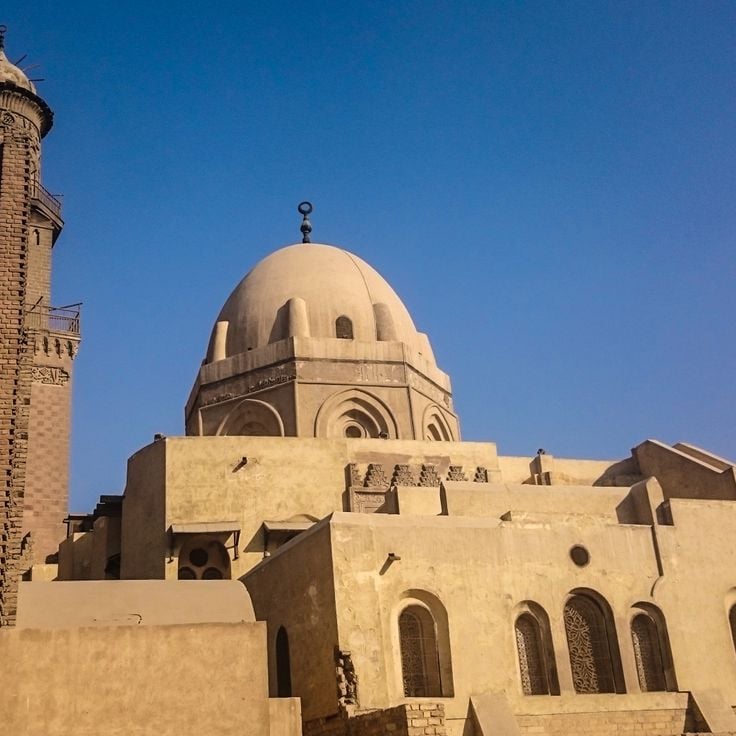
This 14th-century mosque is a Mamluk structure with remarkable Iznik tiles inside. Blue and green tiles with floral patterns decorate the walls of the prayer hall. Emir Aqsunqur built the mosque in 1347. Later, in the 17th century, Ibrahim Agha added ceramic tiles from Damascus. The original minaret retains its Mamluk decoration with carved stone details. This mosque is part of Cairo's architectural collection, which shows buildings from over fifteen centuries, including religious structures, traditional houses, and historic cemeteries.
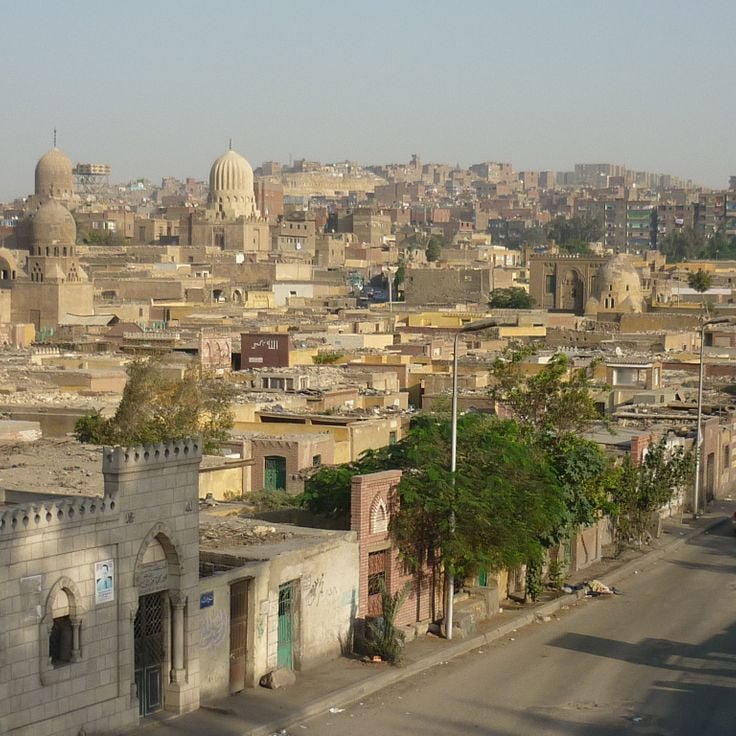
The City of the Dead in this collection is a vast necropolis stretching four kilometers that holds mausoleums, tombs, and houses occupied by residents. It shows how Cairo integrates burial grounds with lived spaces, where generations have built homes among the graves and created a community within what was originally a cemetery.
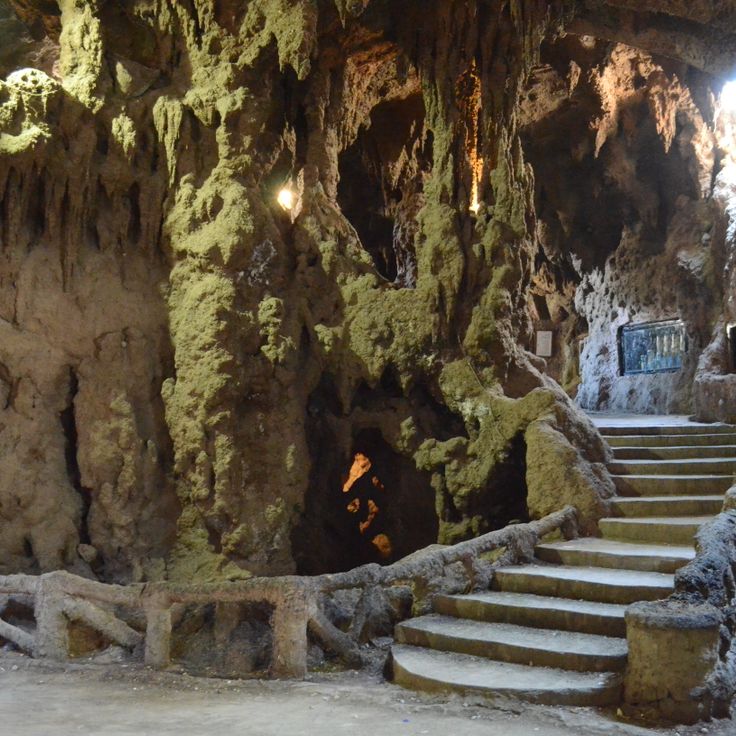
The Grotto Aquarium Garden contributes to Cairo's architectural heritage spanning over fifteen centuries. This 19th-century garden contains artificial grottoes carved into rock, pools with different fish species, and Mediterranean plants. The space combines sculpted stone elements with aquatic and botanical collections, showing how constructed landscapes can integrate living specimens.
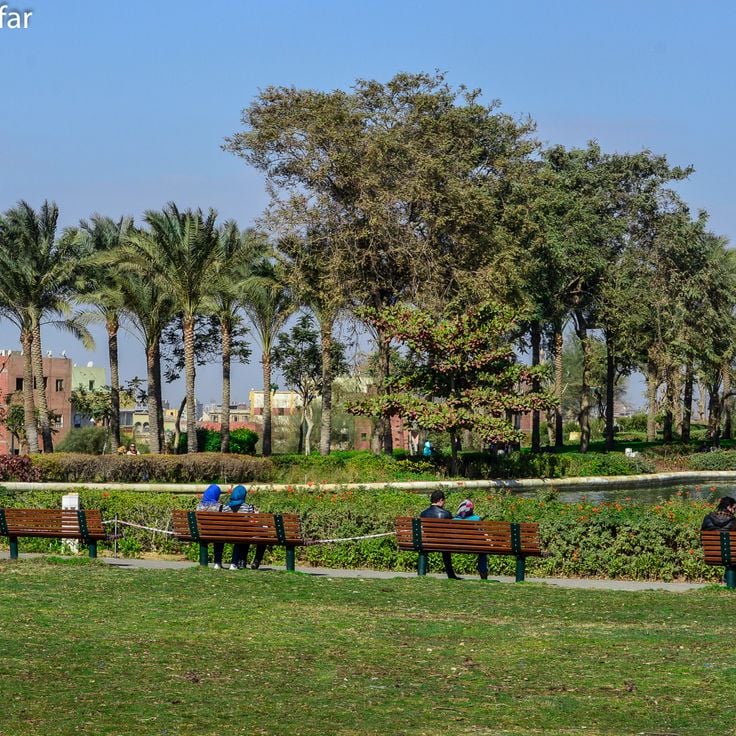
Al-Azhar Park in this collection shows how green spaces fit into Cairo's historic urban landscape. Spanning 30 hectares, the park offers views over the old city, gardens designed in Islamic style, and restaurants serving regional food. Built on a former landfill site, it connects open green areas with vistas of the medieval quarters and mosques that define the city.
The Gayer-Anderson Museum in this collection occupies two connected 16th-century Ottoman houses that showcase Cairo's architectural heritage. British officer Robert Grenville Gayer-Anderson restored these residences between 1935 and 1942, transforming them into a museum. The rooms retain their original decoration with carved wooden ceilings, mashrabiya screens, and courtyards with fountains. The displayed objects include Persian carpets, Chinese porcelain, Ottoman textiles, and Egyptian antiquities from different periods.
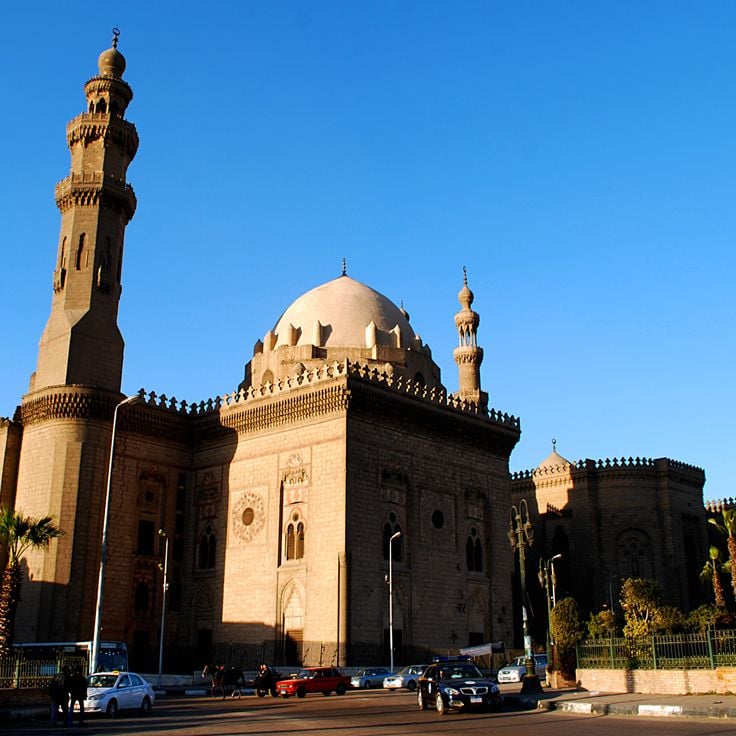
The Sultan Hassan Mosque is a monumental example of 14th-century Mamluk architecture that shapes Cairo's skyline with its 68-meter-high minaret. The structure combines a mosque and a madrasa within a single complex that still commands attention today. The facades display elaborate stonework and intricate details throughout. This building is part of Cairo's architectural heritage, which spans over fifteen centuries and showcases styles from different periods.
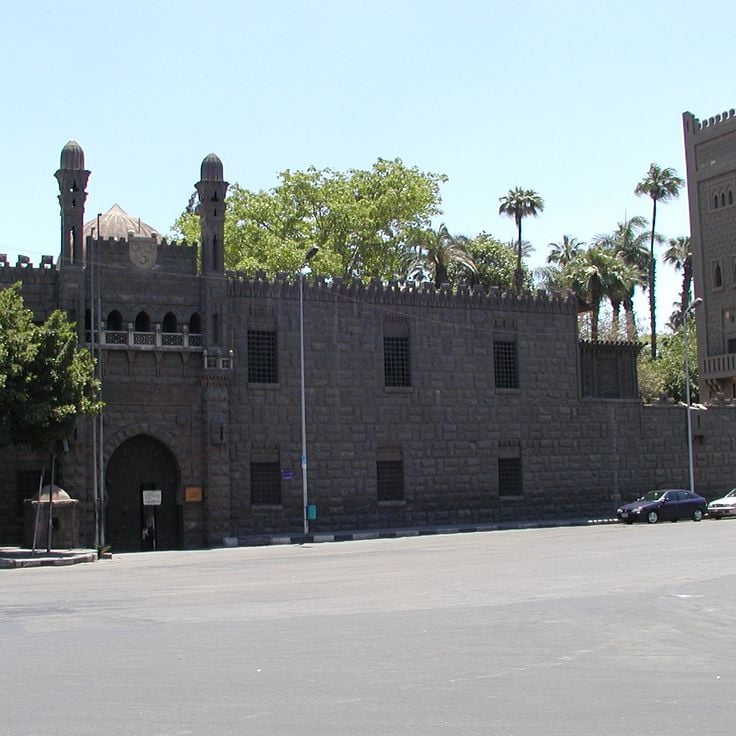
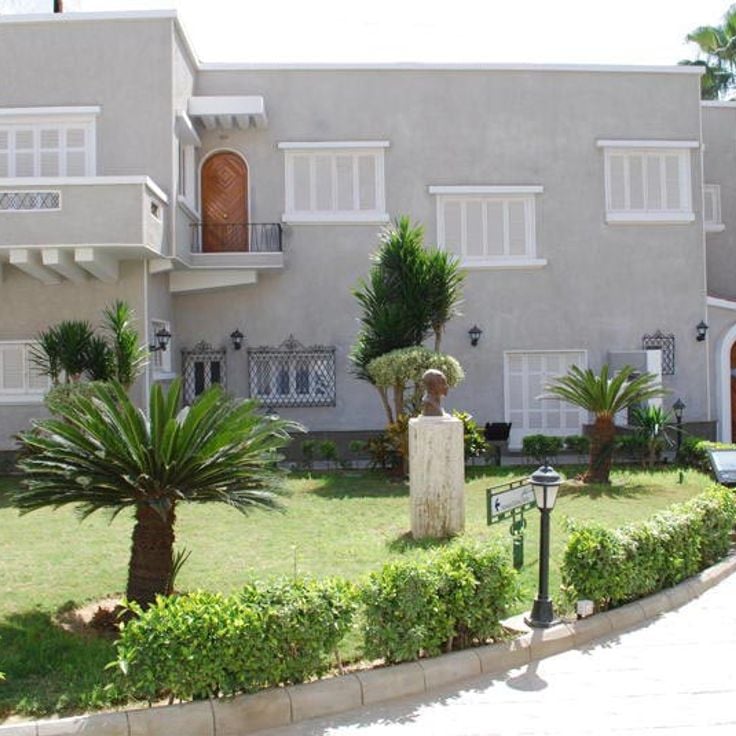
Manial Palace is shown in this collection as a 1929 residence that brings together Ottoman, Persian, and European architectural styles. Built by Prince Mohammed Ali Tewfik, the palace demonstrates how different Islamic traditions and Western influences came together in early 20th-century Cairo. The rooms display handcrafted tiles, carved wood, and artworks that reflect this blend of design traditions.
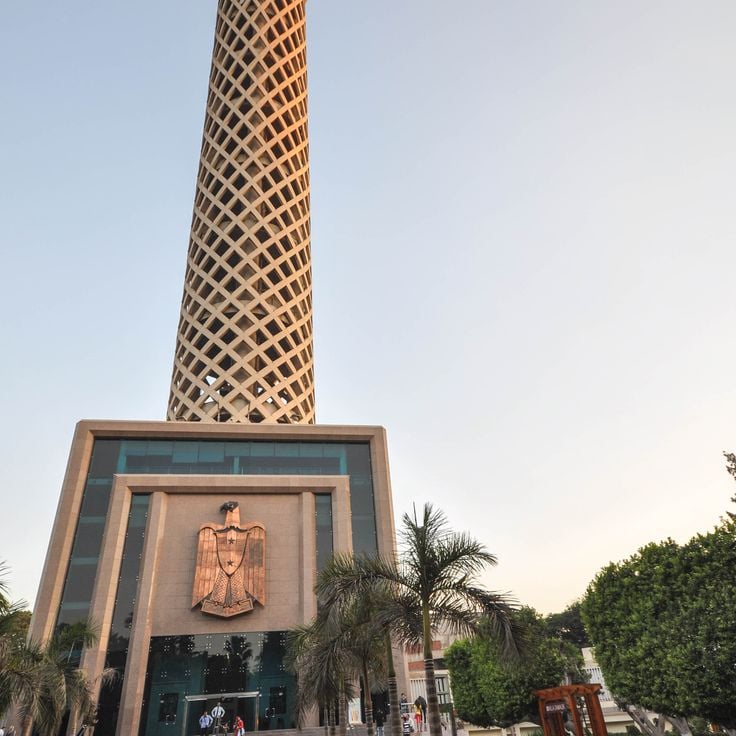
Cairo Tower is a 187-meter concrete structure completed in 1961. This tower in Cairo offers views of the Egyptian capital from its observation platform. Visitors can dine in a revolving restaurant on the upper level while looking out over the cityscape.
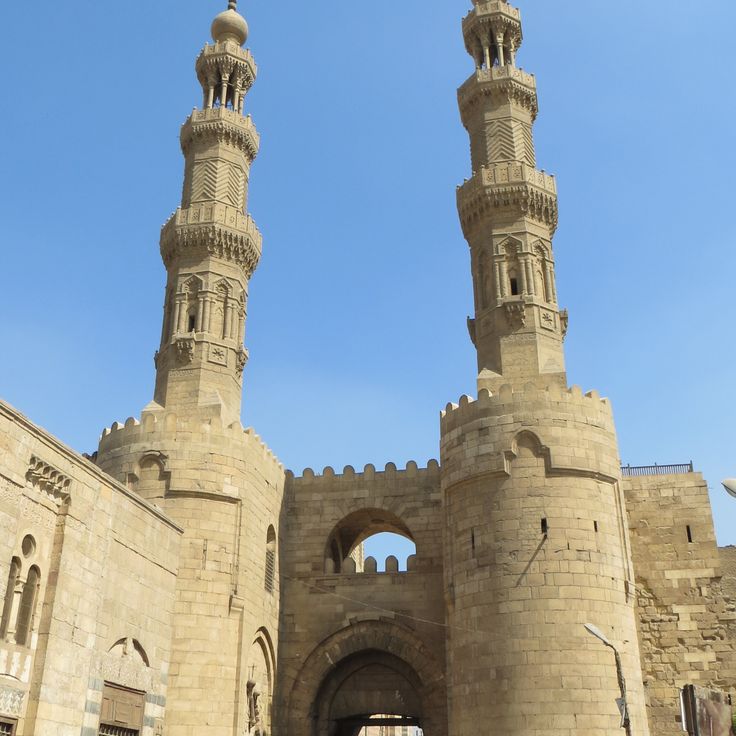
This gate from the 11th century marks the southern entrance to old Fatimid Cairo and is part of the collection showing how the city preserved its architectural heritage over fifteen centuries. Bab Zuweila consists of a vaulted passage flanked by two massive towers. In the 15th century, the Mosque of Sultan al-Mu'ayyad was built against its walls, and two minarets were added on top of the towers. The original wooden doors with their metal reinforcements remain in place. From the upper platform, reached by a narrow staircase, visitors can observe the rooftops of the old city and the domes of the adjacent mosque.
The Taha Hussein Museum in Cairo preserves the personal belongings, manuscripts, and working library of the blind scholar who transformed twentieth-century Arabic literature. Located in his former residence in the Ramses district, the museum documents his life as a writer, Minister of Culture, and professor at Cairo University. His academic works and correspondence with contemporary thinkers are displayed here, offering insight into his influential role in modern Arab intellectual life.
Al-Darb al-Ahmar is a district in historic Cairo that shows how architecture developed across different periods. Narrow lanes and craft workshops fill the streets, where carpenters, glassmakers and metalworkers continue their trades as they have for centuries. Islamic buildings from the 11th century stand among these workshops. The houses display features from both the Mamluk and Ottoman eras.
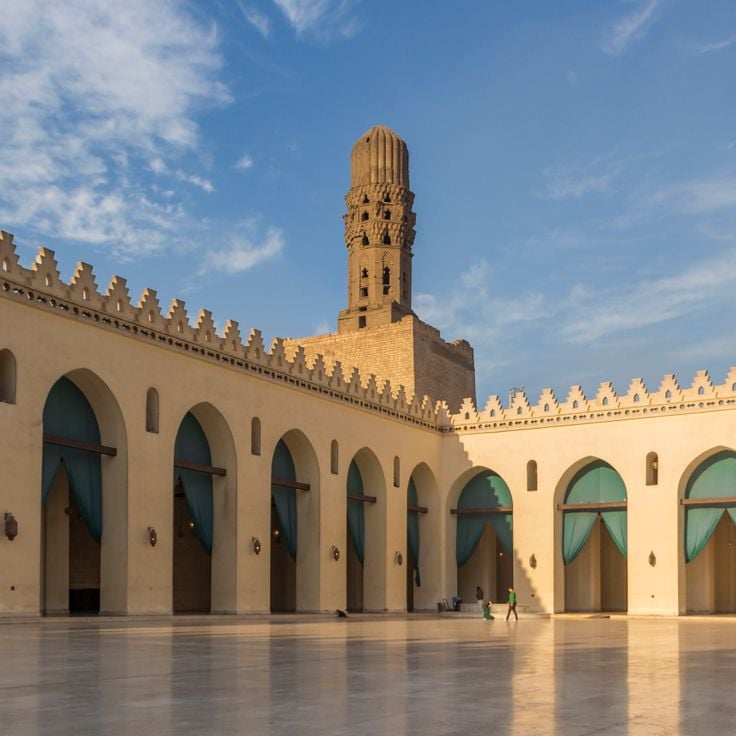
Al-Hakim Mosque appears in Cairo's architectural collection as a significant example from the Fatimid period. This mosque from 990 displays typical characteristics of that era, including angular minarets and a spacious courtyard. During the 20th century, the mosque underwent major restoration work, which added new decorative elements that reflect the ongoing traditions of the site.
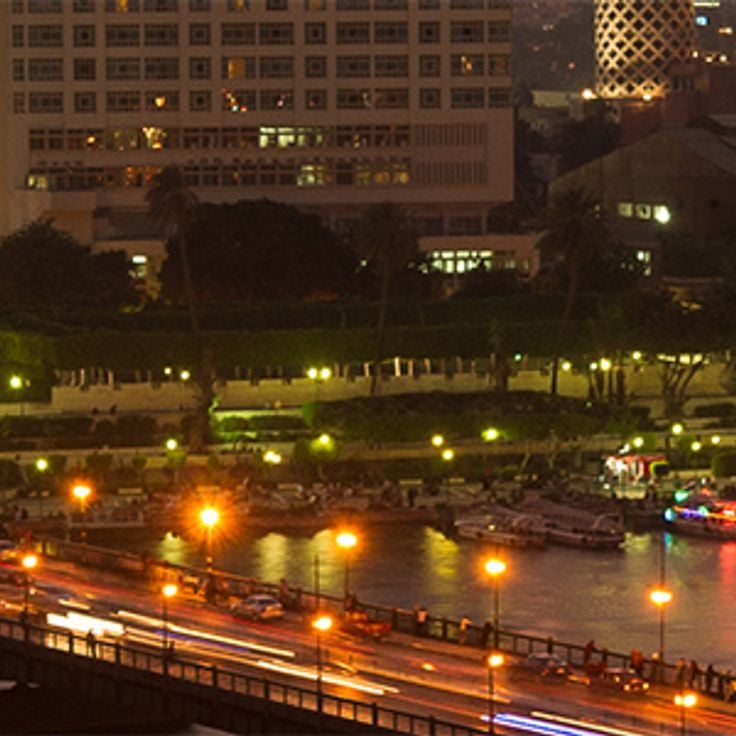
Zamalek occupies Gezira Island on the Nile and is part of Cairo's architectural heritage spanning over fifteen centuries. The district hosts numerous embassies, public parks and art galleries. The architecture displays buildings from the colonial era alongside modern residential structures. International restaurants, cafés and cultural institutions such as the Cairo Opera House and the Gezira Sporting Club shape daily life in the district.
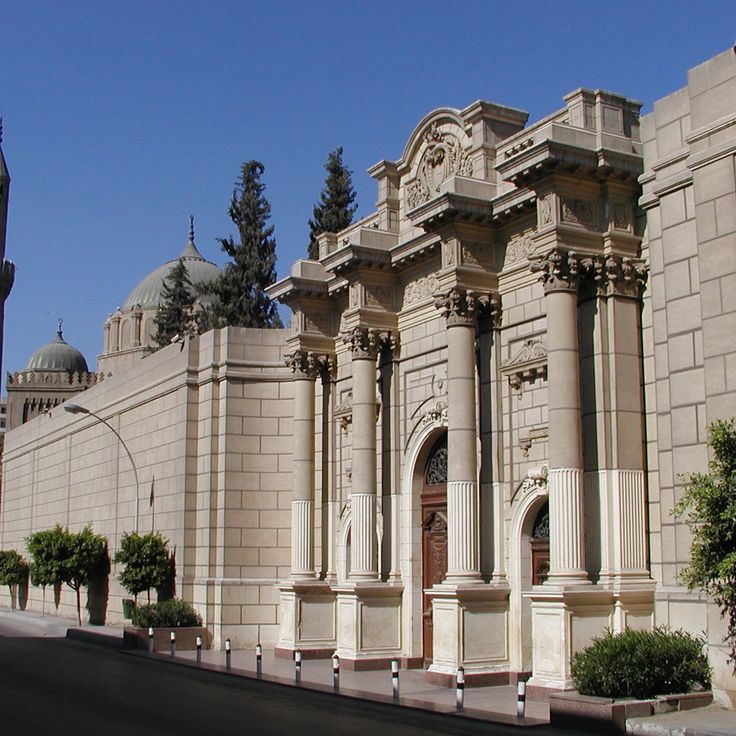
Abdeen Palace was built in 1863 and served as the official seat of government for Egyptian rulers. Today, the palace contains museums displaying royal furniture, silverware, weapons, and historical documents from Egypt's monarchical period. As part of Cairo's architectural heritage, this building documents the political history of the country during the 19th and 20th centuries.
Wekalet El Ghoury is a restored 16th-century Ottoman trading house that forms part of Cairo's architectural collection. The building showcases the craftsmanship and commercial traditions of the Ottoman era. Today, it hosts regular performances of traditional Egyptian music and Sufi dance, keeping the city's cultural life active.
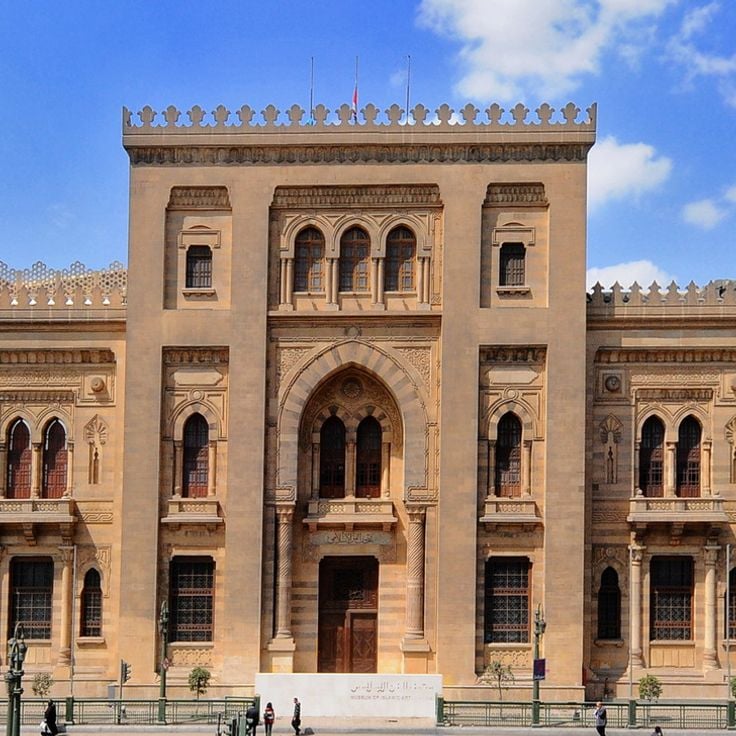
The Museum of Islamic Ceramics in Cairo displays Islamic ceramic works from the 8th to the 19th century, gathered from Egypt, Syria, and Turkey. Set within a Mamluk-era palace, the collection shows how craftspeople shaped techniques and designs across generations, and how trade between regions influenced artistic traditions.
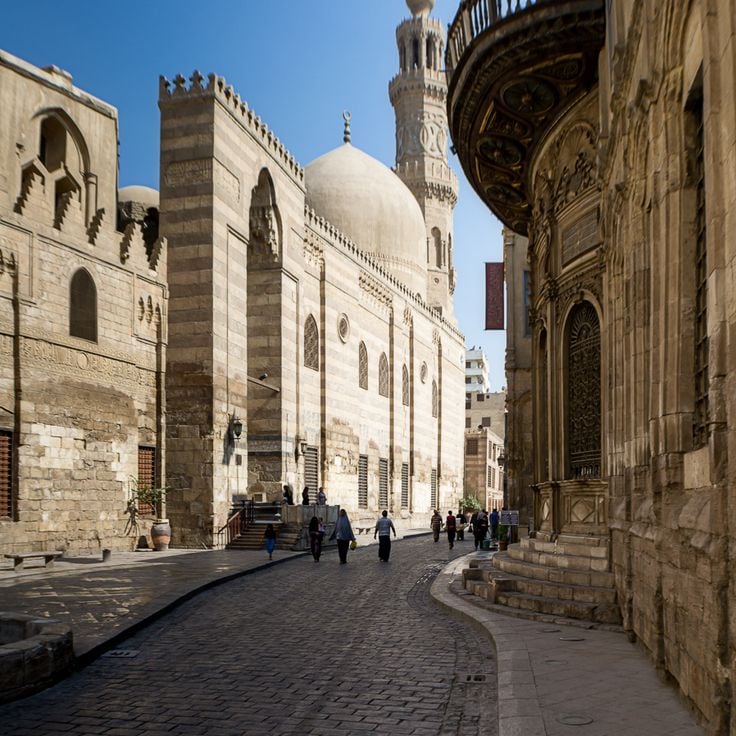
El-Moez Street in this collection displays medieval Islamic architecture with mosques, mausoleums, and trade houses from different periods. The street embodies Cairo's economic and religious significance across centuries. Here, structures from the Fatimid, Mamluk, and Ottoman periods stand side by side, documenting the city's crafts and commerce. The street remains a living place where history intertwines with the daily life of its inhabitants.
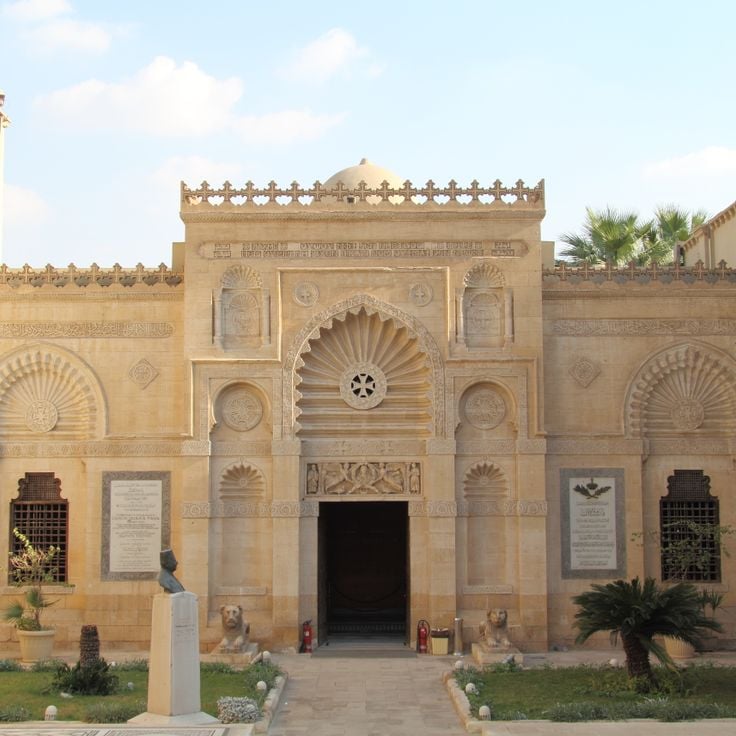
The Coptic Museum in this collection displays illuminated manuscripts, religious icons, liturgical textiles, and stone sculptures documenting fifteen centuries of Egyptian Christianity. The chronologically organized halls trace the evolution of Coptic art from the late Roman period through the Islamic era, with pieces from monasteries and churches in Old Cairo. These works complement the collection's architectural examples, which include religious buildings like the mosque of Sultan Hassan with its 68-meter minaret and historic homes with mashrabiya windows.
The Qalawun Complex is a 13th-century structure built under Mamluk sultan al-Mansur Qalawun that combines a mosque, a madrasa (school), and a mausoleum within one building. This structure displays typical features of Mamluk architecture with carefully carved stonework, raised domes, and decorated facades. The mausoleum holds the tomb of the sultan and his descendants. Located on al-Muizz Street, the complex represents the religious and administrative importance of medieval Cairo.
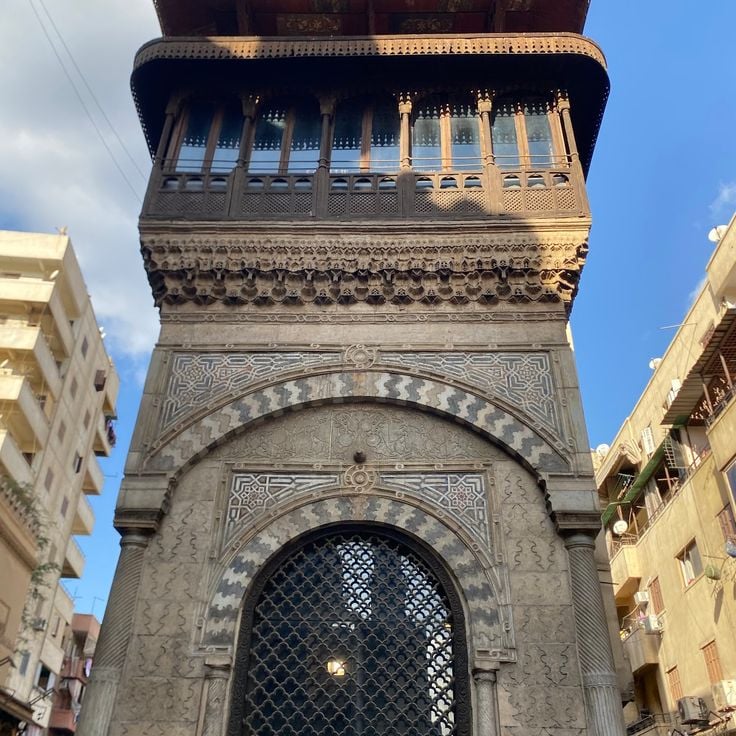
The Sabil-Kuttab of Katkhuda is an 18th-century Ottoman structure in Cairo that combined two important functions. On the ground floor, it provided free drinking water to the community. Upstairs, it housed a school where children learned to recite the Quran. This building reflects how religious and social values shaped everyday architecture in Ottoman Cairo. The Sabil-Kuttab of Katkhuda sits within Cairo's broader architectural heritage, which preserves religious buildings, traditional houses, and practical structures from the Fatimid, Mamluk, and Ottoman periods over more than fifteen centuries.
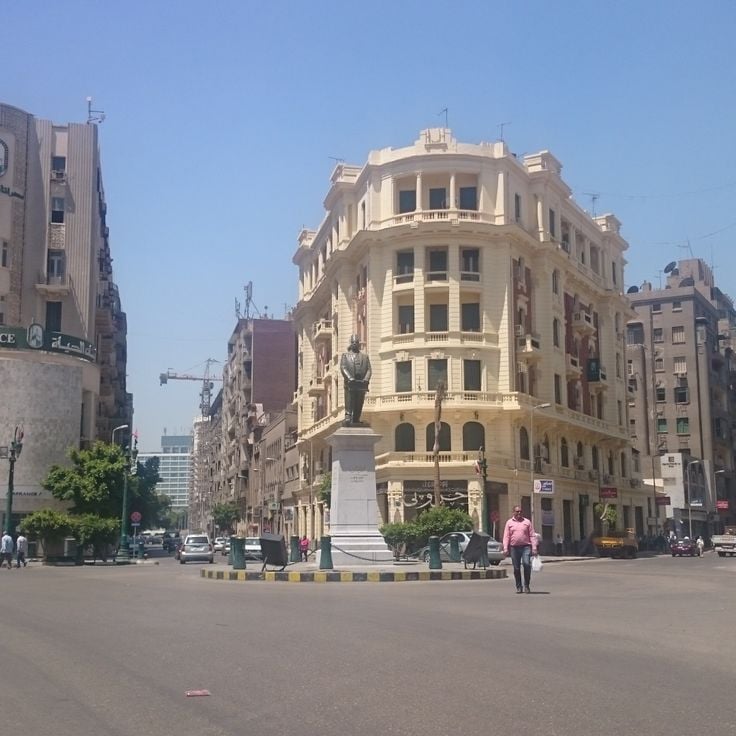
Talaat Harb Square emerged in the early 20th century with French influences visible in its tall columns and stone ornaments decorating the surrounding building facades. Located in the center of modern Cairo, this square functions as a major hub for commerce and public transport. It represents how Western architectural styles shaped the development of the city during this period.
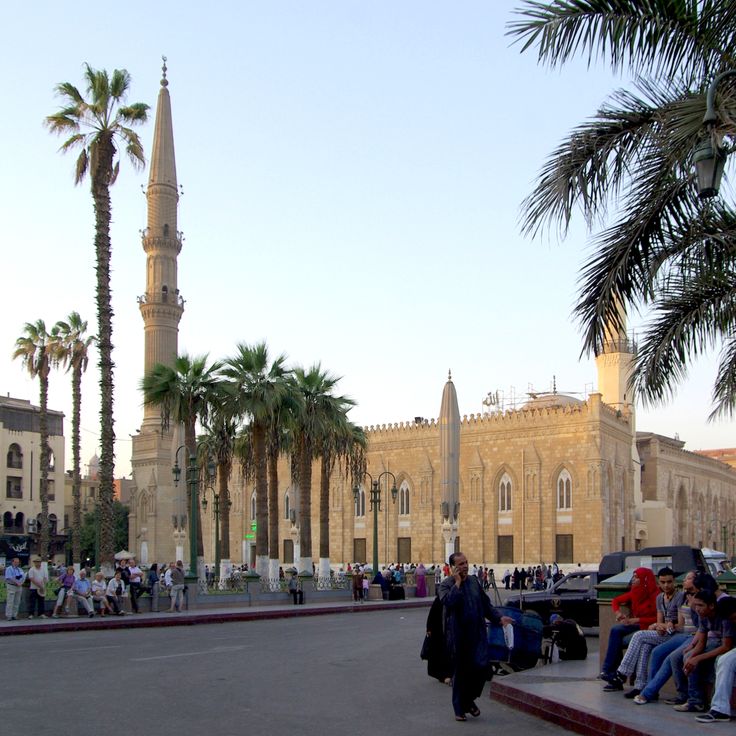
The Al-Hussein Mosque sits at the heart of this collection documenting Cairo's architectural heritage across fifteen centuries. Built in the 12th century and reconstructed during the Fatimid and Mamluk periods, the mosque displays how different eras left their mark on a single structure. The building houses Islamic artworks and functions as an important pilgrimage destination dedicated to Hussein ibn Ali, the grandson of Prophet Muhammad. This mosque exemplifies how religious buildings in Cairo's historic districts remain woven into the city's daily rhythms and living traditions.
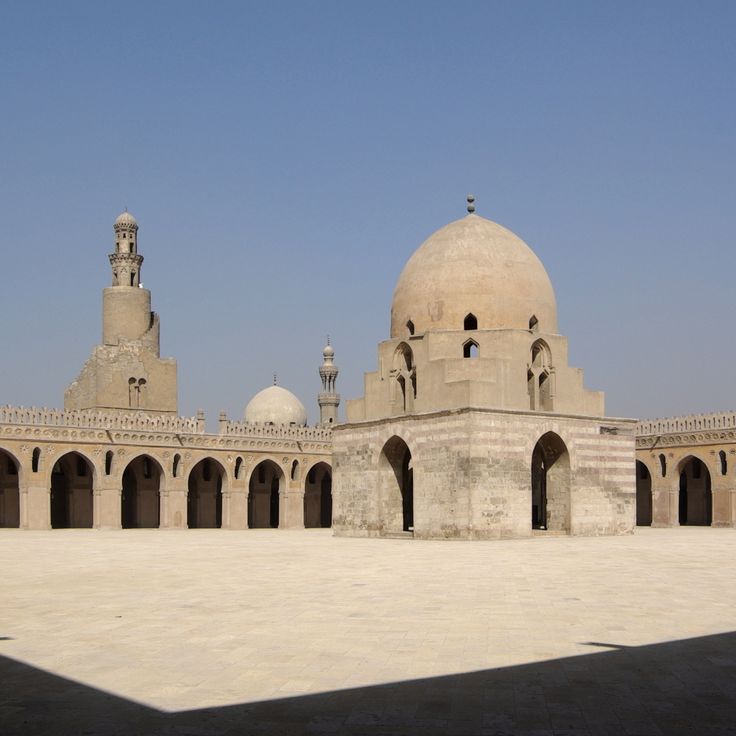
The Ibn Tulun Mosque is part of Cairo's architectural heritage spanning over fifteen centuries and dates from the 9th century. It displays the Abbasid architectural plan with pointed arch arcades surrounding a central courtyard, finely carved stucco ornaments, and geometric patterns on wall surfaces. The minaret with its square base recalls Mesopotamian ziggurats and represents the long history of religious buildings in this city.
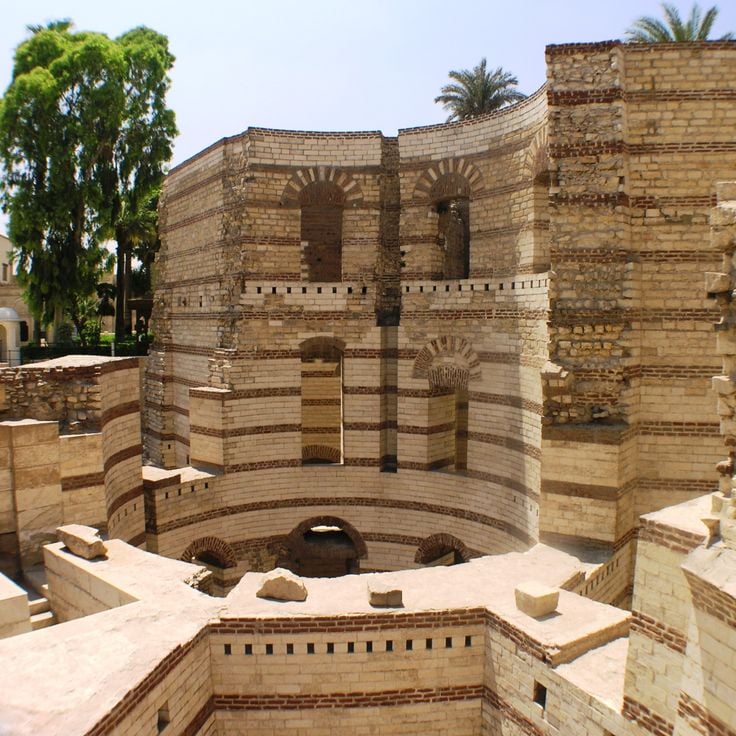
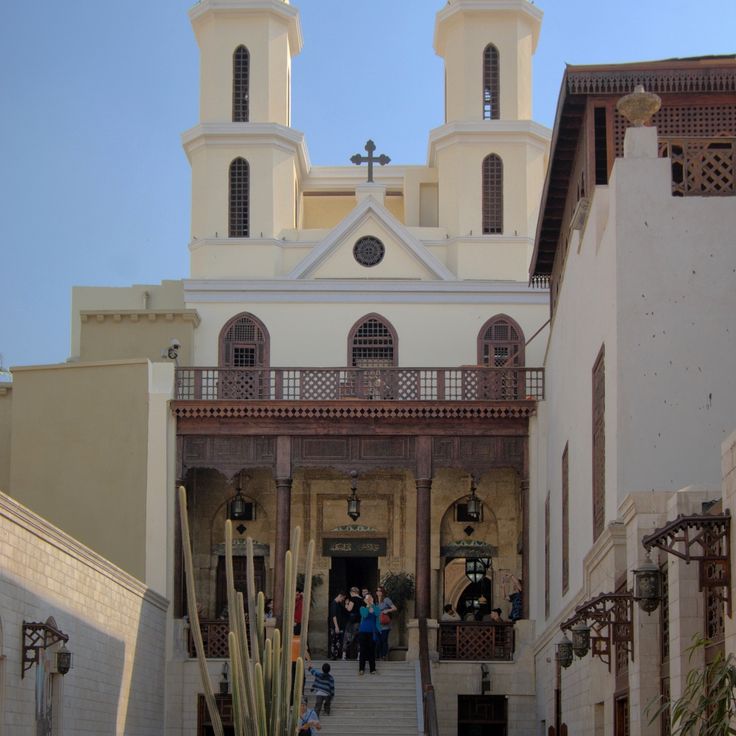
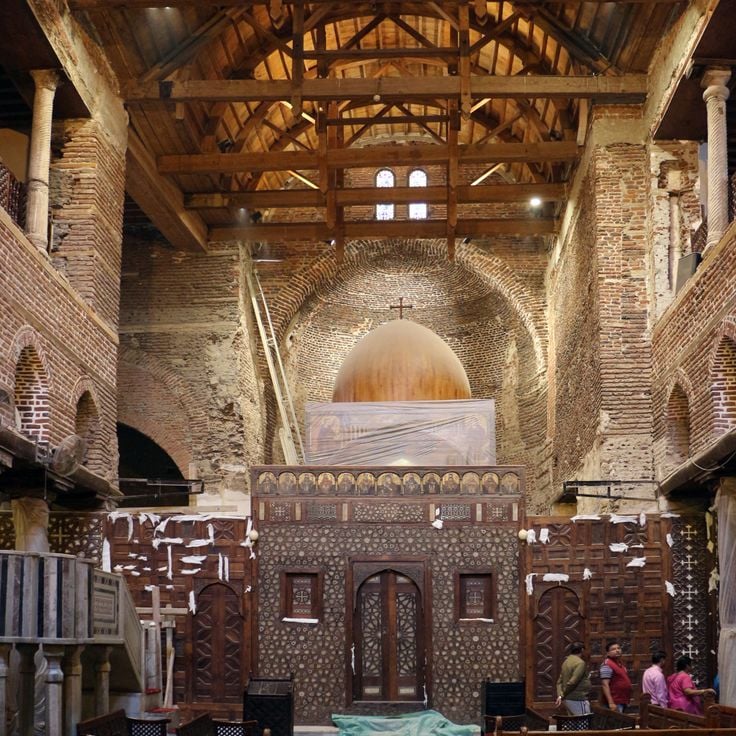
This Coptic church in Cairo rises from two fortress towers and features 29 columns inside its walls. Dating to the 3rd century, it shows how religious structures were built atop defensive fortifications in the city's early history. The building represents the blend of military and spiritual purposes that shaped Cairo's layered past. It stands as part of the city's diverse architectural story, where structures from many periods coexist in historic neighborhoods.
The Church of Saints Sergius and Bacchus is a fourth-century religious building in the Coptic quarter of Old Cairo, contributing to this collection that spans over fifteen centuries of architectural heritage. The structure sits below street level and features three naves supported by twelve marble columns. According to tradition, the Holy Family sought refuge here during their flight to Egypt. A crypt beneath the sanctuary marks the presumed site of their stay. The building has undergone several restorations while preserving its early Christian design.
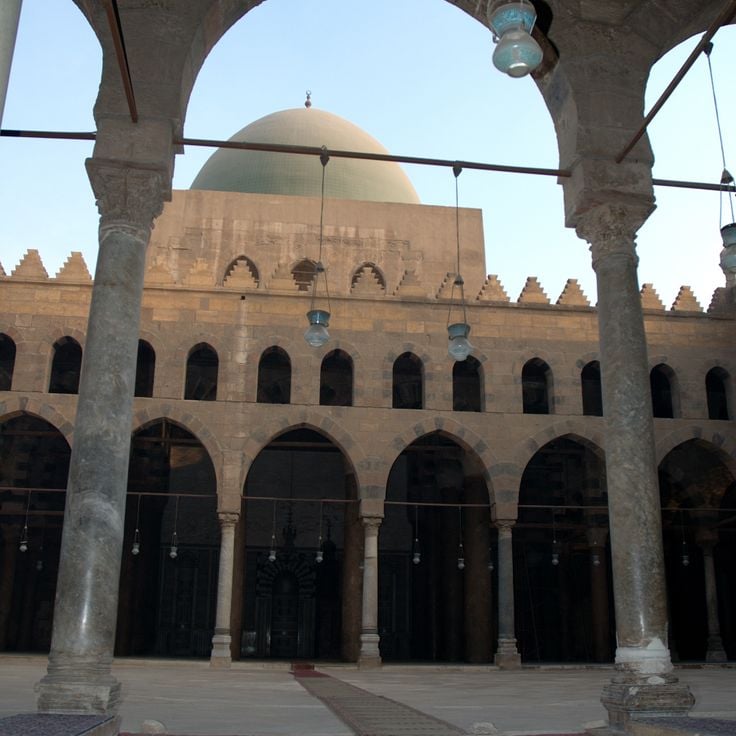
The Al-Nasir Muhammad Mosque represents Mamluk architecture in Cairo's historic landscape. Built in the early 14th century within the Citadel, this mosque centers on a large courtyard surrounded by covered walkways supported by columns. These columns come from different periods: Pharaonic, Roman, and Byzantine monuments. Sultan al-Nasir Muhammad ibn Qalawun commissioned the structure, which demonstrates how builders reused materials from earlier civilizations when constructing new religious spaces.
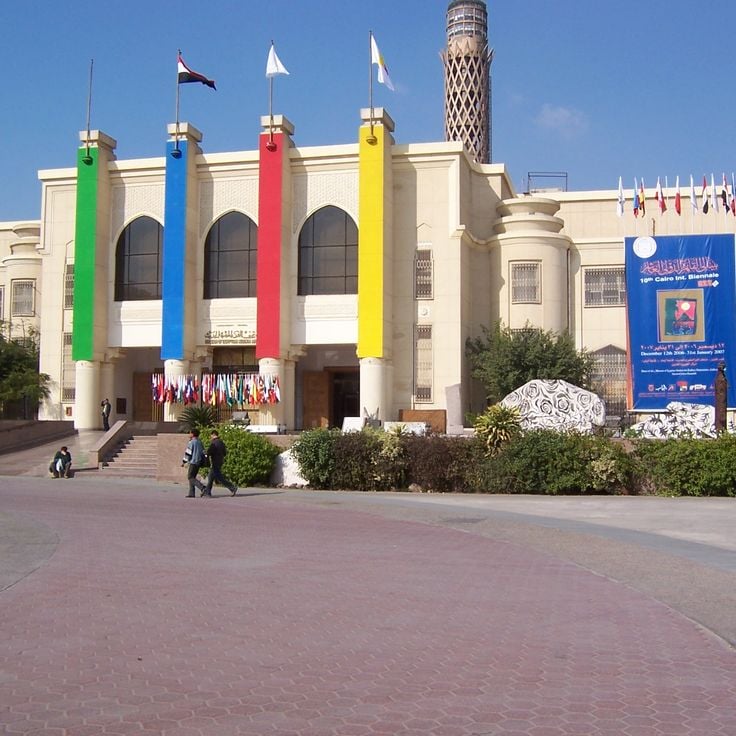
The Museum of Modern Egyptian Art documents the artistic evolution of Egypt during the 20th and 21st centuries. Its collection brings together paintings, sculptures and graphic works by Egyptian artists such as Mahmoud Said, Abdel Hadi El-Gazzar and Gazbia Sirry. Located on Gezira Island in the Opera district, this museum shows how artists explored their society and history through different media. The works help visitors understand how Egypt transformed itself in the modern world.
The Fortress of Babylon was built in the 6th century by Roman legions as a military base. This fortified complex formed a strategic defensive position along the Nile and served to control trade routes between Egypt and the Roman Empire. Today, portions of the massive stone walls and towers remain, integrated into the Coptic quarter of Old Cairo. The fortress shows how Roman military architecture shaped the city and the role it played in controlling this important region.
This 17th-century residence in Cairo demonstrates how Ottoman wealthy families arranged their homes. Bayt Al-Suhaymi features carved wooden mashrabiya windows that filter light through intricate patterns, two interior courtyards with fountains, and reception rooms decorated with painted wooden ceilings and ceramic tiles. The Islamic geometric patterns adorning the walls reflect the craftsmanship of the period. The house illustrates the separation of spaces for men and women, a key aspect of domestic organization during the Ottoman era.
El Khalifa District preserves mosques and mausoleums from the Fatimid and Mamluk periods between the 10th and 15th centuries. The streets are narrow and winding, with buildings showing craftsmanship typical of these historical eras. This district is part of Cairo's broader architectural heritage, which spans over fifteen centuries and includes religious buildings, traditional houses, and structures from different periods. Walking through these streets, you see how medieval monuments remain part of the city's everyday life and rhythm.
Garbage City in this collection shows how the Zabbaleen community collects and processes thousands of tons of Cairo's waste daily. With an 80 percent recycling rate, these workers play a vital role in the city's functioning. Their workshops and courtyards document practical solutions and craft skills passed down through generations. This place reveals the everyday structures that keep the city running.
The Nilometer in Cairo is a 9th-century stone structure that measured the annual flood levels of the Nile using a central column with markings. In this collection of Cairo's architecture, the Nilometer shows how important the river was to Egyptian life. This building stands alongside mosques such as Sultan Hassan with its 68-meter minaret and traditional homes with mashrabiya windows. These structures reflect the Fatimid, Mamluk, and Ottoman periods across the city's historic districts.
This 14th-century mosque is a Mamluk structure with remarkable Iznik tiles inside. Blue and green tiles with floral patterns decorate the walls of the prayer hall. Emir Aqsunqur built the mosque in 1347. Later, in the 17th century, Ibrahim Agha added ceramic tiles from Damascus. The original minaret retains its Mamluk decoration with carved stone details. This mosque is part of Cairo's architectural collection, which shows buildings from over fifteen centuries, including religious structures, traditional houses, and historic cemeteries.
The City of the Dead in this collection is a vast necropolis stretching four kilometers that holds mausoleums, tombs, and houses occupied by residents. It shows how Cairo integrates burial grounds with lived spaces, where generations have built homes among the graves and created a community within what was originally a cemetery.
The Grotto Aquarium Garden contributes to Cairo's architectural heritage spanning over fifteen centuries. This 19th-century garden contains artificial grottoes carved into rock, pools with different fish species, and Mediterranean plants. The space combines sculpted stone elements with aquatic and botanical collections, showing how constructed landscapes can integrate living specimens.
Al-Azhar Park in this collection shows how green spaces fit into Cairo's historic urban landscape. Spanning 30 hectares, the park offers views over the old city, gardens designed in Islamic style, and restaurants serving regional food. Built on a former landfill site, it connects open green areas with vistas of the medieval quarters and mosques that define the city.
The Gayer-Anderson Museum in this collection occupies two connected 16th-century Ottoman houses that showcase Cairo's architectural heritage. British officer Robert Grenville Gayer-Anderson restored these residences between 1935 and 1942, transforming them into a museum. The rooms retain their original decoration with carved wooden ceilings, mashrabiya screens, and courtyards with fountains. The displayed objects include Persian carpets, Chinese porcelain, Ottoman textiles, and Egyptian antiquities from different periods.
The Sultan Hassan Mosque is a monumental example of 14th-century Mamluk architecture that shapes Cairo's skyline with its 68-meter-high minaret. The structure combines a mosque and a madrasa within a single complex that still commands attention today. The facades display elaborate stonework and intricate details throughout. This building is part of Cairo's architectural heritage, which spans over fifteen centuries and showcases styles from different periods.
Manial Palace is shown in this collection as a 1929 residence that brings together Ottoman, Persian, and European architectural styles. Built by Prince Mohammed Ali Tewfik, the palace demonstrates how different Islamic traditions and Western influences came together in early 20th-century Cairo. The rooms display handcrafted tiles, carved wood, and artworks that reflect this blend of design traditions.
Cairo Tower is a 187-meter concrete structure completed in 1961. This tower in Cairo offers views of the Egyptian capital from its observation platform. Visitors can dine in a revolving restaurant on the upper level while looking out over the cityscape.
This gate from the 11th century marks the southern entrance to old Fatimid Cairo and is part of the collection showing how the city preserved its architectural heritage over fifteen centuries. Bab Zuweila consists of a vaulted passage flanked by two massive towers. In the 15th century, the Mosque of Sultan al-Mu'ayyad was built against its walls, and two minarets were added on top of the towers. The original wooden doors with their metal reinforcements remain in place. From the upper platform, reached by a narrow staircase, visitors can observe the rooftops of the old city and the domes of the adjacent mosque.
The Taha Hussein Museum in Cairo preserves the personal belongings, manuscripts, and working library of the blind scholar who transformed twentieth-century Arabic literature. Located in his former residence in the Ramses district, the museum documents his life as a writer, Minister of Culture, and professor at Cairo University. His academic works and correspondence with contemporary thinkers are displayed here, offering insight into his influential role in modern Arab intellectual life.
Al-Darb al-Ahmar is a district in historic Cairo that shows how architecture developed across different periods. Narrow lanes and craft workshops fill the streets, where carpenters, glassmakers and metalworkers continue their trades as they have for centuries. Islamic buildings from the 11th century stand among these workshops. The houses display features from both the Mamluk and Ottoman eras.
Al-Hakim Mosque appears in Cairo's architectural collection as a significant example from the Fatimid period. This mosque from 990 displays typical characteristics of that era, including angular minarets and a spacious courtyard. During the 20th century, the mosque underwent major restoration work, which added new decorative elements that reflect the ongoing traditions of the site.
Zamalek occupies Gezira Island on the Nile and is part of Cairo's architectural heritage spanning over fifteen centuries. The district hosts numerous embassies, public parks and art galleries. The architecture displays buildings from the colonial era alongside modern residential structures. International restaurants, cafés and cultural institutions such as the Cairo Opera House and the Gezira Sporting Club shape daily life in the district.
Abdeen Palace was built in 1863 and served as the official seat of government for Egyptian rulers. Today, the palace contains museums displaying royal furniture, silverware, weapons, and historical documents from Egypt's monarchical period. As part of Cairo's architectural heritage, this building documents the political history of the country during the 19th and 20th centuries.
Wekalet El Ghoury is a restored 16th-century Ottoman trading house that forms part of Cairo's architectural collection. The building showcases the craftsmanship and commercial traditions of the Ottoman era. Today, it hosts regular performances of traditional Egyptian music and Sufi dance, keeping the city's cultural life active.
The Museum of Islamic Ceramics in Cairo displays Islamic ceramic works from the 8th to the 19th century, gathered from Egypt, Syria, and Turkey. Set within a Mamluk-era palace, the collection shows how craftspeople shaped techniques and designs across generations, and how trade between regions influenced artistic traditions.
El-Moez Street in this collection displays medieval Islamic architecture with mosques, mausoleums, and trade houses from different periods. The street embodies Cairo's economic and religious significance across centuries. Here, structures from the Fatimid, Mamluk, and Ottoman periods stand side by side, documenting the city's crafts and commerce. The street remains a living place where history intertwines with the daily life of its inhabitants.
The Coptic Museum in this collection displays illuminated manuscripts, religious icons, liturgical textiles, and stone sculptures documenting fifteen centuries of Egyptian Christianity. The chronologically organized halls trace the evolution of Coptic art from the late Roman period through the Islamic era, with pieces from monasteries and churches in Old Cairo. These works complement the collection's architectural examples, which include religious buildings like the mosque of Sultan Hassan with its 68-meter minaret and historic homes with mashrabiya windows.
The Qalawun Complex is a 13th-century structure built under Mamluk sultan al-Mansur Qalawun that combines a mosque, a madrasa (school), and a mausoleum within one building. This structure displays typical features of Mamluk architecture with carefully carved stonework, raised domes, and decorated facades. The mausoleum holds the tomb of the sultan and his descendants. Located on al-Muizz Street, the complex represents the religious and administrative importance of medieval Cairo.
The Sabil-Kuttab of Katkhuda is an 18th-century Ottoman structure in Cairo that combined two important functions. On the ground floor, it provided free drinking water to the community. Upstairs, it housed a school where children learned to recite the Quran. This building reflects how religious and social values shaped everyday architecture in Ottoman Cairo. The Sabil-Kuttab of Katkhuda sits within Cairo's broader architectural heritage, which preserves religious buildings, traditional houses, and practical structures from the Fatimid, Mamluk, and Ottoman periods over more than fifteen centuries.
Talaat Harb Square emerged in the early 20th century with French influences visible in its tall columns and stone ornaments decorating the surrounding building facades. Located in the center of modern Cairo, this square functions as a major hub for commerce and public transport. It represents how Western architectural styles shaped the development of the city during this period.
The Al-Hussein Mosque sits at the heart of this collection documenting Cairo's architectural heritage across fifteen centuries. Built in the 12th century and reconstructed during the Fatimid and Mamluk periods, the mosque displays how different eras left their mark on a single structure. The building houses Islamic artworks and functions as an important pilgrimage destination dedicated to Hussein ibn Ali, the grandson of Prophet Muhammad. This mosque exemplifies how religious buildings in Cairo's historic districts remain woven into the city's daily rhythms and living traditions.
The Ibn Tulun Mosque is part of Cairo's architectural heritage spanning over fifteen centuries and dates from the 9th century. It displays the Abbasid architectural plan with pointed arch arcades surrounding a central courtyard, finely carved stucco ornaments, and geometric patterns on wall surfaces. The minaret with its square base recalls Mesopotamian ziggurats and represents the long history of religious buildings in this city.
This Coptic church in Cairo rises from two fortress towers and features 29 columns inside its walls. Dating to the 3rd century, it shows how religious structures were built atop defensive fortifications in the city's early history. The building represents the blend of military and spiritual purposes that shaped Cairo's layered past. It stands as part of the city's diverse architectural story, where structures from many periods coexist in historic neighborhoods.
The Church of Saints Sergius and Bacchus is a fourth-century religious building in the Coptic quarter of Old Cairo, contributing to this collection that spans over fifteen centuries of architectural heritage. The structure sits below street level and features three naves supported by twelve marble columns. According to tradition, the Holy Family sought refuge here during their flight to Egypt. A crypt beneath the sanctuary marks the presumed site of their stay. The building has undergone several restorations while preserving its early Christian design.
The Al-Nasir Muhammad Mosque represents Mamluk architecture in Cairo's historic landscape. Built in the early 14th century within the Citadel, this mosque centers on a large courtyard surrounded by covered walkways supported by columns. These columns come from different periods: Pharaonic, Roman, and Byzantine monuments. Sultan al-Nasir Muhammad ibn Qalawun commissioned the structure, which demonstrates how builders reused materials from earlier civilizations when constructing new religious spaces.
The Museum of Modern Egyptian Art documents the artistic evolution of Egypt during the 20th and 21st centuries. Its collection brings together paintings, sculptures and graphic works by Egyptian artists such as Mahmoud Said, Abdel Hadi El-Gazzar and Gazbia Sirry. Located on Gezira Island in the Opera district, this museum shows how artists explored their society and history through different media. The works help visitors understand how Egypt transformed itself in the modern world.
The Fortress of Babylon was built in the 6th century by Roman legions as a military base. This fortified complex formed a strategic defensive position along the Nile and served to control trade routes between Egypt and the Roman Empire. Today, portions of the massive stone walls and towers remain, integrated into the Coptic quarter of Old Cairo. The fortress shows how Roman military architecture shaped the city and the role it played in controlling this important region.
This 17th-century residence in Cairo demonstrates how Ottoman wealthy families arranged their homes. Bayt Al-Suhaymi features carved wooden mashrabiya windows that filter light through intricate patterns, two interior courtyards with fountains, and reception rooms decorated with painted wooden ceilings and ceramic tiles. The Islamic geometric patterns adorning the walls reflect the craftsmanship of the period. The house illustrates the separation of spaces for men and women, a key aspect of domestic organization during the Ottoman era.
El Khalifa District preserves mosques and mausoleums from the Fatimid and Mamluk periods between the 10th and 15th centuries. The streets are narrow and winding, with buildings showing craftsmanship typical of these historical eras. This district is part of Cairo's broader architectural heritage, which spans over fifteen centuries and includes religious buildings, traditional houses, and structures from different periods. Walking through these streets, you see how medieval monuments remain part of the city's everyday life and rhythm.
Garbage City in this collection shows how the Zabbaleen community collects and processes thousands of tons of Cairo's waste daily. With an 80 percent recycling rate, these workers play a vital role in the city's functioning. Their workshops and courtyards document practical solutions and craft skills passed down through generations. This place reveals the everyday structures that keep the city running.
The Nilometer in Cairo is a 9th-century stone structure that measured the annual flood levels of the Nile using a central column with markings. In this collection of Cairo's architecture, the Nilometer shows how important the river was to Egyptian life. This building stands alongside mosques such as Sultan Hassan with its 68-meter minaret and traditional homes with mashrabiya windows. These structures reflect the Fatimid, Mamluk, and Ottoman periods across the city's historic districts.
This 14th-century mosque is a Mamluk structure with remarkable Iznik tiles inside. Blue and green tiles with floral patterns decorate the walls of the prayer hall. Emir Aqsunqur built the mosque in 1347. Later, in the 17th century, Ibrahim Agha added ceramic tiles from Damascus. The original minaret retains its Mamluk decoration with carved stone details. This mosque is part of Cairo's architectural collection, which shows buildings from over fifteen centuries, including religious structures, traditional houses, and historic cemeteries.
The City of the Dead in this collection is a vast necropolis stretching four kilometers that holds mausoleums, tombs, and houses occupied by residents. It shows how Cairo integrates burial grounds with lived spaces, where generations have built homes among the graves and created a community within what was originally a cemetery.
The Grotto Aquarium Garden contributes to Cairo's architectural heritage spanning over fifteen centuries. This 19th-century garden contains artificial grottoes carved into rock, pools with different fish species, and Mediterranean plants. The space combines sculpted stone elements with aquatic and botanical collections, showing how constructed landscapes can integrate living specimens.
Al-Azhar Park in this collection shows how green spaces fit into Cairo's historic urban landscape. Spanning 30 hectares, the park offers views over the old city, gardens designed in Islamic style, and restaurants serving regional food. Built on a former landfill site, it connects open green areas with vistas of the medieval quarters and mosques that define the city.
The Gayer-Anderson Museum in this collection occupies two connected 16th-century Ottoman houses that showcase Cairo's architectural heritage. British officer Robert Grenville Gayer-Anderson restored these residences between 1935 and 1942, transforming them into a museum. The rooms retain their original decoration with carved wooden ceilings, mashrabiya screens, and courtyards with fountains. The displayed objects include Persian carpets, Chinese porcelain, Ottoman textiles, and Egyptian antiquities from different periods.
The Sultan Hassan Mosque is a monumental example of 14th-century Mamluk architecture that shapes Cairo's skyline with its 68-meter-high minaret. The structure combines a mosque and a madrasa within a single complex that still commands attention today. The facades display elaborate stonework and intricate details throughout. This building is part of Cairo's architectural heritage, which spans over fifteen centuries and showcases styles from different periods.
Manial Palace is shown in this collection as a 1929 residence that brings together Ottoman, Persian, and European architectural styles. Built by Prince Mohammed Ali Tewfik, the palace demonstrates how different Islamic traditions and Western influences came together in early 20th-century Cairo. The rooms display handcrafted tiles, carved wood, and artworks that reflect this blend of design traditions.
Cairo Tower is a 187-meter concrete structure completed in 1961. This tower in Cairo offers views of the Egyptian capital from its observation platform. Visitors can dine in a revolving restaurant on the upper level while looking out over the cityscape.
This gate from the 11th century marks the southern entrance to old Fatimid Cairo and is part of the collection showing how the city preserved its architectural heritage over fifteen centuries. Bab Zuweila consists of a vaulted passage flanked by two massive towers. In the 15th century, the Mosque of Sultan al-Mu'ayyad was built against its walls, and two minarets were added on top of the towers. The original wooden doors with their metal reinforcements remain in place. From the upper platform, reached by a narrow staircase, visitors can observe the rooftops of the old city and the domes of the adjacent mosque.
The Taha Hussein Museum in Cairo preserves the personal belongings, manuscripts, and working library of the blind scholar who transformed twentieth-century Arabic literature. Located in his former residence in the Ramses district, the museum documents his life as a writer, Minister of Culture, and professor at Cairo University. His academic works and correspondence with contemporary thinkers are displayed here, offering insight into his influential role in modern Arab intellectual life.
Al-Darb al-Ahmar is a district in historic Cairo that shows how architecture developed across different periods. Narrow lanes and craft workshops fill the streets, where carpenters, glassmakers and metalworkers continue their trades as they have for centuries. Islamic buildings from the 11th century stand among these workshops. The houses display features from both the Mamluk and Ottoman eras.
Al-Hakim Mosque appears in Cairo's architectural collection as a significant example from the Fatimid period. This mosque from 990 displays typical characteristics of that era, including angular minarets and a spacious courtyard. During the 20th century, the mosque underwent major restoration work, which added new decorative elements that reflect the ongoing traditions of the site.
Zamalek occupies Gezira Island on the Nile and is part of Cairo's architectural heritage spanning over fifteen centuries. The district hosts numerous embassies, public parks and art galleries. The architecture displays buildings from the colonial era alongside modern residential structures. International restaurants, cafés and cultural institutions such as the Cairo Opera House and the Gezira Sporting Club shape daily life in the district.
Abdeen Palace was built in 1863 and served as the official seat of government for Egyptian rulers. Today, the palace contains museums displaying royal furniture, silverware, weapons, and historical documents from Egypt's monarchical period. As part of Cairo's architectural heritage, this building documents the political history of the country during the 19th and 20th centuries.
Wekalet El Ghoury is a restored 16th-century Ottoman trading house that forms part of Cairo's architectural collection. The building showcases the craftsmanship and commercial traditions of the Ottoman era. Today, it hosts regular performances of traditional Egyptian music and Sufi dance, keeping the city's cultural life active.
The Museum of Islamic Ceramics in Cairo displays Islamic ceramic works from the 8th to the 19th century, gathered from Egypt, Syria, and Turkey. Set within a Mamluk-era palace, the collection shows how craftspeople shaped techniques and designs across generations, and how trade between regions influenced artistic traditions.
El-Moez Street in this collection displays medieval Islamic architecture with mosques, mausoleums, and trade houses from different periods. The street embodies Cairo's economic and religious significance across centuries. Here, structures from the Fatimid, Mamluk, and Ottoman periods stand side by side, documenting the city's crafts and commerce. The street remains a living place where history intertwines with the daily life of its inhabitants.
The Coptic Museum in this collection displays illuminated manuscripts, religious icons, liturgical textiles, and stone sculptures documenting fifteen centuries of Egyptian Christianity. The chronologically organized halls trace the evolution of Coptic art from the late Roman period through the Islamic era, with pieces from monasteries and churches in Old Cairo. These works complement the collection's architectural examples, which include religious buildings like the mosque of Sultan Hassan with its 68-meter minaret and historic homes with mashrabiya windows.
The Qalawun Complex is a 13th-century structure built under Mamluk sultan al-Mansur Qalawun that combines a mosque, a madrasa (school), and a mausoleum within one building. This structure displays typical features of Mamluk architecture with carefully carved stonework, raised domes, and decorated facades. The mausoleum holds the tomb of the sultan and his descendants. Located on al-Muizz Street, the complex represents the religious and administrative importance of medieval Cairo.
The Sabil-Kuttab of Katkhuda is an 18th-century Ottoman structure in Cairo that combined two important functions. On the ground floor, it provided free drinking water to the community. Upstairs, it housed a school where children learned to recite the Quran. This building reflects how religious and social values shaped everyday architecture in Ottoman Cairo. The Sabil-Kuttab of Katkhuda sits within Cairo's broader architectural heritage, which preserves religious buildings, traditional houses, and practical structures from the Fatimid, Mamluk, and Ottoman periods over more than fifteen centuries.
Talaat Harb Square emerged in the early 20th century with French influences visible in its tall columns and stone ornaments decorating the surrounding building facades. Located in the center of modern Cairo, this square functions as a major hub for commerce and public transport. It represents how Western architectural styles shaped the development of the city during this period.
The Al-Hussein Mosque sits at the heart of this collection documenting Cairo's architectural heritage across fifteen centuries. Built in the 12th century and reconstructed during the Fatimid and Mamluk periods, the mosque displays how different eras left their mark on a single structure. The building houses Islamic artworks and functions as an important pilgrimage destination dedicated to Hussein ibn Ali, the grandson of Prophet Muhammad. This mosque exemplifies how religious buildings in Cairo's historic districts remain woven into the city's daily rhythms and living traditions.
The Ibn Tulun Mosque is part of Cairo's architectural heritage spanning over fifteen centuries and dates from the 9th century. It displays the Abbasid architectural plan with pointed arch arcades surrounding a central courtyard, finely carved stucco ornaments, and geometric patterns on wall surfaces. The minaret with its square base recalls Mesopotamian ziggurats and represents the long history of religious buildings in this city.
This Coptic church in Cairo rises from two fortress towers and features 29 columns inside its walls. Dating to the 3rd century, it shows how religious structures were built atop defensive fortifications in the city's early history. The building represents the blend of military and spiritual purposes that shaped Cairo's layered past. It stands as part of the city's diverse architectural story, where structures from many periods coexist in historic neighborhoods.
The Church of Saints Sergius and Bacchus is a fourth-century religious building in the Coptic quarter of Old Cairo, contributing to this collection that spans over fifteen centuries of architectural heritage. The structure sits below street level and features three naves supported by twelve marble columns. According to tradition, the Holy Family sought refuge here during their flight to Egypt. A crypt beneath the sanctuary marks the presumed site of their stay. The building has undergone several restorations while preserving its early Christian design.
The Al-Nasir Muhammad Mosque represents Mamluk architecture in Cairo's historic landscape. Built in the early 14th century within the Citadel, this mosque centers on a large courtyard surrounded by covered walkways supported by columns. These columns come from different periods: Pharaonic, Roman, and Byzantine monuments. Sultan al-Nasir Muhammad ibn Qalawun commissioned the structure, which demonstrates how builders reused materials from earlier civilizations when constructing new religious spaces.
The Museum of Modern Egyptian Art documents the artistic evolution of Egypt during the 20th and 21st centuries. Its collection brings together paintings, sculptures and graphic works by Egyptian artists such as Mahmoud Said, Abdel Hadi El-Gazzar and Gazbia Sirry. Located on Gezira Island in the Opera district, this museum shows how artists explored their society and history through different media. The works help visitors understand how Egypt transformed itself in the modern world.
The Fortress of Babylon was built in the 6th century by Roman legions as a military base. This fortified complex formed a strategic defensive position along the Nile and served to control trade routes between Egypt and the Roman Empire. Today, portions of the massive stone walls and towers remain, integrated into the Coptic quarter of Old Cairo. The fortress shows how Roman military architecture shaped the city and the role it played in controlling this important region.