Hanging Church, Coptic Orthodox church in Old Cairo, Egypt
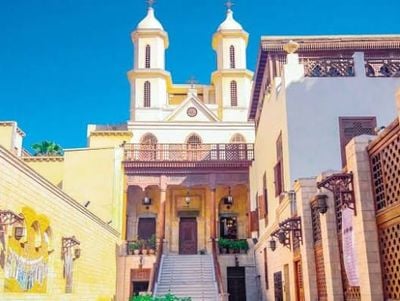
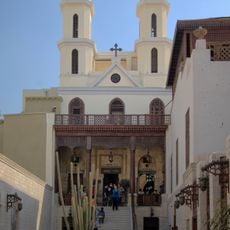
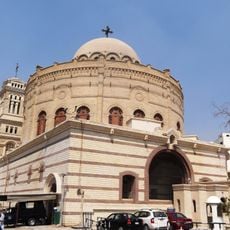
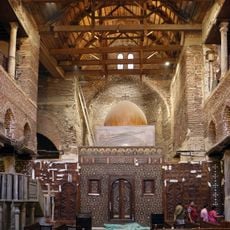
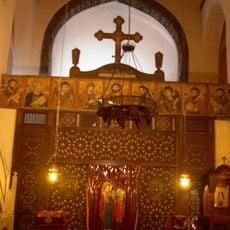
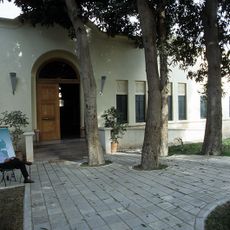
The Hanging Church (al-Kanisa al-Mu'allaqa) is a Coptic Orthodox church in Coptic Cairo whose nave rests above a gatehouse of the Roman Babylon Fortress. Its 19th-century cream facade has twin bell towers topped with small domes, a triangular pediment with a round window and cross, and a recessed portico with dark wooden columns and gold Arabic script above the door. The interior has a dark wooden ceiling, a brass chandelier, pale stone columns, and an ebony-and-ivory iconostasis.
The church was first mentioned in the biography of Patriarch Joseph I (831–849), was largely rebuilt under Pope Abraham (975–978), and was partially destroyed in 840 by governor Ali ibn Yahia. In 1047 it became the official residence of the Coptic pope. A chapel ceiling collapsed in 1983, and the 1992 earthquake led to a restoration completed in 2011.
The church keeps 110 icons, the oldest from the 8th century, though most are 18th-century; some were donated in 1898 by Boutros Pasha, then overseer of the church. The ebony iconostasis inlaid with ivory carries a row of icons of the Virgin and the Twelve Apostles, and the main altar screen shows Coptic crosses from about the 12th or 13th century.
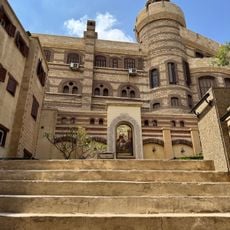
The site is accessible during daylight hours and visitors can climb the stairs to explore the interior, with modest dress being respectful. The surrounding area features narrow streets, so plan extra time to navigate through the densely built historic neighborhood.
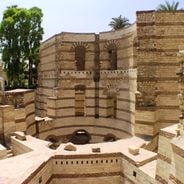
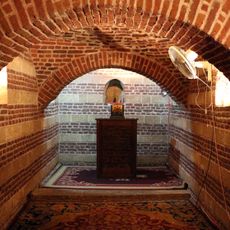
The church's nave hangs over a passage of the Babylon Fortress, whose south bastions once framed the main gate; the old atrium entrance below still has niched walls that held statues, later reinforced with superimposed columns and brick arches. Ten wooden door panels carved with Christian iconography in 1300 AD are now in the British Museum.
The community of curious travelers
AroundUs brings together thousands of curated places, local tips, and hidden gems, enriched daily by 94,691 contributors worldwide.