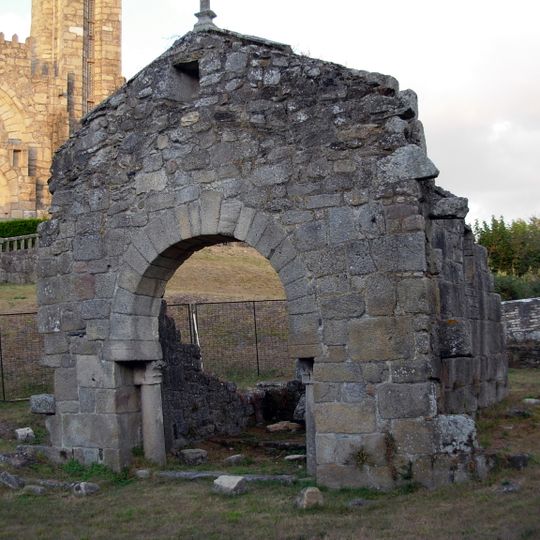
Arco visigótico de Panxón, Pre-Romanesque arch ruins in Panxón Nigrán, Spain
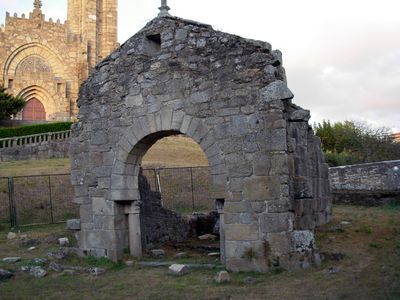
The Arco visigótico de Panxón is a pre-Romanesque ruin where ancient temple remains lie beneath modern structures. The horseshoe-shaped arch rests on two smooth columns with Corinthian capitals and is built from 21 wedge-shaped stones of varying sizes.
The structure was initially classified as a Visigothic work from the 6th century, but carbon dating in 2016 revealed it actually dates to the 10th century. Excavations during the 1980s uncovered the foundations of an older temple with a Greek cross layout beneath it.
The arch shows Germanic influences reflected in local medieval building techniques. The blend of foreign style features with regional craftsmanship makes the site evidence of cultural exchange during that period.
The monument sits several meters below the current church level and is protected by metal mesh fencing. It remains visible to visitors year-round, though the surrounding church grounds should be respected.
The site shows layers of rebuilding throughout history, with ancient Germanic temple foundations lying beneath the 17th-century church modifications. These stacked structures tell the story of overlapping sacred spaces built over centuries.
The community of curious travelers
AroundUs brings together thousands of curated places, local tips, and hidden gems, enriched daily by 90,881 contributors worldwide.