Well of Moses, Medieval monument in Champmol, France
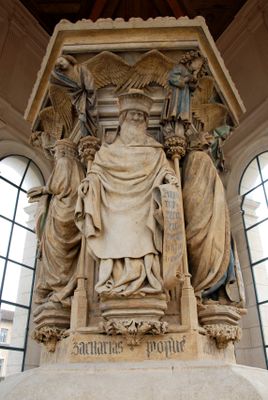
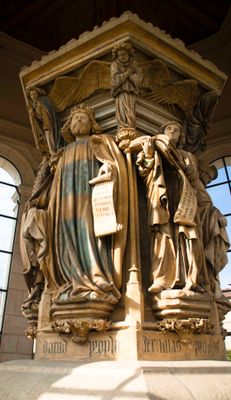
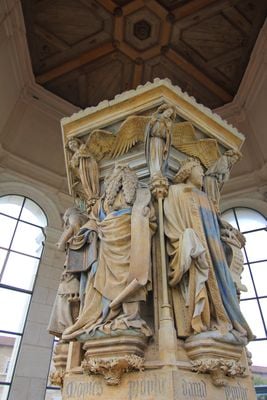
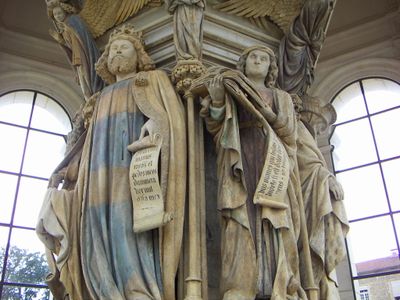
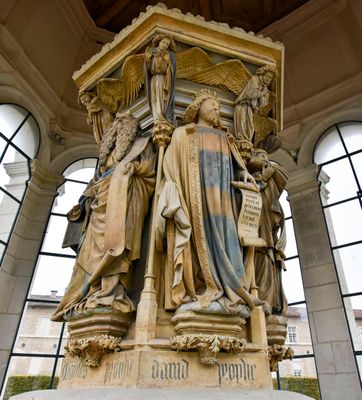
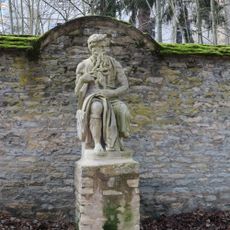
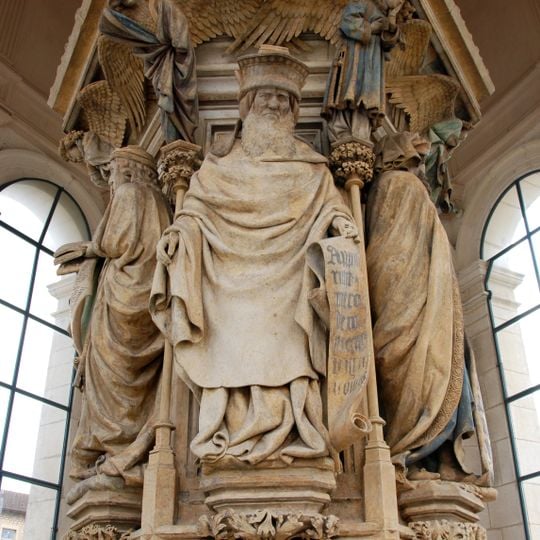
The Well of Moses stands in a monastery garden as a monument displaying six life-sized prophet and angel sculptures carved from limestone on a hexagonal base. The figures reach approximately seven meters high and once surrounded a functioning well beneath the Carthusian monastery of Champmol.
Created between 1395 and 1403 by Dutch sculptor Claus Sluter for the Carthusian monastery under Duke Philip the Bold, this monument marks a major achievement of late medieval sculpture. The project reflected the duke's ambition to establish his family as a leading cultural force in Europe.
The prophet figures on the hexagonal base represent biblical predictions of Christ's crucifixion, reflecting the religious meaning of this sacred site.
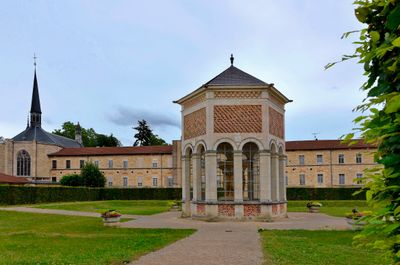
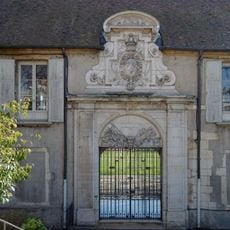
The monument sits in the garden of the former monastery, now the Hospital of Chartreuse, and is visible from the courtyard area. Original painted fragments and additional sculptures from the site can be viewed at Dijon's Archaeological Museum for a fuller understanding of the original design.
One of the prophet sculptures bears the facial features of Duke Philip the Bold himself, blending earthly and spiritual authority in an unusual way for the time. The original burgundy-colored paintwork survives only in fragments displayed separately at the museum.
The community of curious travelers
AroundUs brings together thousands of curated places, local tips, and hidden gems, enriched daily by 60,000 contributors worldwide.