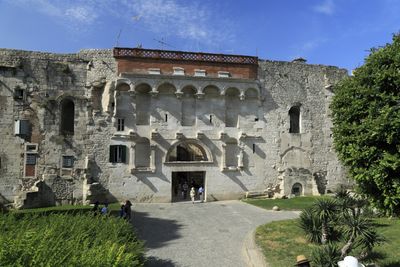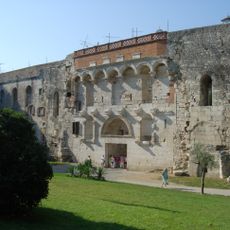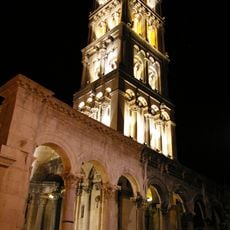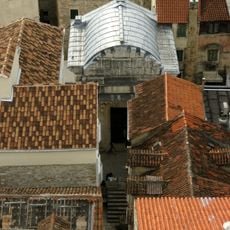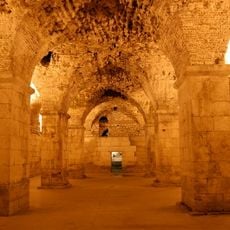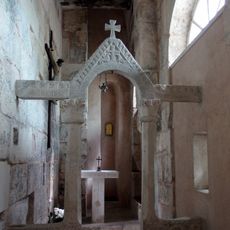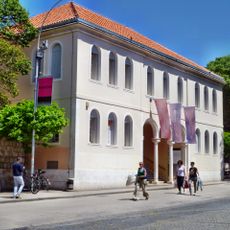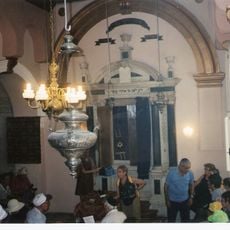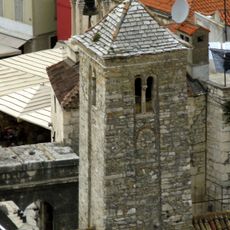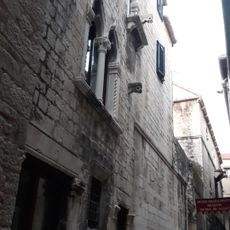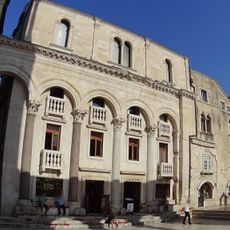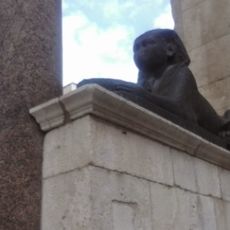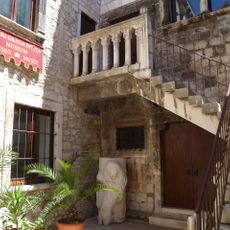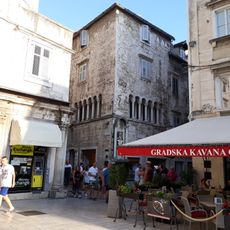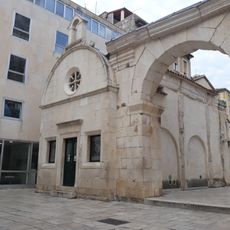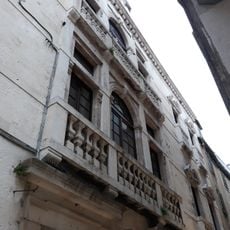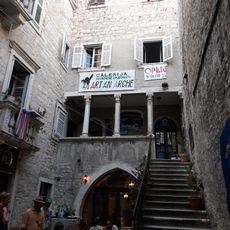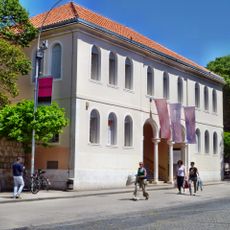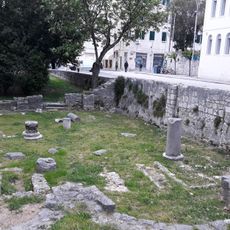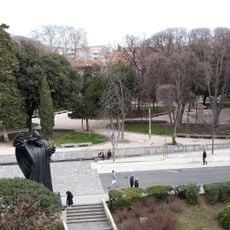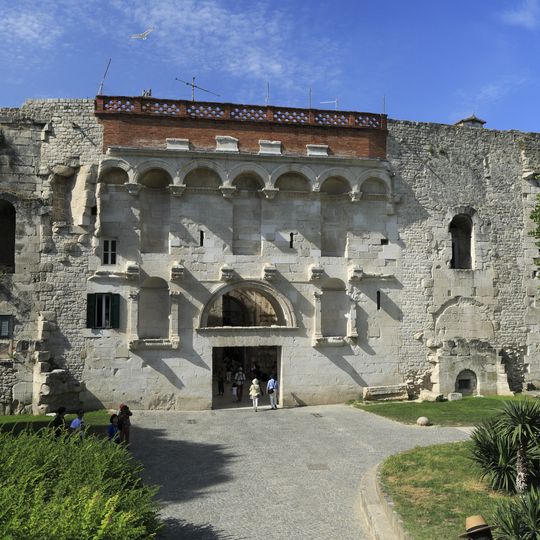
Golden Gate, Memorial gate in Diocletian's Palace, Split, Croatia.
The Golden Gate is the northern gate of Diocletian's Palace in Split, Croatia, and is the best-preserved of the palace's four original gates. It has two levels with arched niches that once held sculptures, and a wide passageway connecting the outside city to the inner Cardo street.
The gate was built around 300 AD as Porta Septemtrionalis and served as the main entrance used by Emperor Diocletian when he retired to his palace in 305 AD. Venetian authorities gave it its current name in the 16th century.
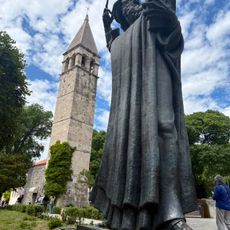
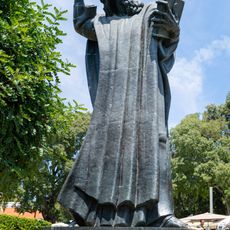
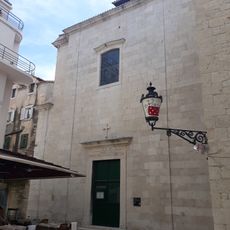
Above the outer passage sits a small church dedicated to Saint Martin, still in use today. Just outside the gate stands a large statue of Gregory of Nin, a 10th-century Croatian bishop, whose toe visitors traditionally touch for good luck.
The gate is on the northern side of Diocletian's Palace and is easy to reach from both the old town and the nearby Strossmayer Park. It can be viewed from outside at any time, and it makes a good starting point for a walk to the palace's other three gates.
Although the gate has been called the Golden Gate since the 16th century, it contains no gold or gilded decoration of any kind. The name most likely refers to its former role as the main entrance through which the emperor himself entered the complex.
The community of curious travelers
AroundUs brings together thousands of curated places, local tips, and hidden gems, enriched daily by 92,618 contributors worldwide.