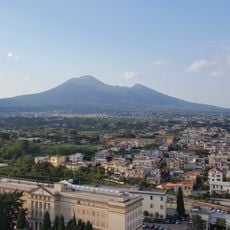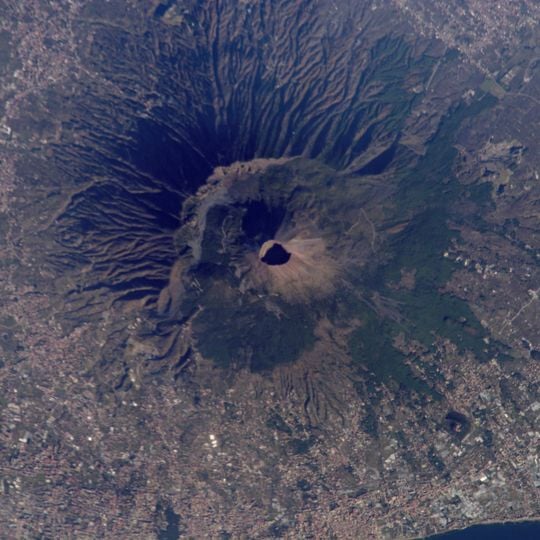
Mount Somma, Stratovolcano in Metropolitan City of Naples, Italy.
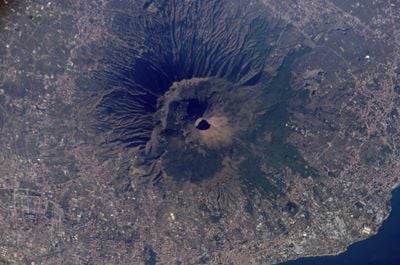
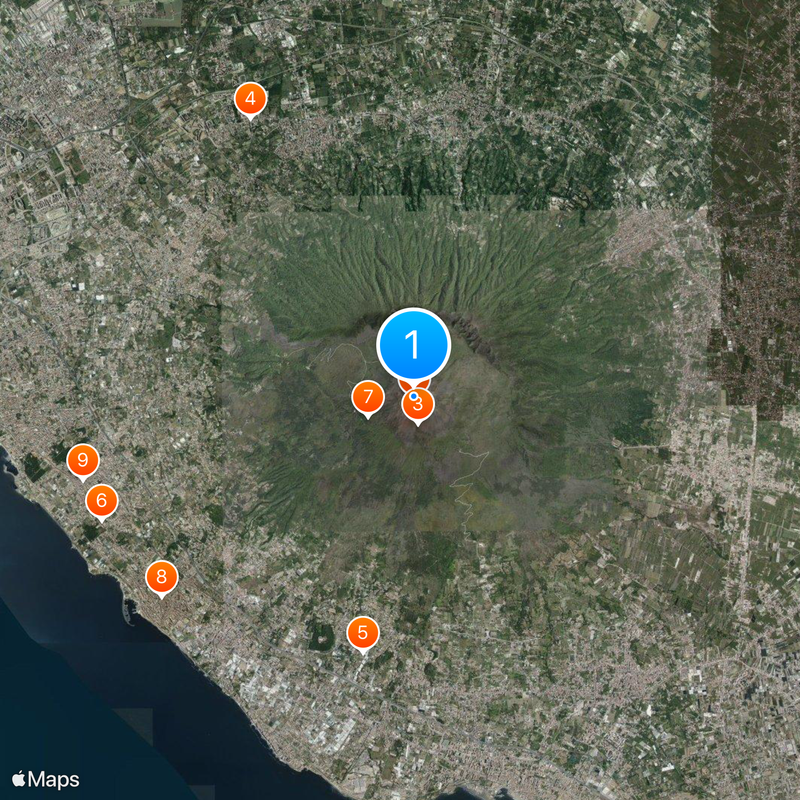
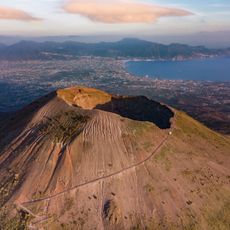
Mount Somma forms a semicircular ridge on the northern side of Vesuvius, reaching an elevation of 1132 meters above sea level. This ridge partially encircles the younger volcanic cone, creating a distinctive geological structure in the Gulf of Naples.
The caldera formed around 25,000 years ago through a major eruption, which later enabled the emergence of Vesuvius from its center. This geological development changed the entire landscape of the region and shaped later volcanic activity.
The highest point carries the name Punta del Nasone, a designation given by King Ferdinand I during his rule over the Two Sicilies. This name refers to the characteristic shape of the summit, which stands out clearly from the rest of the ridge.
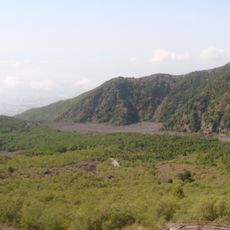
Multiple hiking trails cross the 1944 lava flow areas, allowing visitors to observe the geological formations and mediterranean vegetation throughout the year. The paths offer different difficulty levels and suit both short walks and longer hikes along the ridge.
This formation serves as the namesake for somma volcanoes, a classification describing volcanic calderas partially filled with newer central cones. Geologists worldwide use this term to refer to similar structures on other continents.
The community of curious travelers
AroundUs brings together thousands of curated places, local tips, and hidden gems, enriched daily by 90,888 contributors worldwide.