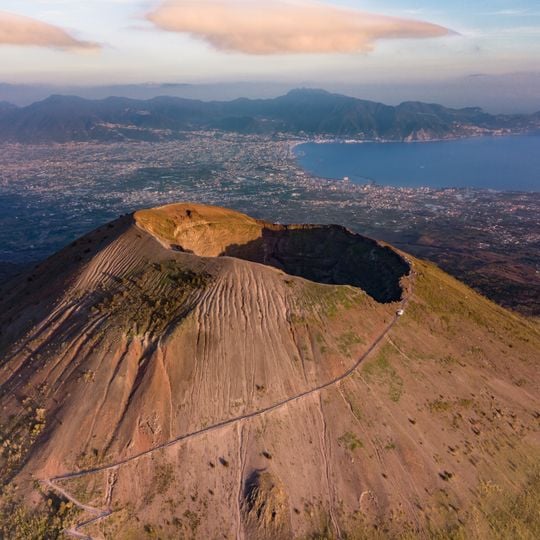
Mount Vesuvius, Active volcano in Naples metropolitan area, Italy
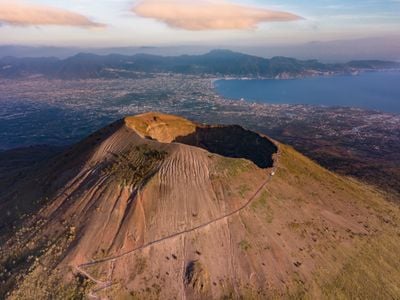
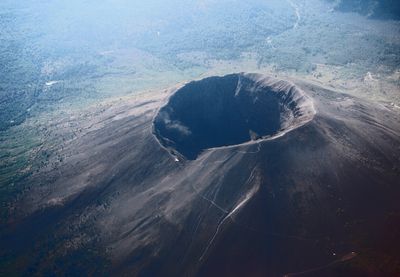
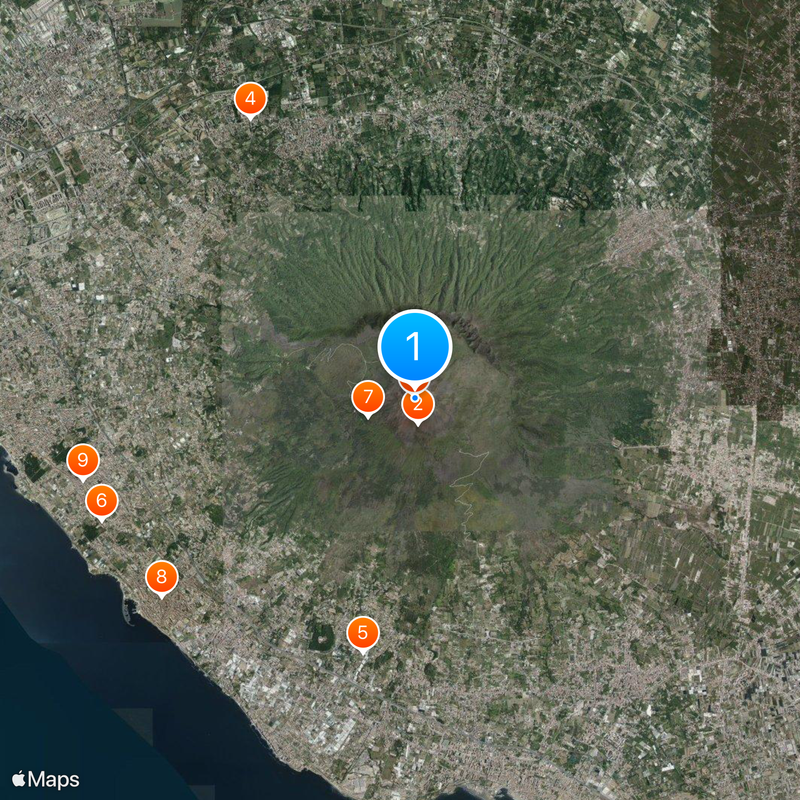
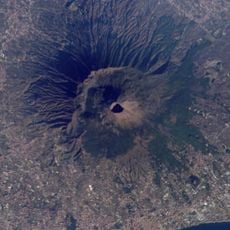
Vesuvius is a stratovolcano near Naples with a summit at 1281 meters (4203 feet) above the gulf, where a crater measures 450 meters (1476 feet) across and 300 meters (984 feet) deep. Fumaroles along the inner walls continue releasing gases, while solidified lava flows and ash deposits mark the slopes from multiple eruptions.
The eruption in 79 destroyed Roman settlements at Pompeii and Herculaneum, preserving them under volcanic deposits for later excavation. Later major events took place in 1631 with roughly 4000 deaths, followed by activity in 1906 and the most recent recorded eruption in 1944.
Farmers at the base continue to plant vines on slopes with volcanic soil, where Lacryma Christi and Verdeca grapes grow amid layers of ash that influence each growing season. Around the crater, daily life goes on with warning systems monitoring every slight movement below the summit for decades now.
Visitors reach the summit through trails starting at the national park entrance at 1000 meters (3281 feet), requiring roughly 30 minutes of walking. Paths close during bad weather or heightened seismic activity, and guided tours offer geological insights along the route with rest points positioned at intervals.
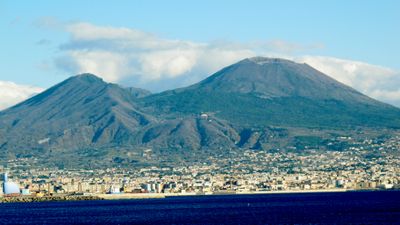
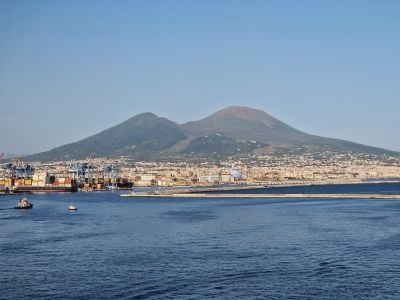
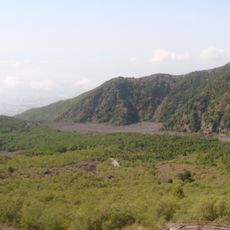
The double structure shows Monte Somma's older crater partially enclosing the younger cone, separated by Valle del Gigante valley. This formation came from the collapse of an older caldera roughly 17000 years ago, creating a horseshoe ring still visible as the northern rim today.
The community of curious travelers
AroundUs brings together thousands of curated places, local tips, and hidden gems, enriched daily by 90,755 contributors worldwide.