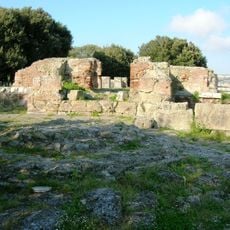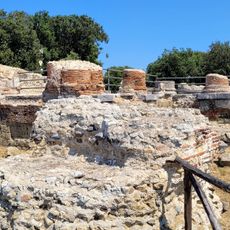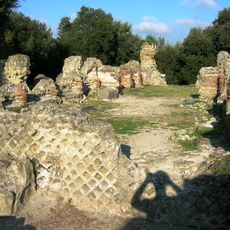
Lake Avernus, Volcanic crater lake in Campania, Italy.
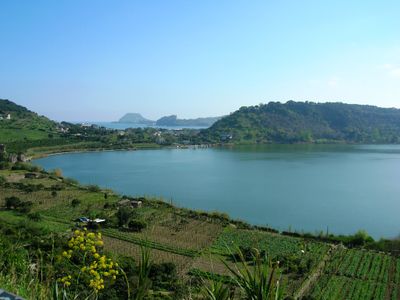
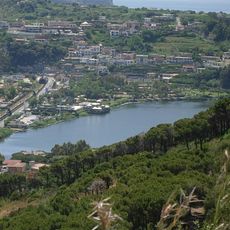
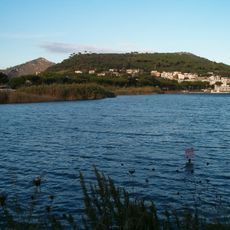
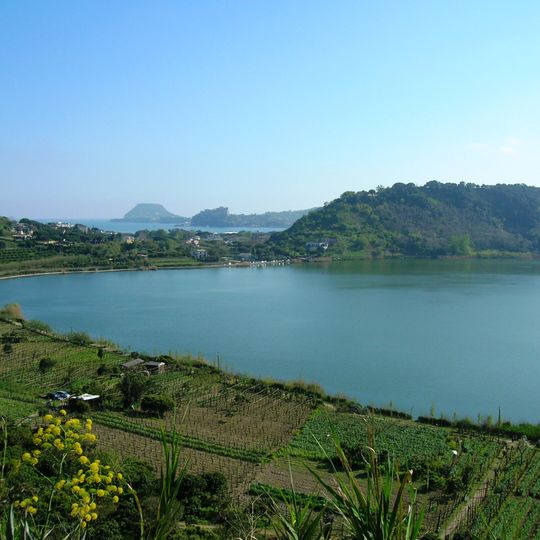
Lake Avernus is a roughly circular volcanic crater lake in the Campania region, about 4 kilometres west of Pozzuoli, within the Phlegraean Fields. It measures two kilometres in circumference and is 60 metres deep. The water fills a rounded basin bordered by a thin band of pale earth and low vegetation, with green hills rising on the right and a low hill and small rocky islet on the horizon.
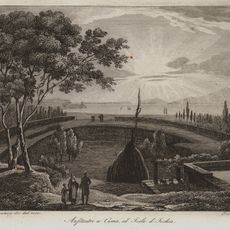
The lake formed from volcanic activity in ancient times and was dramatically altered by Roman engineering. In 37 BC, the Romans built a canal to connect the basin to the sea, creating a major naval port that served their fleet.
The name Avernus likely comes from the Greek aornos, "without birds", though some scholars link it to a root meaning "abyss". Roman writers used the name as a synonym for the underworld itself, and Virgil has Aeneas descend to Hades through a cave near the shore in the Aeneid. In Hyginus' Fabulae, Odysseus also reaches the lower world from this spot and meets his lost comrade Elpenor.
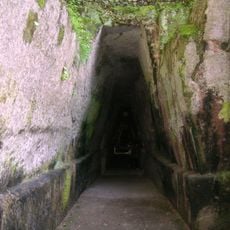
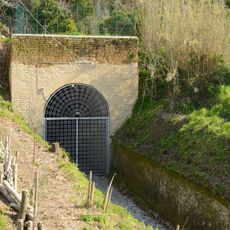
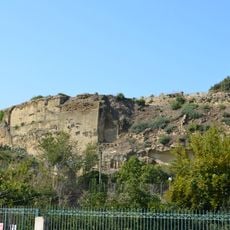
The lake lies in a crater about 4 km west of Pozzuoli, between Lucrino and the Cumae archaeological site, reached by road from the Phlegraean Fields. The water sits roughly 40 m below the rim, so the walk down and back up is steep. The Grotta di Cocceio, the Roman tunnel to Cumae, has been closed since wartime damage made it unsafe.
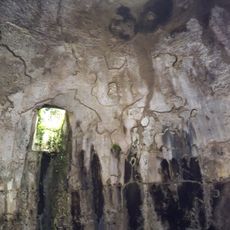
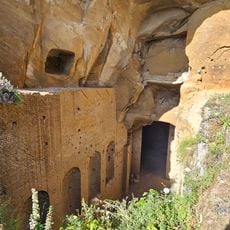
A tunnel carved through stone near the lake in Roman times remains one of the longest such passages ever created by hand in that era. This underground passage connected two harbors and demonstrates Roman engineering skill in working through difficult terrain.
The community of curious travelers
AroundUs brings together thousands of curated places, local tips, and hidden gems, enriched daily by 94,749 contributors worldwide.