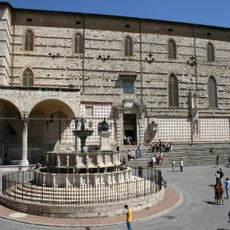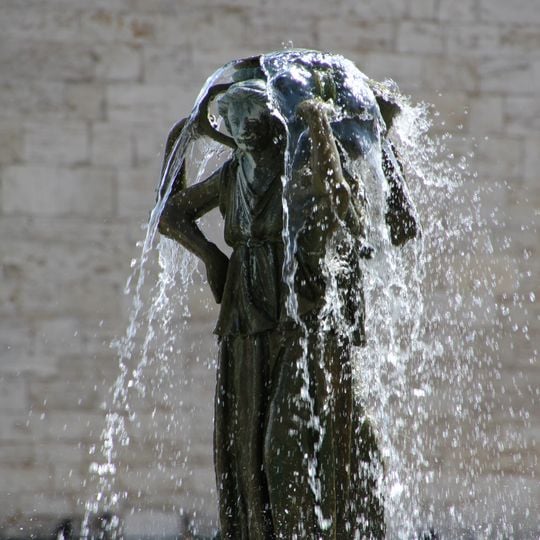
Fontana Maggiore, Proto-Renaissance water well in Piazza IV Novembre, Perugia, Italy
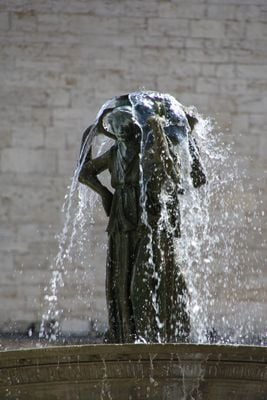
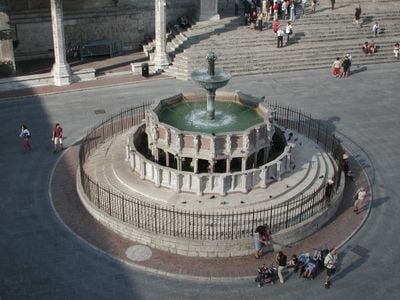
Fontana Maggiore is a fountain made of two stacked polygonal marble basins standing on Piazza IV Novembre in Perugia. Between the basins are twenty-four niches holding statues carved from white Carrara marble, and the panels are cut from pink Assisi stone.
Nicola Pisano, his son Giovanni and Arnolfo di Cambio built the fountain in 1275 to celebrate the new aqueduct from Monte Pacciano. The water reached the city through gravity and supplied the upper square without the use of pumps.
The lower reliefs show scenes like grain harvest, pig slaughter and wine pressing, all tied to the farming calendar. These carvings run around the basin and offer a direct view of thirteenth-century daily routines.
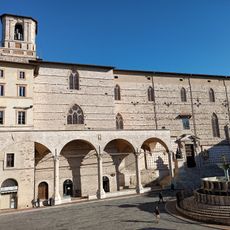
The fountain stands freely on the square in front of the cathedral, so you can walk around it from all sides. The square is usually busy, especially in the late afternoon when locals and travelers gather near the basin.
The upper bronze cup was divided into three bowls, each filled with water so that the overflow pours into the bowl below. The Latin inscriptions on the lower frame explain the symbolism of the reliefs and link theological texts with worldly references.
Location: Perugia
Inception: 1275
Architects: Nicola Pisano, Giovanni Pisano, Arnolfo di Cambio
Creator: Nicola Pisano
Architectural style: Proto-Renaissance
Made from material: marble, bronze
GPS coordinates: 43.11210,12.38880
Latest update: December 5, 2025 22:26
Italian historic fountains demonstrate five centuries of craftsmanship in sculpture, hydraulic engineering, and urban design. From the 15th to the 19th century, Italian artisans shaped marble, bronze, and stone to create works combining practicality and artistic expression. These fountains tell stories from classical mythology, such as Neptune and marine deities, or from the Bible, like Moses drawing water from the rock. They also celebrate the political power of great families and the identity of Italian cities. In Rome, the Trevi Fountain extends 86 feet (26 meters) high with baroque sculptures, while Bernini's Fountain of the Four Rivers symbolizes continents on Piazza Navona. In Florence, Neptune sits above the Piazza della Signoria, recalling the Medici family's maritime ambitions. The gardens of Villa d'Este in Tivoli feature 51 fountains spread across multiple terraces, showcasing Renaissance hydraulic mastery. These works reveal how water has shaped Italy’s architecture and urban life, from papal Rome to squares in Palermo and Siena.
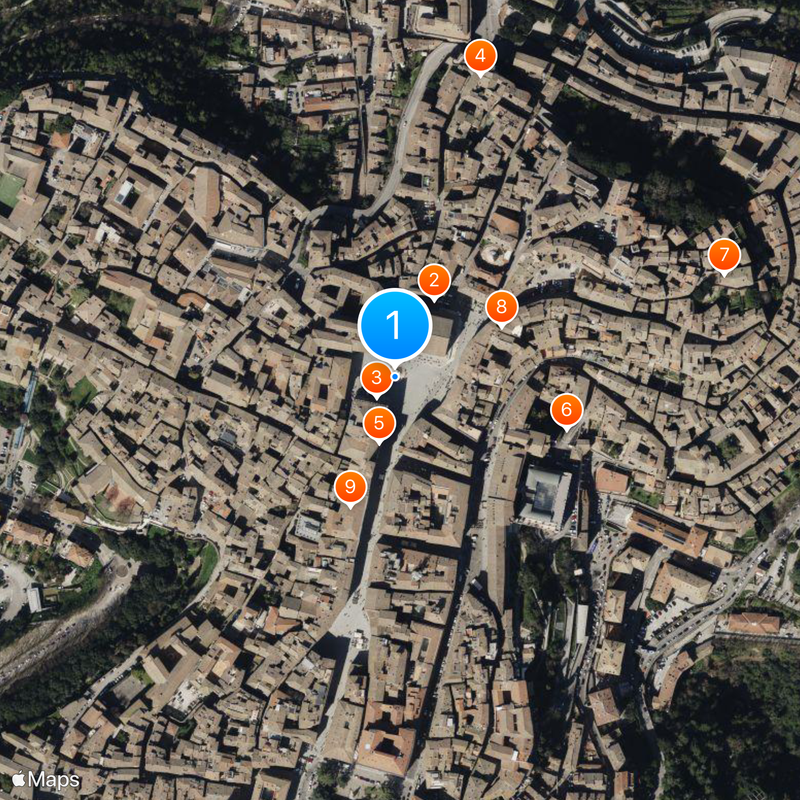
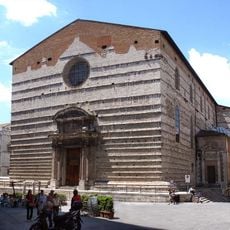
Perugia Cathedral
73 m
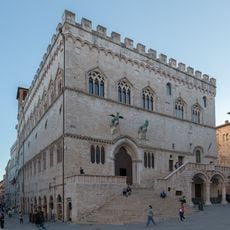
Palazzo dei Priori
23 m
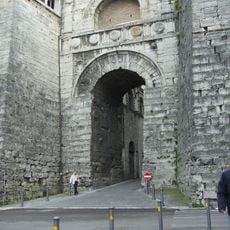
Etruscan Arch
266 m
National Gallery of Umbria
57 m
Perusia
153 m
San Severo Chapel
293 m
Pozzo Etrusco
100 m
Collegio del Cambio
116 m
City wall of Perugia
287 m
Palazzo del Capitano del Popolo (Perugia)
147 m
Collegio della Mercanzia
116 m
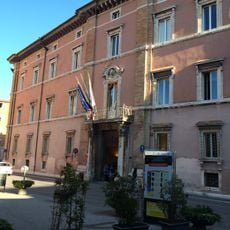
Palais Sorbello
65 m
Museo dell'Opera del Duomo
31 m
National Gallery
56 m
Teatro del Pavone
214 m
San Severo
298 m
Etruscan Well
101 m
Palazzo Manzoni (Perugia)
214 m
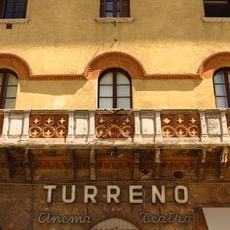
Teatro Turreno
97 m
San Benedetto
296 m
Palazzo Conestabile della Staffa
221 m
Palazzo Donini
303 m
Chiesa di San Fortunato
287 m
Church of the Compagnia della morte
182 m
Teatro Morlacchi
214 m
Capitularies Museum of Saint Lorenzo
41 m
Palazzo Baldeschi al Corso
192 m
Sala udienza del Nobile Collegio della Mercanzia
57 mReviews
Visited this place? Tap the stars to rate it and share your experience / photos with the community! Try now! You can cancel it anytime.
Discover hidden gems everywhere you go!
From secret cafés to breathtaking viewpoints, skip the crowded tourist spots and find places that match your style. Our app makes it easy with voice search, smart filtering, route optimization, and insider tips from travelers worldwide. Download now for the complete mobile experience.
A unique approach to discovering new places❞
— Le Figaro
All the places worth exploring❞
— France Info
A tailor-made excursion in just a few clicks❞
— 20 Minutes