Yawata no Yabushirazu, Sacred bamboo grove in Yawata, Ichikawa, Japan
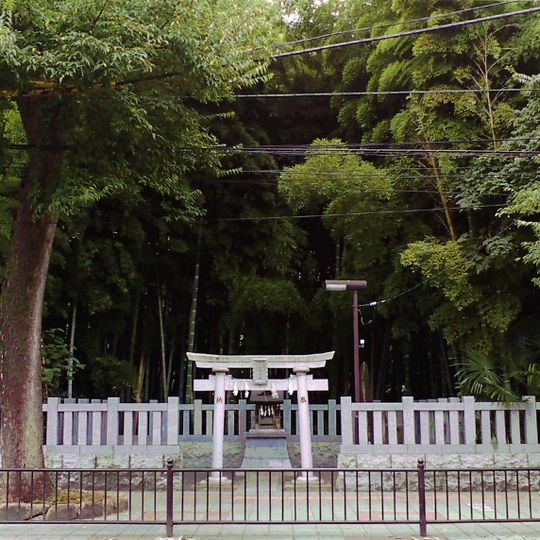
Yawata no Yabushirazu is a grove in Yawata, Ichikawa, Japan, measuring about 18 meters deep and wide, with a hollow in the center. Once a mixed wood of bamboo, lacquer, pine, cedar, oak and chestnut, it is now mostly taken over by moso bamboo, with only a few trees left. A small shrine and an 1857 stone stele stand outside the fenced grove.
The grove appears in Edo-period texts from 1749 onward, including the Kashika-ki and the Edo meisho zue of 1829. Explanations linked it to Yamato Takeru, Taira no Masakado and his followers, and later to a tale of Mito Komon. In the Meiji era, maze attractions imitating the grove became popular, and a kabuki play, Kōmon-ki Yawata Ōyabu, was staged in 1878.
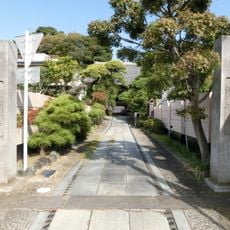
A small shrine stands at the entrance, showing the link between natural places and supernatural forces in Japanese belief. Visitors can see how the local community continues to hold respect for this site, treated for centuries as a boundary between everyday life and unknown realms.
The grove stands near Moto-Yawata Station on the Sobu Line and is clearly marked by a stone fence and warning signs. Visitors can view the outer areas, but should note that entry is not recommended due to disorientation risks and uneven vegetation.
In the Edo period, entrepreneurs built maze-like groves imitating this forest, charging admission and giving prizes to those who found their way out; the fad returned around 1878 and became a craze, and a kabuki play titled Kōmonki Yawata Ōyabu was staged in 1878.
The community of curious travelers
AroundUs brings together thousands of curated places, local tips, and hidden gems, enriched daily by 93,782 contributors worldwide.