Japan Vertical Datum, Geodetic benchmark in Nagatachō, Japan
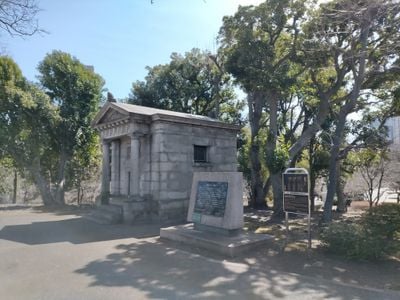
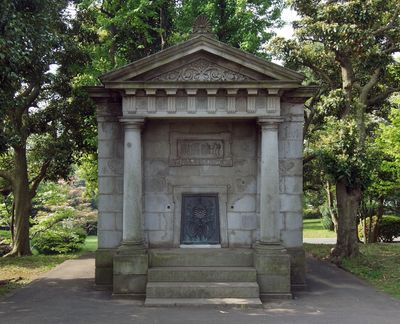
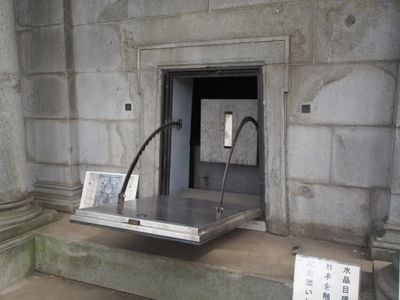
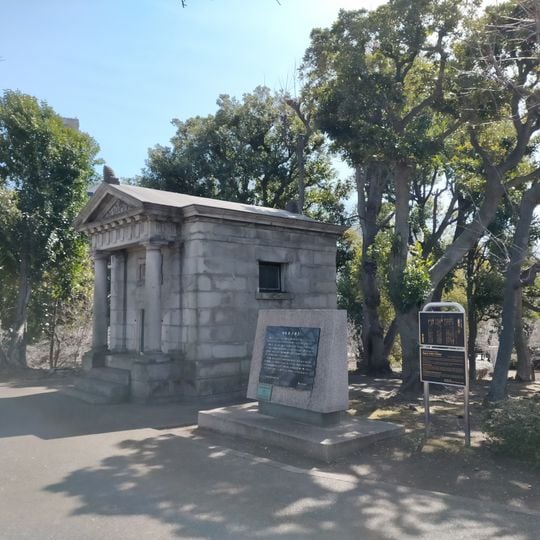
The Japan Vertical Datum is a small stone shelter, the Nihon Suijun Genten Hyōko, in the grounds of the Parliamentary Museum in Nagatachō. Built of light grey stone blocks, it imitates a Roman temple: four columns carry a triangular pediment above the doorway, and a small square window sits in the right side wall. The datum itself is a black lid with a chrysanthemum emblem inside; the building only protects it. It measures 14.93 m² in area, 3.75 m to the eaves and 4.3 m in total height.
The reference point was established in May 1891 and marked the beginning of standardized elevation measurements across the Japanese archipelago. This innovation supported nationwide surveying activities and contributed to the development of accurate maps during the country's modernization.
The name refers to the reference point for all height measurements in the country and connects western geodesy with Japanese precision. Visitors today see a technical monument from the time when Japan modernized its cartographic systems and adopted international standards.
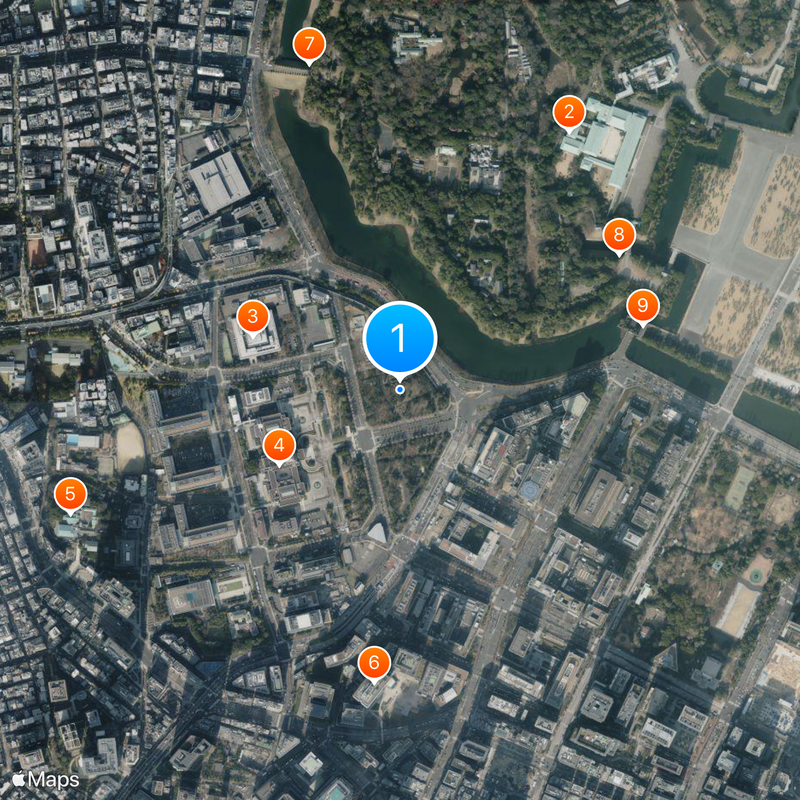
The stone shelter stands in the Western-style garden of the National Diet Front Garden, in the northern section on the grounds of the Constitution Memorial Hall, not inside a museum building. The datum point itself is hidden under a black lid bearing a chrysanthemum emblem inside the shelter. The site is opened to the public for about a week each year in late May.
The granite stone has fulfilled the same function for over 130 years and continues to provide data for monitoring land movements. This continuity makes it one of the oldest active geodetic instruments in East Asia.
The community of curious travelers
AroundUs brings together thousands of curated places, local tips, and hidden gems, enriched daily by 93,338 contributors worldwide.