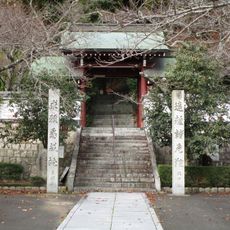
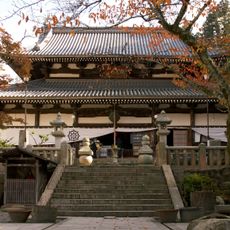
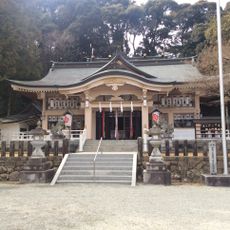
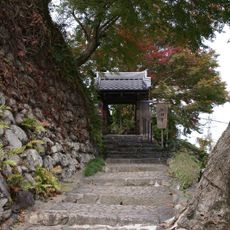
Arima-jinja, Shinto shrine in Kita-ku, Kobe, Japan
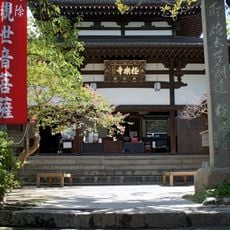
Arima-jinja is a Shinto shrine in Arino-cho, Kita-ku, Kobe, Hyogo Prefecture. Its current main hall, a three-bay nagare-zukuri structure, was rebuilt in 1796; a reinforced-concrete worship hall was added after World War II. The grounds cover about 28,000 square meters and include a grove of chinquapin trees, part of which is a Kobe City natural monument.
The shrine stood at Sannō-dani in Yamaguchi-shō Nago village before a flood of the Arima River in 715 (Reiki 1) washed away the hall; a divine oracle moved it to its present site in Nishio, Arino. Emperor Jomei is said to have visited in 631, and the shrine appears in the 927 Engishiki register. The hall burned in the Miki campaign of 1580 and again in 1622 and 1789; the current honden dates from 1796.
The name Arima is an older written form of Arima (有馬), and the shrine was once called Sannomiya because it stood in Sannodani. Its old name, Sannomiya, was linked by sound to "birth cord", so it became a shrine for safe childbirth; the otabisho holds a Ko-yasu-ishi, a stone where pregnant women prayed and mothers purified themselves with their newborns in the river after delivery.
The shrine is a 10-minute walk from Okaba Station on the Kobe Electric Railway Sanda Line. The grounds cover about 28,000 square metres, and the main hall stands after a short climb; the former site of the shrine's Buddhist temple is now a parking lot.
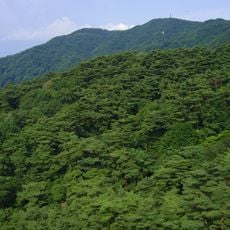
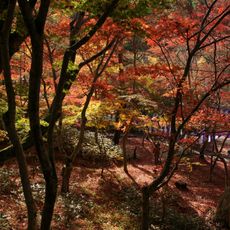
The shrine's grove covers about 28,000 square metres and is listed among the Hyogo no Mori 100 selections. Within it, a roughly 7,000-square-metre stand of shii oak was designated a Hyogo Prefecture environmental green space conservation area and a Kobe City natural monument on 24 February 1999.
The community of curious travelers
AroundUs brings together thousands of curated places, local tips, and hidden gems, enriched daily by 93,359 contributors worldwide.