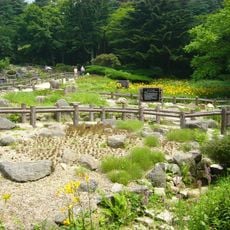
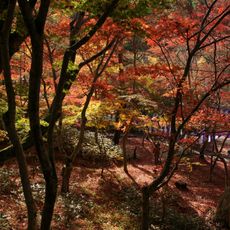
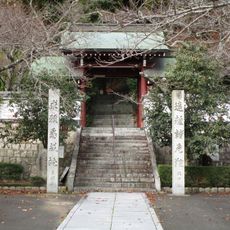
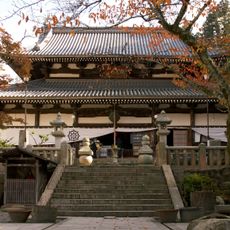
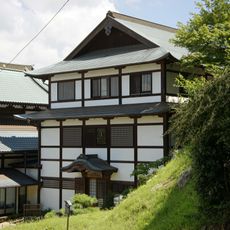
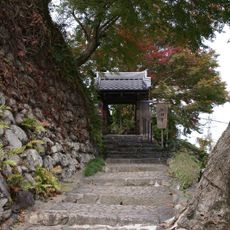
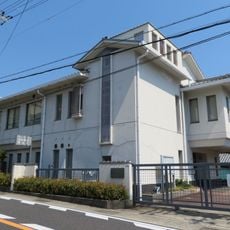
Gokuraku-ji, Buddhist temple in Arima Onsen, Japan.
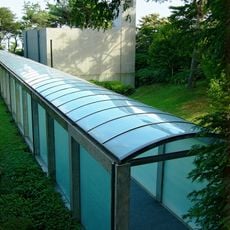
Gokuraku-ji is a Jōdo-shū temple in Arima, Kobe, with the mountain name Jakujō-zan and the cloister name Denbō-in. Its main hall and kuri were rebuilt in 1782 after a fire in 1774. The grounds also hold the Kobe City Taikō no Yudono-kan, opened in 1999, which displays the remains of Toyotomi Hideyoshi's Yuyama Goten bathhouse.
According to tradition, Prince Shōtoku founded Gokuraku-ji in 593, enshrining a Kannon image carved by Kuratsukuri no Tori. A flood destroyed it in 1097; Kawakami Korekiyo, who followed the monk Ninsai in reviving Arima Onsen, moved it to its present site in 1191. Hōnen was invited and the temple became a nenbutsu practice hall, later renamed Jakujōzan Denbō-in. It burned in 1774 and was rebuilt in 1782.
Gokuraku-ji is the first stop on the Arima district's Saigoku Kannon pilgrimage, followed by Nenbutsu-ji. Its main image is an Amida Buddha, and the temple holds a miniature shrine donated by Keishō-in, mother of Tokugawa Tsunayoshi, plus a fire-prevention Kannon attributed to Kuratsukuri no Tori.
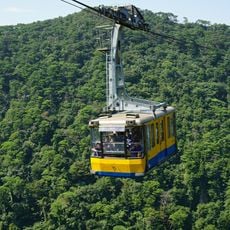
Gokuraku-ji stands at Arimachō 1642, a 7-minute walk from Arima Onsen Station on the Kōbe Electric Railway and 10 minutes from the Rokko-Arima Ropeway station. Onsen-ji, Nenbutsu-ji and Yushin Shrine are each about a minute away, and the Gin-no-yu bath about two. The Taikō no Yudono-kan, built over the Toyotomi Hideyoshi bath remains, opened to the public in 1999.
The temple's storehouse, rebuilt in 1782, was half-destroyed in the 1995 Great Hanshin-Awaji earthquake; repairs revealed the foundations of Toyotomi Hideyoshi's Yuyama Palace bathhouse beneath it. The excavated remains, with pottery and roof tiles, became a Kobe City historic site in 1997 and are shown in the Kobe City Taiko-no-Yudono-kan, opened on the spot in 1999.
The community of curious travelers
AroundUs brings together thousands of curated places, local tips, and hidden gems, enriched daily by 93,849 contributors worldwide.