Syouwa-o-hashi, Niigata, Steel bridge in Chuo, Niigata, Japan
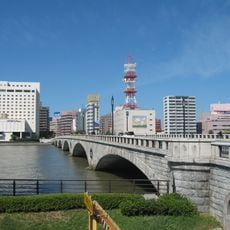
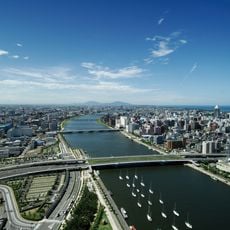
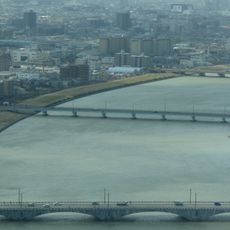
Syouwa-o-hashi is a steel bridge crossing the Shinano River with separate lanes for vehicles and pedestrians on its wide deck. The structure connects neighborhoods on either side of the river and remains an important route through the city.
A first wooden bridge, then called Shōwa Bridge, was built in 1931, two years after the third Bandai Bridge opened. It was replaced by a second wooden bridge in 1950, which had no separation between footway and roadway. Road works for the 1964 National Sports Festival brought the current steel bridge, completed in May 1964 and renamed Shōwa Ōhashi.
The bridge's name changed from Showa-bashi to Showa-o-hashi in 1964, when the current steel structure replaced a wooden bridge ahead of the 19th National Sports Festival (Niigata Kokutai). The 1964 Niigata earthquake, about a month after opening, became a reference point for liquefaction damage and led to mandatory anti-fall structures on bridges.
The bridge carries Niigata Prefectural Route 164 (Hakusan Station–Meike line) with four vehicle lanes and cycle-pedestrian paths on both sides. It is the fourth bridge from the Shinano River mouth, between the JR Echigo Line railway bridge upstream and the Yachiyo Bridge downstream. From the Yasuragi embankment on the riverbank you can see the piers that remain tilted and the girders jutting out.
Five of the twelve spans collapsed in the 1964 Niigata earthquake, about a month after the bridge opened, when liquefaction buried two piers and tilted others. The five fallen spans were lifted, repaired and reused in the restoration, finished in December 1964. Some piers remain tilted today, visible from the Yasuragi embankment on the Shinano River bank.
The community of curious travelers
AroundUs brings together thousands of curated places, local tips, and hidden gems, enriched daily by 93,362 contributors worldwide.