Myōō-in, Buddhist temple in Jūniso, Japan
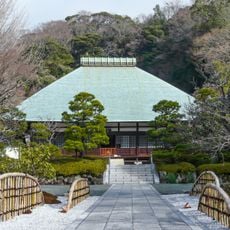
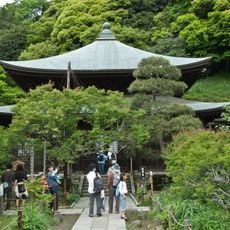
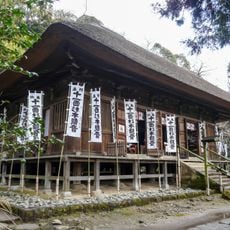
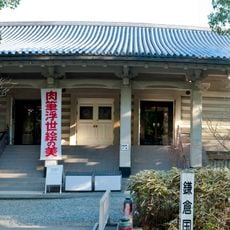
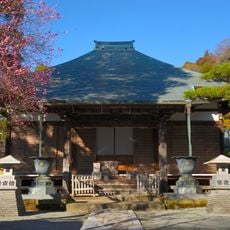
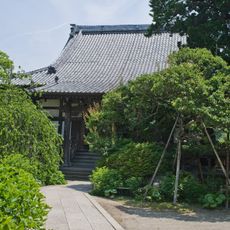
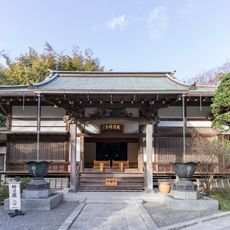
Myōō-in is a Shingon temple of the Sennyū-ji school in Jūniso, Kamakura, on the slope of Mount Iimori. Its main hall, the Godai-dō, enshrines five Myōō statues: the Fudō Myōō is a Kamakura-period work attributed to the sculptor Higo no Betto Jōkei, while the other four were made after a fire in the Kan'ei era (1624–1644).
Myōō-in was founded in 1231 by Kujō Yoritsune, the fourth shogun of the Kamakura shogunate, and its temple name Kangiji comes from the era name of that year. It was completed in 1235, when Jōgō, the head of Tsurugaoka Hachimangū, was invited as founding abbot. A fire in the Kan'ei era (1624–1644) destroyed the buildings, which were later rebuilt.
Myōō-in is the eighth stop on the Kamakura Kannon pilgrimage circuit. Its name, Myōō-in, refers to the five wisdom kings, and the temple is also called Godai-dō after its main hall. The main image is a seated Fudō Myōō attributed to the Kamakura-period sculptor Higo no Betto Jōkei.
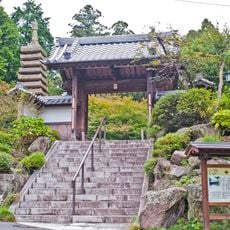
Myōō-in stands east of central Kamakura: leave the Kanazawa-kaidō road heading north and cross the Nameri River to reach it. The temple belongs to the Shingon-shū Sennyū-ji school and is the 8th stop on the Kamakura Kannon pilgrimage, so it is visited as part of that circuit.
The temple's honzon is a seated Fudō Myōō attributed by style to the Kamakura-period sculptor Higo no Betto Jōkei. It is the only Kamakura-era image among the five Myōō statues; the other four were made after the fire of the Kan'ei era (1624–1644). The temple is stop 8 on the Kamakura Kannon pilgrimage.
The community of curious travelers
AroundUs brings together thousands of curated places, local tips, and hidden gems, enriched daily by 93,606 contributors worldwide.