Nunakuma Shrine, Shinto shrine in Tomonoura, Japan
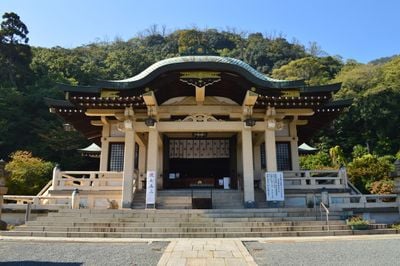
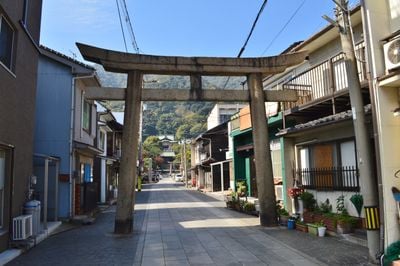
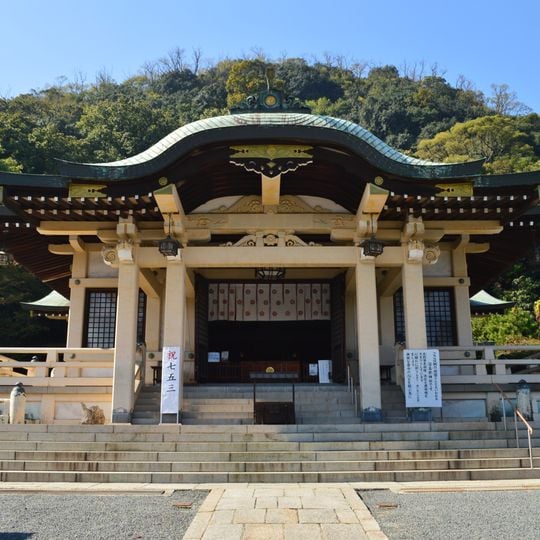
Nunakuma Shrine is a Shinto sanctuary in Tomonoura positioned on elevated terrain and marked by a traditional torii gate at its entrance. A series of stairs leads to the main worship building constructed from wood, which also houses an exceptional collapsible Noh stage as its architectural centerpiece.
The shrine took its present form in the Meiji era, when Watasu Shrine and Tomo Gion-gu were merged and renamed Nunakuma Shrine after a name in the Engishiki register. Watasu Shrine, linked to Empress Jingu's voyage, was moved here in the Keicho years as a sub-shrine of Gion-gu, which had burned in 1599. In 1876 the Watasu deity was installed in the main hall and the Gion deity moved to a side hall.
The shrine is commonly called "Gion-san" or "Ogyon-san", after its former identity as Tomo Gion-gu. Its July Gion festival begins with the Otobi rite, in which a great torch is carried up to the worship hall over an hour before the portable shrine is brought out and the torch purifies the grounds and streets. The February Oyumi archery rite, held at the Hachiman subsidiary shrine, is a city-designated intangible folk property.
The sanctuary is freely accessible, though reaching the main building requires climbing stairs on a sloped path from the entrance. Wear comfortable shoes and allow time to explore the surrounding Tomonoura area with its coastal character.
The Noh stage was assembled from numbered, marked parts so it could be taken apart and carried, reportedly even onto a battlefield. It stood in Fushimi Castle and was used by Toyotomi Hideyoshi before Tokugawa Ieyasu's son gave it to the Fukuyama daimyo Mizunokatsu, who moved it to Fukuyama Castle; Mizunokatsu's son donated it here in the Manji era (1658-1660). It was fixed in place in 1738, and the pine and bamboo painted on its front mirror panel date from the beginning.
The community of curious travelers
AroundUs brings together thousands of curated places, local tips, and hidden gems, enriched daily by 93,479 contributors worldwide.