Jindaiji Castle, Medieval castle ruins in Chofu, Japan
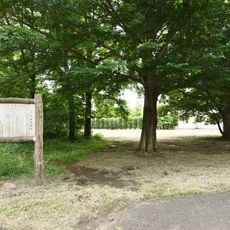
Jindaiji Castle is a Sengoku-period castle ruin in Jindaiji Motomachi, Chofu, Tokyo, within the aquatic botanical garden attached to Jindai Botanical Park. Its main bailey, about 50 by 90 meters, is ringed by earthen ramparts with flat gates on the north and south; the north gate led by a earth bridge to the second bailey, and a projecting watchtower platform at the northwest corner overlooked both the north gate and the dry moat. The second bailey, roughly 50 by 120 meters, lies west of the main bailey, and its western rampart has been partly restored.
Jindaiji Castle began as a small fort, possibly in the Kamakura period, and was rebuilt in 1537 by Uesugi Tomosada as a base against the Hōjō. Hōjō Ujitsuna bypassed it and attacked Kawagoe Castle directly, so the castle lost its value and was soon abandoned.
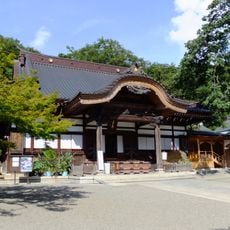
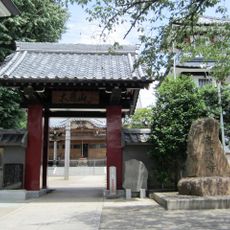
The castle stands on a rise facing Jindai-ji, an ancient temple on the neighbouring hill across a small valley and creek to the north. The castle lay at a junction of the west and middle routes of the Kamakura Kaidō, the road linking Kamakura with Kōzuke and Shimotsuke provinces. Visitors today walk between the temple and the castle ruins in the Jindai Botanical Garden.
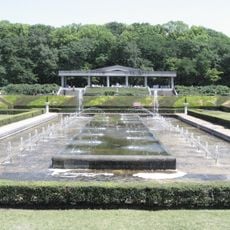
The ruins lie inside the Jindai Botanical Garden's aquatic botanical garden, a detached facility reached by bus from Mitaka Station on the JR Chūō Line. The western dry moat is now a road, and the third bailey was lost to housing, so follow the surviving earthworks of the inner and second baileys. The southern cut slope is thought to remain as it was.
The old castle moat has naturally turned into a wetland where rare water plants now grow, plants that have largely disappeared from the surrounding urban area. This makes the former moat one of the few places in this part of the Tokyo region where such plants can still be seen.
The community of curious travelers
AroundUs brings together thousands of curated places, local tips, and hidden gems, enriched daily by 93,403 contributors worldwide.