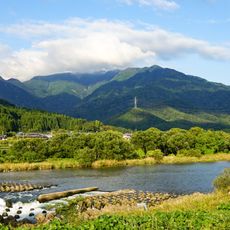
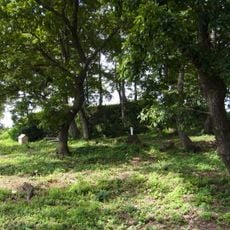
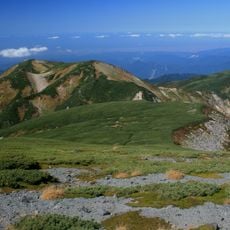
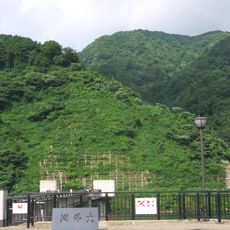
Mount Hōonji, Volcanic hill in Katsuyama, Japan.
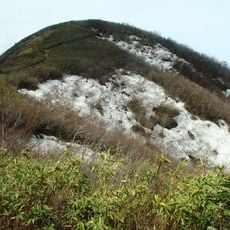
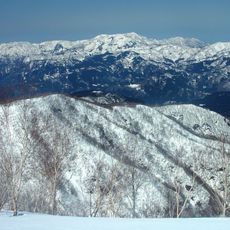
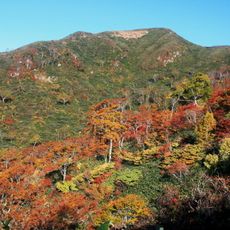
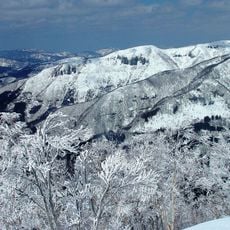
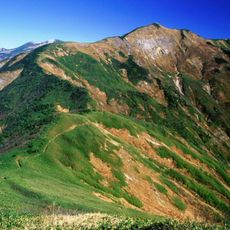
Mount Hōonji is a 1,357 m volcano on the border of Fukui and Ishikawa prefectures, in the Ryōhaku Mountains within Hakusan National Park. Its west face is a gentle slope and its east face steep; the summit area holds beech, Mongolian oak and Erman's birch woods, with a Japanese walnut grove found nowhere else in Fukui Prefecture. Just below the summit lie the remains of Hōonji-kyōji temple.
The mountain formed through volcanic activity and has long shaped the natural landscape around Katsuyama. Local communities developed their settlements and ways of living around this landmark, which served as a reference point in the region's geography and culture.
The mountain's name comes from Hōon-kyō-ji, the temple Taichō founded just below the summit when he opened Mount Hakusan; the temple site now holds a small hokora. The peak and the neighbouring Fushiogami point (1,360 m) served as places to worship Hakusan from afar, and the Echizen Zenjō-dō pilgrimage route from Heisenji Hakusan Shrine still passes through them.
The mountain is accessible year-round for hiking, with marked paths and information boards at entry points to guide visitors. Proper footwear and preparation for changing seasonal conditions will help make your visit more comfortable and safe.
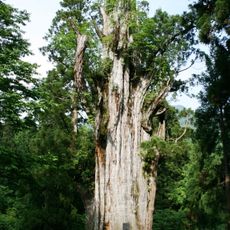
The sawa walnut grove near the summit is the only one recorded in Fukui Prefecture, and rhododendrons grow in clusters between the beech, mizunara oak and dakekamba birch. Below the summit, at the site of the former Hōonji Kyōji temple, gentians flower in autumn. Along the Hōonji forest road stands the "Nemari Sugi", a cedar over 500 years old designated a Katsuyama town natural monument on 15 October 1975.
The community of curious travelers
AroundUs brings together thousands of curated places, local tips, and hidden gems, enriched daily by 93,389 contributors worldwide.