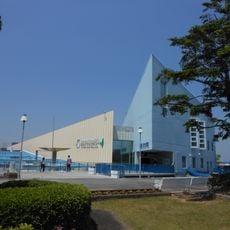
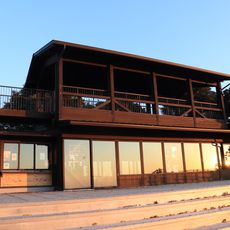
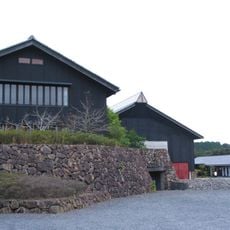
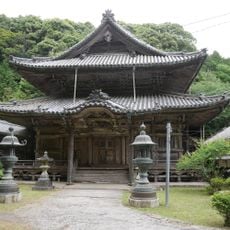
Nakiri Shrine, Shinto shrine in Shima, Mie Prefecture, Japan
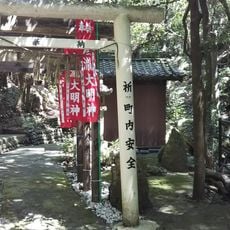
Nakiri Shrine stands at 1 Nakiri, Daio-cho, Shima, and its grounds cover 4,505 square metres. The present worship hall, rebuilt on 2 May 1974, is a reinforced-concrete building of 106.43 square metres in Shinmei-zukuri style, with a concrete sanctuary of 9.11 square metres; the earlier buildings were of wood. Its crest is the hanabishi diamond-flower motif. Near the west approach stands a small hokora dedicated to Hiruko, the deity identified with Ebisu.
The shrine's origin is unknown. In 1872 it was added to the rank of gōsha and took its present name, Nakiri Shrine. On 5 December 1907 it absorbed thirteen subsidiary shrines, including Shinmei, Kasuga, Sumiyoshi and Iya, plus four unranked shrines, and the joint enshrinement rite was held on 26 December. A 1713 gazetteer, Shiyō Ryakushi, already lists Hachioji-sha, Hachiman-gū and Kumano Gongen here.
The shrine's annual Waraji Festival, held each September, centres on a giant straw sandal that is dragged onto a stage and then floated out from the beach; it is designated a Mie Prefecture intangible folk cultural property as "Nakiri no Waraji Hiki". The rite recalls a legend in which villagers, or the deity Iya no Kami, made oversized sandals to frighten away the wicked Dandarabōshi of Daio Island offshore. Near the west approach stands a small hokora to Hiruko no Kami, identified with Ebisu.
The nearest station is Ugata on the Kintetsu Shima Line, about 10 km away. From Ugata, buses toward Goza Port or Kokakuchugakko-mae take about 18 minutes; get off at Daiozaki Lighthouse and walk 2 minutes. By road, the shrine is about 2 km southeast of the Daiozaki entrance intersection on National Route 260. Paid private parking is available nearby.
The shrine's name, Nakiri, means "wave-cutting," and its guardian deity Iya-no-kami is the ujigami of Nakiri. The shrine's own history is unknown, but in 1872 it was added to the rank of gōsha and took its present name. The Waraji Festival, held each September, was moved from the old lunar calendar and is now part of the Daio Fureai Festival.
The community of curious travelers
AroundUs brings together thousands of curated places, local tips, and hidden gems, enriched daily by 94,771 contributors worldwide.