Sarutani Dam, Gravity dam in Gojō, Japan
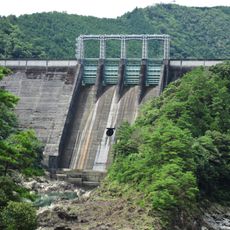
Sarutani Dam is a concrete gravity dam on the Kumano River in the city of Gojō, Nara Prefecture, Japan. It stands 74 m (about 240 ft) tall and stretches 170 m (about 560 ft) across, holding back a reservoir that supplies the surrounding region with water.
Sarutani Dam was planned from 1949 as part of the Totsukawa–Kinokawa comprehensive development scheme, and the national government took over the project in 1952. Compensation talks with residents of Oto and Tenkawa villages, who opposed the loss of 95 households and of log-floating on the river, dragged on until 1954. Impounding began on 24 September 1956 and management started in April 1958.
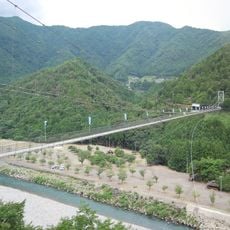
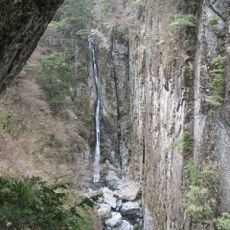
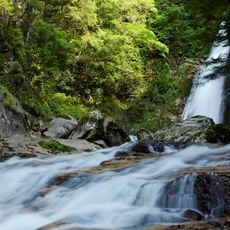
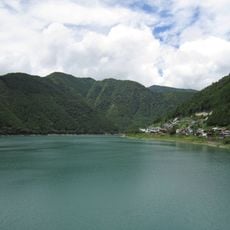
The dam sits in a forested valley and has reshaped the river's course in a way that is still visible today. Visitors can see how the stored water feeds the surrounding farmland and keeps nearby villages supplied through dry seasons.
The dam is easy to reach from a main road and offers a clear view of the structure and the valley below. An online camera system lets visitors check water levels and current conditions before arriving.
Sarutani Dam is one of only two dams directly managed by Japan's Ministry of Land, Infrastructure, Transport and Tourism that has no flood-control function at all; the other is Ashibetsu Dam in Hokkaido. Its water is diverted through the Amatsuji Tunnel from the Kumano River basin into the Kino River basin, where it drives the J-Power Nishiyoshino No. 1 and No. 2 power stations before irrigating about 10,438 ha of farmland.
The community of curious travelers
AroundUs brings together thousands of curated places, local tips, and hidden gems, enriched daily by 94,470 contributors worldwide.