Kazeya Dam, Gravity dam in Totsukawa, Japan
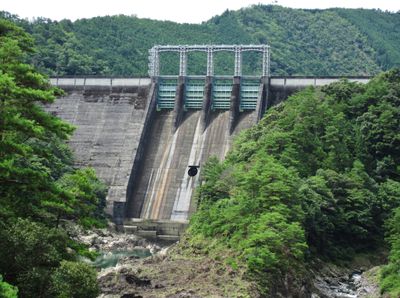
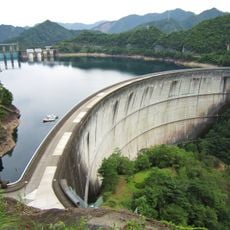
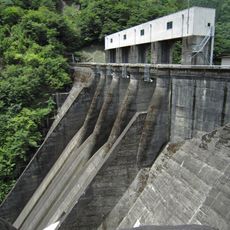
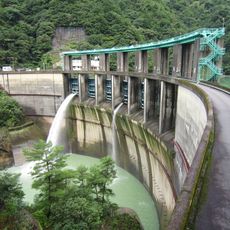
Kazeya Dam is a 101-metre concrete gravity dam on the Totsukawa, the upper stretch of the Kumano River, in Totsukawa, Nara Prefecture. It sends water to the J-POWER Totsukawa No. 1 Power Station, which generates up to 75,000 kilowatts. Its discharge facilities consist of four roller gates and one Howell-Bunger valve.
Construction of Kazeya Dam began in October 1958 and the Totsukawa No. 1 Power Station started operating on 1 October 1960. In 1959, while a third of the concrete had been placed, Typhoon Vera sent a flood of 5,000 cubic metres per second through the unfinished dam, washing away materials and roads. The work continued and the dam now feeds a 75,000 kW plant.
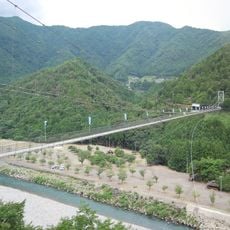
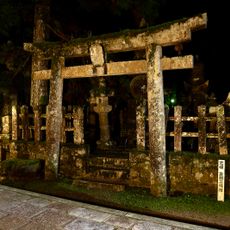
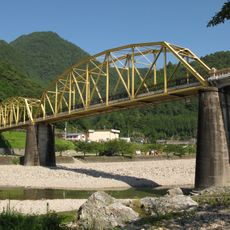
The dam's name comes from Kazeya, the Totsukawa locality where it stands. On the left bank a park holds a memorial monument to the workers who died building the Tenkawa No. 1 power station, and a slope bears an inscription titled "Outline of the Totsukawa No. 1 Power Station Construction". Below the dam, the Kazeya Bridge on Route 168 gives a full view of the wall.
The dam is in a remote part of Nara Prefecture, and the roads leading there are narrow and winding, so having your own vehicle is the most practical option. The best views of the wall are from the lookout points near the crest, which can be reached with a short walk from the parking area.
The dam's discharge system combines four roller gates with a single Howell-Bunger valve. Just downstream, the Route 168 Kazeya Bridge crosses the river, and from the bridge deck the whole dam face can be seen at once. On the left bank a park and a memorial monument stand above the crest.
The community of curious travelers
AroundUs brings together thousands of curated places, local tips, and hidden gems, enriched daily by 94,123 contributors worldwide.