Tamaki Shrine, Shinto shrine in Totsukawa, Japan
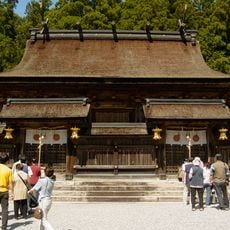
Tamaki Shrine is a wooden structure perched on Mount Tamaki at an elevation of 1,076 meters, featuring traditional East Asian roof design with gentle curves. The building stands surrounded by ancient cedar trees that rise tall around the grounds, creating a secluded setting high in the mountains.
The shrine's founding date is unknown; its own chronicle claims 37 BC, but the Nihon Shoki records no such event. By the Kamakura period it appears in mountain pilgrimage records as Tamaki-juku, a lodging on the Omine Okugake route. In 1691 it came under Ani Monzeki, and from 1727 under Shogo-in, whose control ended with the Meiji separation of Buddhism and Shinto in the late 19th century.
The shrine's name comes from the rounded boulders, called tama-ishi, that emerge near the summit and are worshipped at the Tamaishi-sha auxiliary shrine, where the deity Ōnamuchi is enshrined without a hall. The main sanctuary honours five deities, including Kunitokotachi, Izanagi, Izanami, Amaterasu and Jimmu. Annual rites include the Reitaisai on 24 October and the Dainichi-sha festival on 8 August.
Reaching the shrine requires a roughly 15-minute walk from the parking area along an earthen path that winds through the mountains. Visitors should wear sturdy footwear and allow extra time, as the elevation and terrain demand some physical effort.
The giant cedars in the shrine grounds are a prefectural natural monument, not a national one. The shrine office and kitchen, built in 1804 as the main hall and kitchen of the bettō temple Kōmura-in, are a nationally designated Important Cultural Property; their sliding doors carry paintings by late-Edo Kanō-school artists such as Hokkyō Tachibana Yasuharu.
The community of curious travelers
AroundUs brings together thousands of curated places, local tips, and hidden gems, enriched daily by 93,530 contributors worldwide.