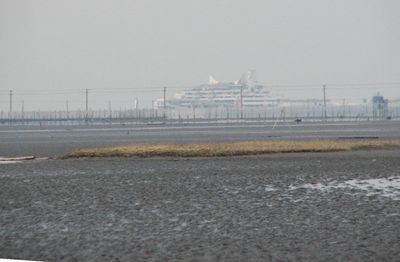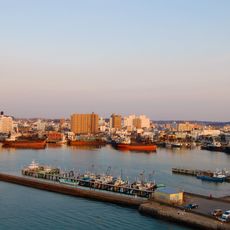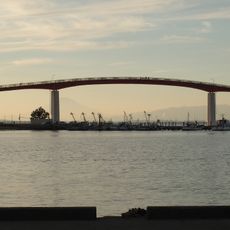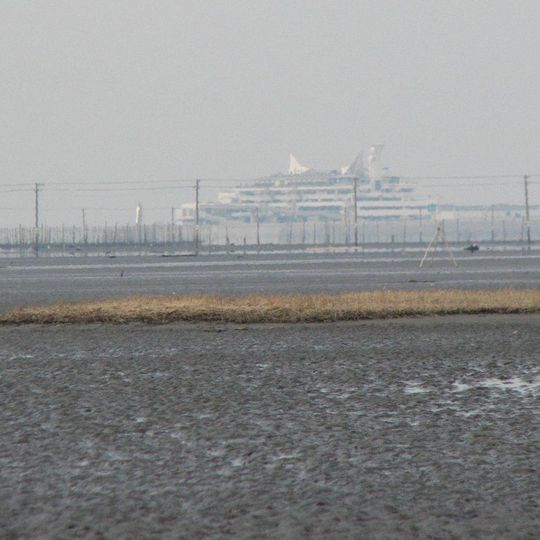
Banzu Higata, Tidal flat in Kisarazu City, Japan.
Banzu Higata is a tidal mudflat located where the Obitsu River meets Tokyo Bay. The area spans a large expanse of exposed sediment that changes with tidal cycles, revealing different sections throughout the day.
Banzu Higata is listed among Japan's 500 Important Wetlands. A steelworks once tried drawing Obitsu River water as cooling water, but abandoned the plan because of the high salinity; the infiltration test pond built for it survives and now serves as a nesting site for cormorants and other birds.
The name Banzu is also written 盤洲. Fishing here covers asari and bakagai clams and nori cultivation, and attempts are under way to farm asakusanori, a now-scarce species. Some fishermen still use a traditional method that sets reed screens to trap fish with the tide. In spring and summer the flats at Uchinome, Egawa and Kaneda fill with clam diggers, around 100,000 visitors during Golden Week alone.
Visit during low tide when large portions of the flat are exposed and walkable. Check tide schedules before going, and wear proper footwear since the muddy surface can be slippery and soft.
The yellow long-legged ground beetle, listed as endangered in Japan's Red List, lives only in this wetland. Tokyo Bay's only remaining eelgrass bed also grows here, and the former Nippon Steel infiltration test pond, built to test river water as cooling water and abandoned because of high salinity, now hosts nesting cormorants.
The community of curious travelers
AroundUs brings together thousands of curated places, local tips, and hidden gems, enriched daily by 93,637 contributors worldwide.