Kamagami-jinja, Shinto shrine in Japan
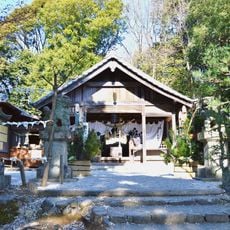
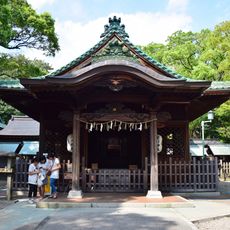
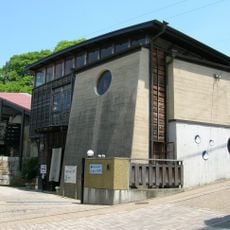
Kamagami-jinja is a Shinto shrine in Seto, Aichi Prefecture, housed since 1964 in a concrete building shaped like a round kiln (marugama), an idea of then-mayor Akira Kato. Inside this structure stands a hinoki-wood sanctuary. Behind the shrine, to the north, lie clay and silica sand pits.
The shrine began in 1824 as a remote worship site (yōhaisho) established at the request of Katō Tamikichi, who brought porcelain-making to Seto; its kami was a hanging scroll of three deities painted by Sugawara Nagachika, which Tamikichi owned. In 1826 Tamikichi himself was enshrined as Marugama-shin and the shrine is thought to have been renamed Kamagami-jinja around then. Rebuilt in 1907 and 1922, the hall burned down on 20 May 1925 in an arson by a person connected to the Katō family; reconstruction had to wait until 1964 because the Seto ceramics industry was in recession.
The shrine takes its name from the kiln deity: in 1826 Katō Tamikichi, who brought porcelain-making to Seto, was enshrined here as Marugama-shin, and the place was renamed Kamagami-jinja. Its kami is honoured by potters of the Seto kilns. In the grounds stands a bronze statue of Tamikichi, cast in 1937 from a model by sculptor Katō Kensei.
The shrine stands in Seto, with clay and silica sand pits on the hill directly behind its north side. The hall is a concrete structure shaped like a round kiln, with a cypress shrine inside, so look for the kiln form rather than a thatched roof. The grounds are compact and walked on foot.
The shrine's concrete main hall, built in 1964, was designed to imitate a round kiln, on a proposal by then Seto mayor Kato Akira. A cypress shrine sits inside it. Behind the hall, to the north, lie clay and silica sand pits.
The community of curious travelers
AroundUs brings together thousands of curated places, local tips, and hidden gems, enriched daily by 94,284 contributors worldwide.