Kenchū-ji, Buddhist temple in Fukuyama, Japan.
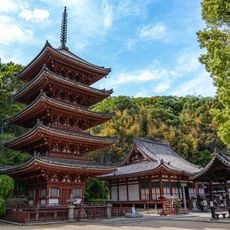
Kenchū-ji is a Sōtō Zen temple in the Teramachi district of Fukuyama, Hiroshima Prefecture, with the mountain name Nanyōzan. It is the family temple of the Mizuno lords of Fukuyama, and the graves of the first lord, Mizuno Katsunari, and his successors stand in the temple's cemetery. The temple also runs a kindergarten.
Kenchū-ji was founded in the early Edo period, in 1622 or 1626, by Mizuno Katsunari to pray for his father Tadashige. It was moved to its present site during the construction of Fukuyama Castle and the castle town. The Mizuno family cemetery, north of the grounds across the JR line, was relocated there when the Sanyō Railway was built.
The temple is the family temple of the Mizuno clan, lords of Fukuyama, and holds the graves of the first lord Mizuno Katsunari and his father Tadashige. It is the seventh stop on the Chūgoku Thirty-Three Kannon Pilgrimage. The temple runs a kindergarten, teaching Katsunari's precepts to children.
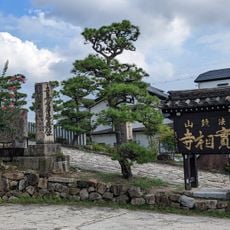
Kenchū-ji stands in the Teramachi district of Fukuyama, and the grounds are free to enter. The temple's own collection is not open to the public, so the halls and the family graves are what a visitor sees. The Mizuno family cemetery lies across the JR tracks in Wakamatsu-chō, a short walk north of the precinct.
The temple keeps a 400-year-old hourglass donated by Tokugawa Ieyasu, a cousin of Mizuno Katsunari. Made in the Netherlands, it sits in a hexagonal wooden frame covered with arabesque-patterned leather, and its white and light-brown sand takes 100 minutes to fall. On Time Day, priests show it to kindergarten children run by the temple and preach about time.
The community of curious travelers
AroundUs brings together thousands of curated places, local tips, and hidden gems, enriched daily by 94,562 contributors worldwide.