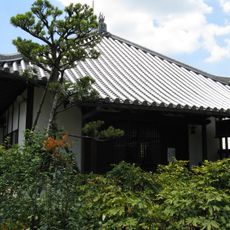
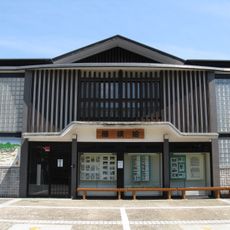
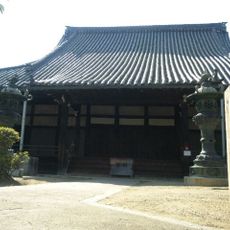
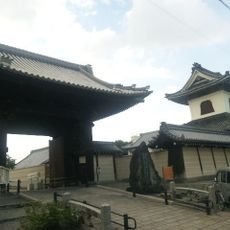
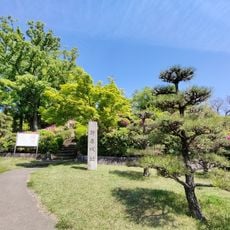
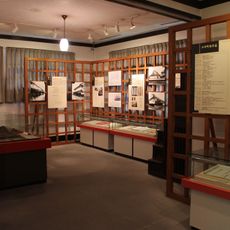
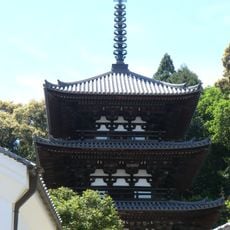
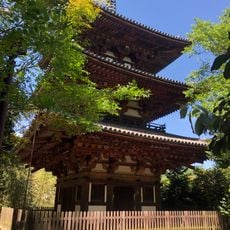
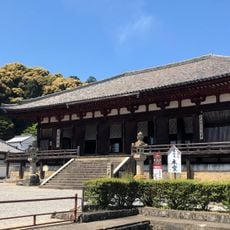
Hase-hon-ji, Buddhist temple in Yamatotakada, Japan
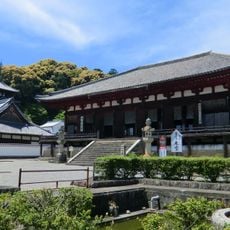
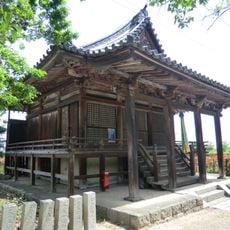
Hase-hon-ji is a Shingon Buzan-ha temple in Yamatotakada, founded in 710 by the monk Daiman and the city's oldest temple, with the mountain name Myōonzan. Its main hall, rebuilt in 1669 by Kuwayama Shūrinosuke of Shinjō Domain, houses a Heian-period single-block wooden Eleven-Faced Kannon in the Hase-dera style, a prefectural cultural property, alongside a wooden Tobatsu Bishamonten and a seated Yakushi Nyorai.
Founded in 710 by the monk Daiman, Hase-hon-ji is the oldest temple in Yamatotakada and belongs to the Shingon Buzan school. A 1193 map of Isono-no-sho already records its name, and in 1553 the court noble Sanjonishi Kineda stayed here twice on his way back from Yoshino. The main hall was rebuilt in 1669 by Kuwayama Shuri-no-suke, lord of Shinjo Domain.
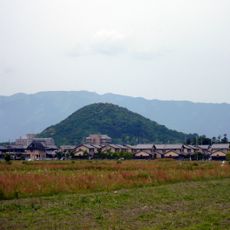
The temple's name, Hase-hon-ji, means "original Hase temple": legend holds that the sacred kusunoki wood left over from carving this temple's Kannon was used for the main image at Hase-dera in Sakurai, so this image is considered the older twin. The mountain name, Myōon-zan, comes from the sound of the chisel heard each night during carving.
The temple is a six-minute walk from Kintetsu Takadashi Station, nine minutes from JR Takada Station and thirteen minutes from Kintetsu Yamatotakada Station. It stands just west of the Kitashiocho intersection, north of the Shio rotary. The hall is kept locked for security, so arrange a visit in advance.
The temple's name, Hase-hon-ji, means "the original Hase temple": legend holds that the sacred kusunoki wood left over after the main Kannon was carved was carried in a boy's sleeve to Hase-dera in Sakurai, where the same twin image was made. The mountain name, Myoon-zan ("wondrous sound"), comes from the chisel taps heard each midnight during carving.
The community of curious travelers
AroundUs brings together thousands of curated places, local tips, and hidden gems, enriched daily by 95,452 contributors worldwide.