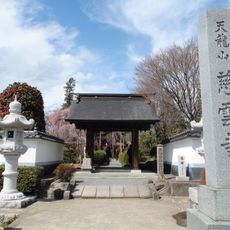
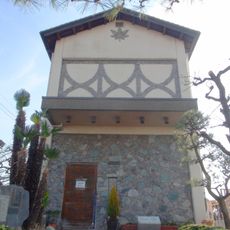
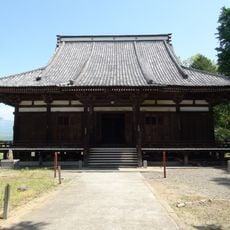
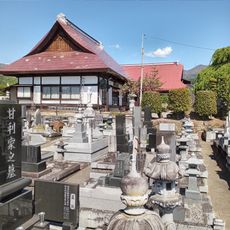
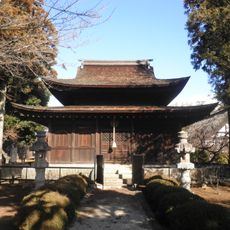
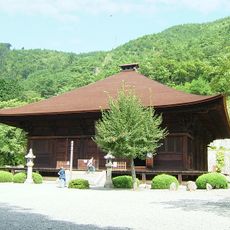
Umpō-ji, Buddhist temple in Koshu, Japan.
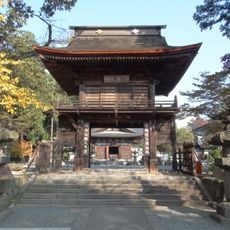
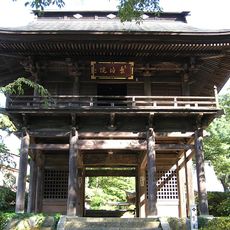
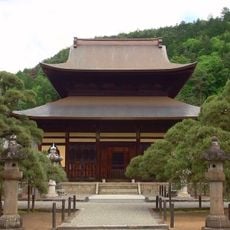
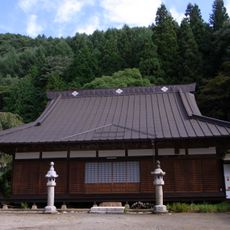
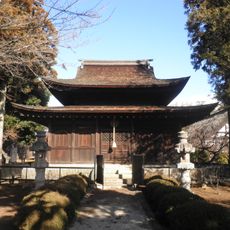
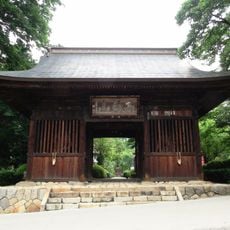
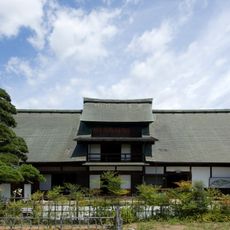
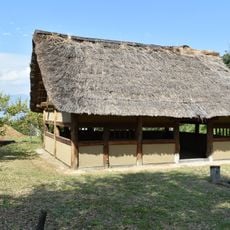
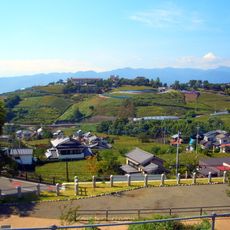
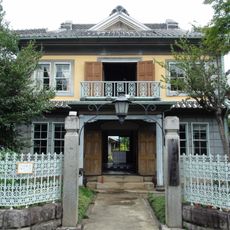
Umpō-ji is a Buddhist temple in Koshu nestled at the foot of forested mountains, with wooden structures and curved roofs that follow traditional Japanese design. The site spreads across connected buildings, gardens, and pathways that fit naturally into the hilly landscape.
Founded in 745 according to temple tradition, when Gyōki carved the eleven-headed Kannon from a hagi tree that grew overnight from a split boulder. In the Muromachi period it became a Rinzai Zen temple under Erin-ji, and later a prayer site for the Takeda clan, who helped rebuild it after a fire in the Tenbun era. In 1582, after the Takeda fell at Tenmokuzan, family banners including the sun-disc flag were carried here and are kept in the treasure hall.
The temple's name comes from Rekishi-zan, the mountain name, and its main image is the Rekishi Kannon, an eleven-faced statue said to have been carved by Gyōki from a hagi tree that grew overnight from a split boulder. The temple also preserves six banners, including the Hinomaru go-ki and Sonshi no hata, carried from the Takeda family after their fall in 1582 and now shown in the treasure hall.
The temple is accessible during daylight hours and visitors should allow time to explore the different areas on foot since they are connected by pathways. Comfortable walking shoes are recommended since the grounds are hilly and some routes require walking across terrain.
Six banners are kept in the temple's treasure hall: the "Hinomaru" war banner, the Sonshi banner, the Suwa deity banner and a horse-standard, said to have been carried over the mountains when the Takeda clan fell at Tenmokuzan in 1582. They are designated a Yamanashi Prefecture cultural property.
The community of curious travelers
AroundUs brings together thousands of curated places, local tips, and hidden gems, enriched daily by 93,532 contributors worldwide.