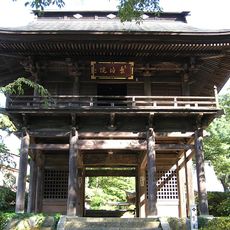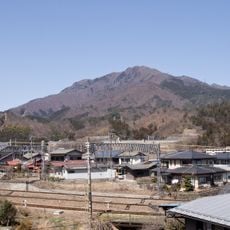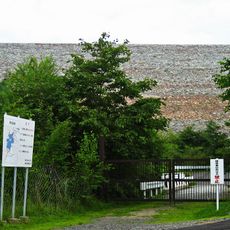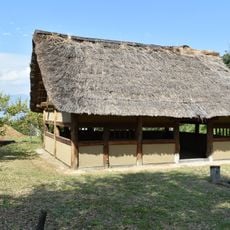
Seiunji Temple, Buddhist temple in Koshu, Japan
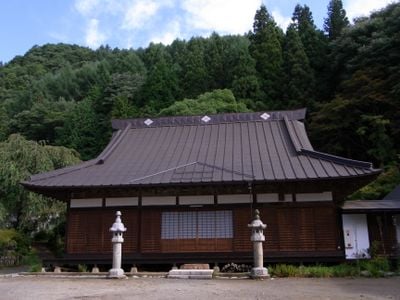
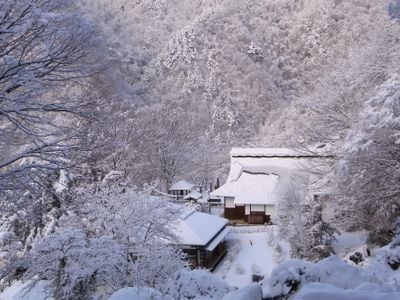
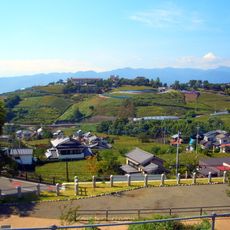
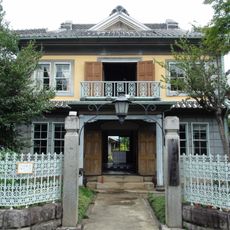
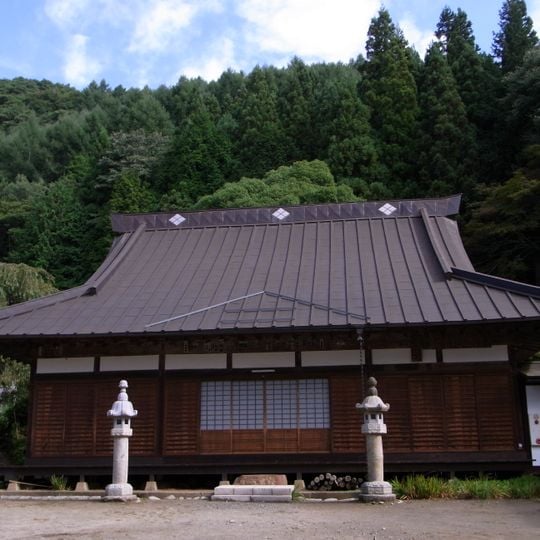
Seiunji Temple is a Rinzai Zen temple of the Kenchoji school on the left bank of the upper Nichikawa valley at about 1,050 m in the Tenmokuzan mountains. Its single-story main hall has dark brown vertical wood siding, a steep metal roof with five white diamond crests along the ridge, and shoji panels behind dark slats. Stone lanterns flank the steps, and a low stone basin sits at the center.
The monk Gokkai Honjo (1284–1352) founded the temple in 1348 as Tenmokuzan Gokoku Zenji, after studying under Zhongfeng Mingben at Tianmu Mountain in Yuan China and returning in 1326. Under the Takeda clan it prospered and was called 'East Tenmoku'. In 1416 Takeda Nobumitsu killed himself on the mountain and was buried here; the temple burned in 1592 and the kuri was rebuilt that year.
The temple keeps the name Tenmokuzan, after Tianmu Mountain in China where founder Gokkai Honjo studied under Zhongfeng Mingben; Kogenji in Tanba, founded by his travel companion Tohkei Soyo, was called "West Tianmu" to Seiunji's "East Tianmu". The temple also holds a Yuan-dynasty silk painting long venerated as Kokuzo Bosatsu, reclassified in 2013 as a Manichaean image holding a cross, possibly owned by the Christian daimyo Arima Harunobu, who died here.
The easiest way to reach this temple is by taking the JR Chuo Line to Kai-Yamato Station and then connecting to a local bus that stops at Amame. From the bus stop, a walking path leads uphill to the complex.
The temple's bronze bell, cast in 1359 by the smith Shami Dōkin, is counted among the "Five Bells of Kai" alongside bells at Kuonji, Gogan-in, Hōkō-ji and Eishō-in. Its inscription names the donor Dōrin, thought to be the Buddhist name of Takeda Nobutake, and tradition says the bell was later used as a war drum.
The community of curious travelers
AroundUs brings together thousands of curated places, local tips, and hidden gems, enriched daily by 93,378 contributors worldwide.