Takaya Sanryō, Imperial mausoleum in Mizobe-chō Fumoto, Kirishima, Japan
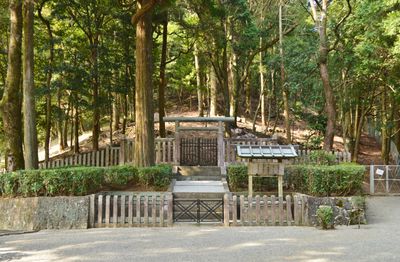
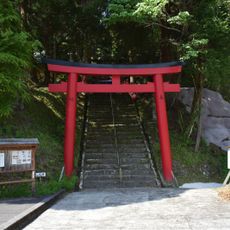
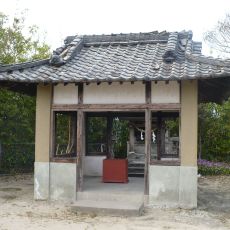
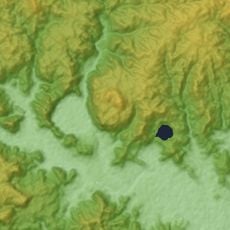
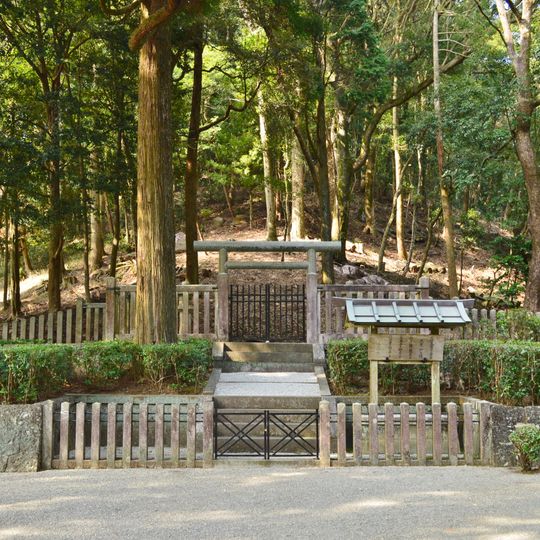
Takaya Sanryō is the mausoleum of Hoori (Hiko-Hohodemi no Mikoto) on the summit of Kamarioka, a 390 m hill in Mizobe-chō Fumoto, Kirishima, Kagoshima. The roughly 53,000 m² site is entered through a low fence of vertical stone posts with a black metal lattice gate, then stone steps to a second stone gateway with a plain lintel and barred metal gate. The round burial mound lies about 60 m above the worship area, which is divided off by a torii and fence.
The site commemorates Hoori, known also as Hiko-Hohodemi no Mikoto, a central figure in Japanese mythology whose origins trace back to ancient times. This connection to mythological origins makes it an important marker in Japan's imperial ancestral history.
The burial ground is part of a collection of ancient tombs that reflects how Japanese people honored their imperial ancestors through carefully chosen locations. These sites show the importance placed on connecting sacred figures to natural landmarks and the surrounding landscape.
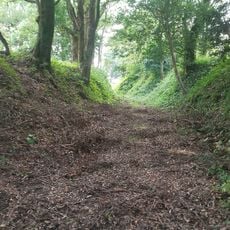
The tomb sits on the summit of Kanwari-oka, about 390 m above sea level, roughly 60 m above the worship area marked off by a torii and fence. A stone stairway and a second gate lead up the slope. The grounds cover about 53,000 square metres, and a path from the east side was built in the 1940s.
The name of the mausoleum directly references its location on Takaya Mountain, marking both its geographic position and imperial burial status through geography alone. This naming practice was common in ancient Japanese tradition and tied sacred places firmly to their natural settings.
The community of curious travelers
AroundUs brings together thousands of curated places, local tips, and hidden gems, enriched daily by 94,860 contributors worldwide.