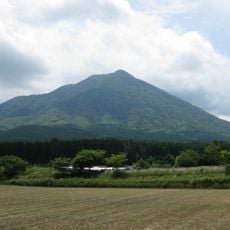
Mount Karakuni, Volcanic summit in Kirishima, Japan.
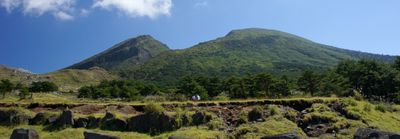
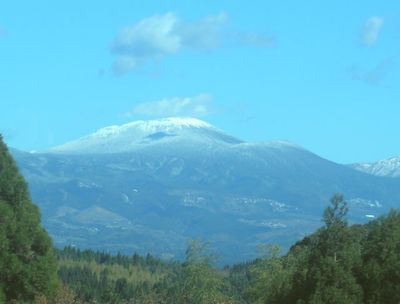
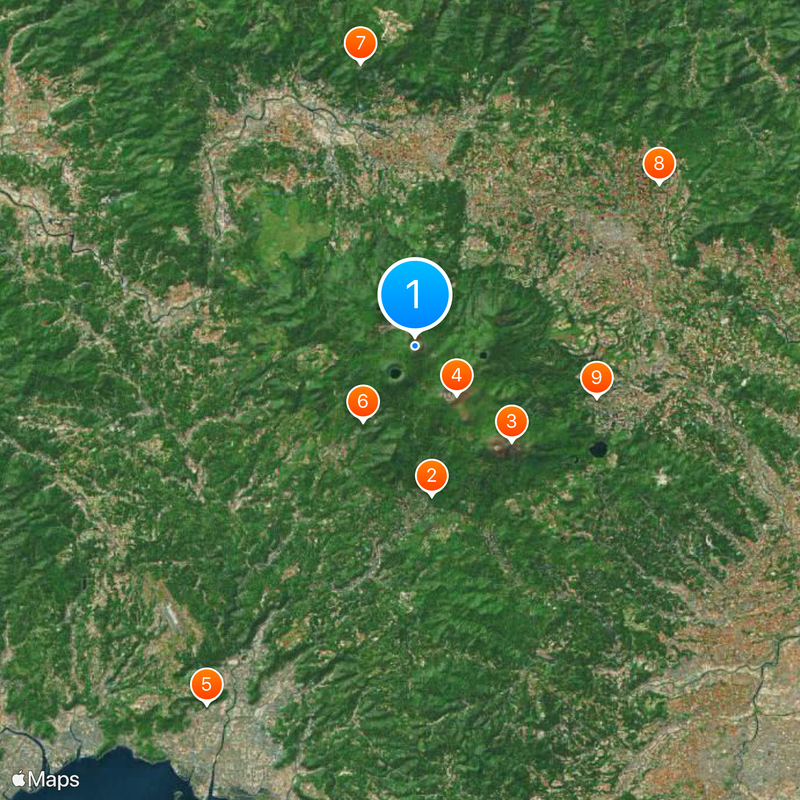
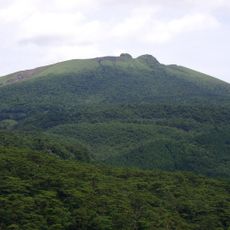
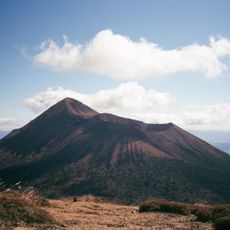
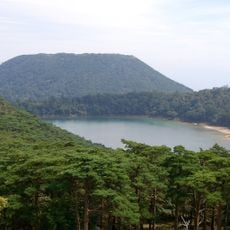
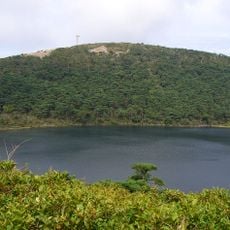
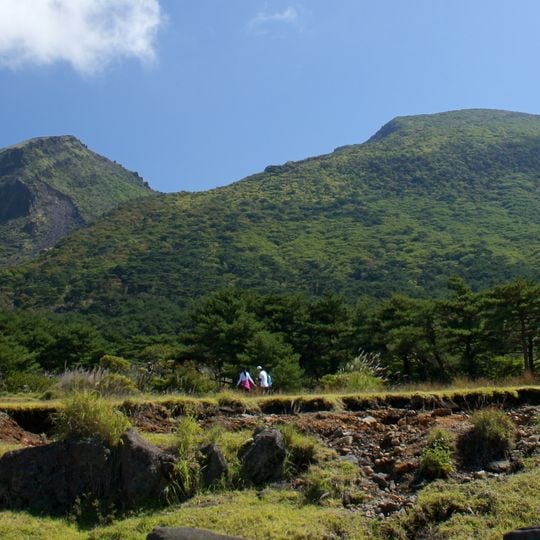
Mount Karakuni is the highest peak of the Kirishima range, on the border of Ebino and Kobayashi in Miyazaki Prefecture and Kirishima in Kagoshima Prefecture. Its summit holds a crater 900 metres across and 300 metres deep that fills with water after prolonged rain. Above 900 metres the cone is built of lava, pyroclastic flow and pumice erupted after 15,000 years ago; the western crater wall collapsed in a later explosion.
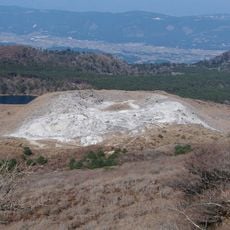
Mount Karakuni is part of the younger Shin-Kirishima volcanic group, built over older volcanoes such as Shiratoriyama and Onamike. Its lavas fall into three phases: old lava erupted 18,000 years ago, middle lava on the northeast slope below 900 m, and new lava above that level from eruptions after 15,000 years ago. No summit eruption is recorded, but in 1768 (Meiwa 5) lava flowed from the northwest flank and formed Iōyama. The Shimazu lords climbed it in the Edo period.
The name Karakuni is written 韓国岳, and one explanation links it to a line in the Kojiki's descent of the heavenly grandson, "facing Karakuni". The Miyazaki place-name dictionary also records a folk view that the peak was named for the far view reaching as far as Korea. Older names include Kirishima-dake West Peak, Hazeno-dake, Yuki-dake and Koshiki-dake.
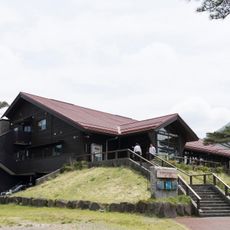
The hike from Ebino Plateau visitor center to the summit takes about three hours with adequate rest breaks along the way. The trail is well-marked and visitors should use the stops to adjust to the elevation gain.
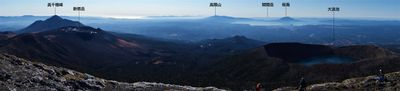
On clear days, visitors can see the neighboring Shinmoedake volcano, which remains periodically active. This proximity reveals how two major volcanic forces shape the landscape in this mountainous corner of Kyushu.
The community of curious travelers
AroundUs brings together thousands of curated places, local tips, and hidden gems, enriched daily by 93,153 contributors worldwide.