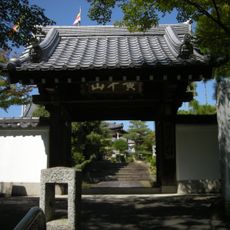
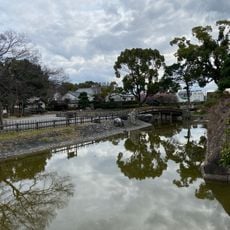
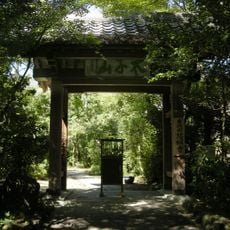
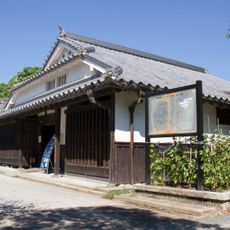
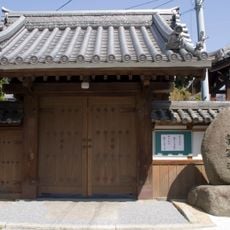
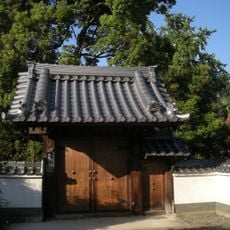
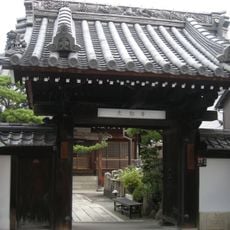
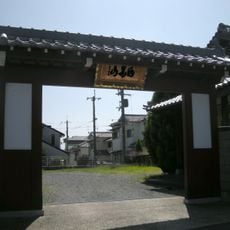
Ise-ji, Buddhist temple in Takatsuki, Japan.
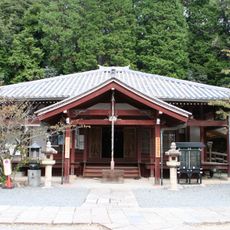
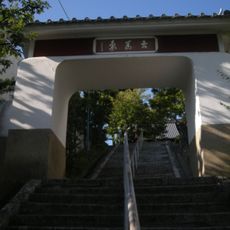
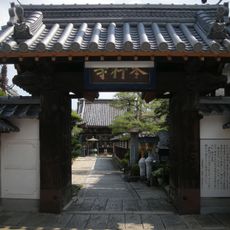
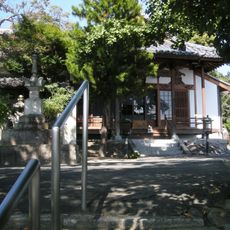
Ise-ji is a Sōtō Zen temple on Mount Kongō in Takatsuki, founded on the site where the Heian poet Ise retired. Its main hall, rebuilt in the Kan'ei era (1624–1644), houses a standing statue of Shō Kannon attributed to Ennin. The grounds also hold the Ise Byōdō, rebuilt in 1998, a bell tower, a Fudō hall, a Jizō hall and the tomb of Wada Koremasa.
Ise-ji was founded on the site where the Heian poet Ise retired and died; her brother Ise Sadakuni turned her residence into a Tendai temple. Burned in the early Tenshō era during fighting between Takayama Ukon and Oda Nobunaga, it was rebuilt from 1615 by the monk Matsuma Sōei, who invited Shōseki from Sōtō-ji and converted it to the Sōtō school.
The temple name comes from Ise, a Heian-period poet of the Thirty-six Immortals whose retreat stood here; her father Fujiwara no Tsugukage was governor of Ise, hence her name. Her son Nakatada's daughter Nakatsukasa was also a poet of the Thirty-six Immortals. The temple keeps a hall for Ise, rebuilt in 1998.
Ise-ji is about a 15-minute walk from JR Takatsuki Station on the Tokaido Main Line, in the Okutenjin-cho district. The main grounds hold the main hall, bell tower and several small halls; the detached site with the Den-Nōin Hōshi burial mound, its literary mound, Furo water and Hana-no-i well lies apart from the main precinct.
In the temple's detached precinct lies the tomb of the poet Nōin Hōshi, a designated historic site of Takatsuki. Nōin admired Ise across the centuries and is counted among the Middle Thirty-Six Poetic Immortals. The tomb is accompanied by a mound of writings, the Furo water and the Flower Well.
The community of curious travelers
AroundUs brings together thousands of curated places, local tips, and hidden gems, enriched daily by 93,489 contributors worldwide.