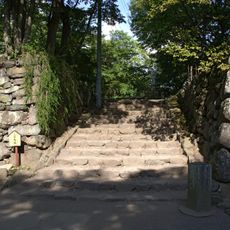
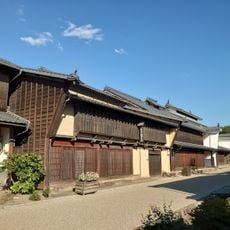
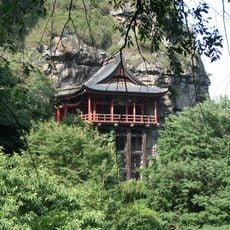
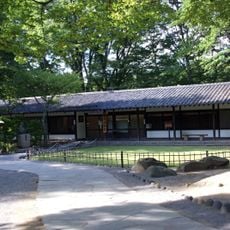
Fukuō-ji, Buddhist temple in Saku, Japan.
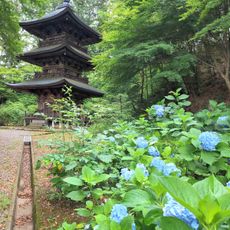
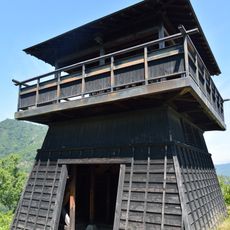
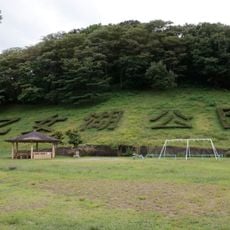
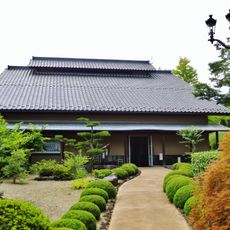
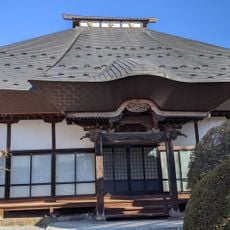
Fukuō-ji is a Shingon Chizan school temple in Saku, Nagano Prefecture, with the mountain name Shizukuda-san and the cloister name Chikusen-in. Its main hall and Niō gate were rebuilt by 1709 after a mountain fire in the Kan'ei era destroyed most of the complex. A 300-year-old weeping cherry stands in the grounds.
According to temple tradition, Fukuō-ji was founded in 807 by a local clan. In 801, Sakanoue no Tamuramaro passed along the Tōsandō; a monk travelling with him treated the clan chief's ill wife, and after her death Tamuramaro ordered a tomb and a temple built on the best site visible from it. Under the Kamakura-period patronage of the Mochizuki clan the main Amida statue was made, but a mountain fire in the Kan'ei era (1624–1645) destroyed most of the complex; the main hall and Niō gate were rebuilt by 1709.
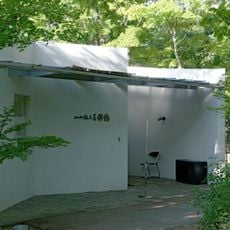
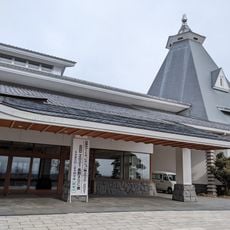
The temple belongs to the Chizan school of Shingon Buddhism and is known for a weeping cherry tree said to be over 300 years old, a spot for hanami in spring. The hillside grounds hold a Kannon hall built in 1992 and a storage hall from 1975. The main image, a seated Amida Buddha, is shown in the storage hall.
Visitors can explore the grounds year-round and may participate in meditation sessions or ceremonies when these are offered. It helps to check ahead when such activities take place to make the most of your visit.
The temple's main image, a seated Amida Buddha 138.8 cm tall carved from a single block of katsura wood, carries an inscription inside: the monk Kōsen built the hall and made the statue in 1203, with repairs recorded in 1250, 1340 and 1696. It was designated a National Treasure under the old law in 1914 and now sits in the 1975 storehouse.
The community of curious travelers
AroundUs brings together thousands of curated places, local tips, and hidden gems, enriched daily by 93,431 contributors worldwide.