阿彌神社, Shinto shrine in Ami, Ibaraki, Japan
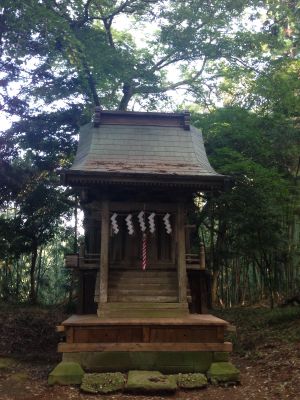
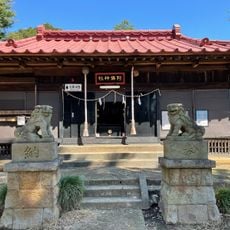
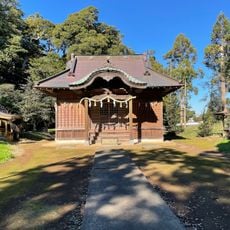
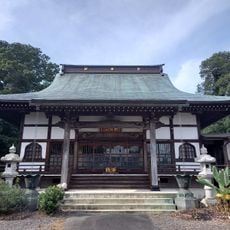
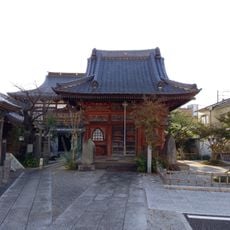
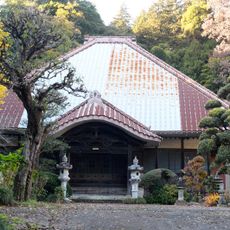
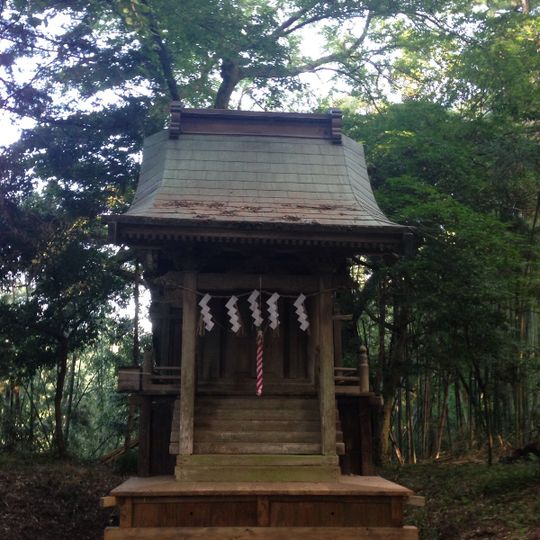
Ami Shrine stands at 1366 Takeku, Ami, on a tongue-shaped plateau facing Lake Kasumigaura. Its three-bay nagare-zukuri main hall, built in 1691, is the oldest structure in the town, and a kagura hall from 1756 stands west of it. The approach is unusual: seven narrow paths branch off only to the northwest, each leading to a stone shrine or stele.
The shrine's founding date is uncertain: the Meiji Shrine Records cite the Wadō era (708–715), while a sign by the Ami Town Board of Education gives 607, under Empress Suiko. In the early Meiji period it was renamed Ami Shrine and ranked as a prefectural shrine. The main hall, built in 1691, is the oldest building in Ami, and a kagura hall followed in 1756.
The shrine's name comes from the Engishiki listing for Shita District, and until the early Meiji era it was called Ni-no-Miya Myojin, second shrine of the district and tutelary shrine of 45 villages in western Shita. Its annual rites are held on 5 October, with a New Year door-opening rite on 7 January and Setsubun on 3 February. The grounds were designated an Ami town natural monument in 1977.
The shrine stands on a tongue-shaped plateau facing Lake Kasumigaura, and every path from the buildings drops steeply. The grounds are a designated green-environment conservation area, so stay on the paths. The shrine is in Takeku, Ami; the precinct backs onto the site of the medieval Takeku residence.
The shrine's sacred body (goshintai) is a circular mirror, and its main deity is Take-mikazuchi-no-o-no-mikoto, with Futsunushi-no-mikoto and Ame-no-koyane-no-mikoto as associate deities. Until the early Meiji period it was called Ni-no-miya Myōjin, the second-rank shrine of Shida District, and in 1873 it was renamed Ami Shrine and ranked as a prefectural shrine.
The community of curious travelers
AroundUs brings together thousands of curated places, local tips, and hidden gems, enriched daily by 94,265 contributors worldwide.