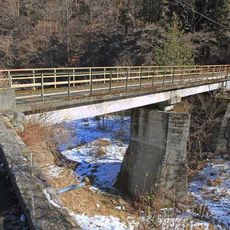
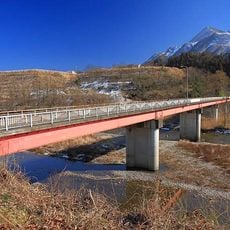
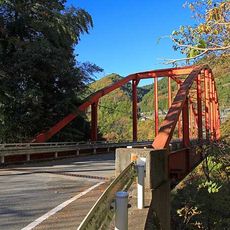
Arakawa Bridge, Steel bridge in the Kanto region, Japan.
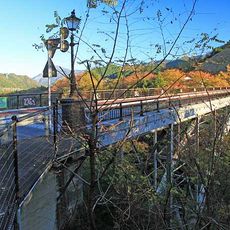
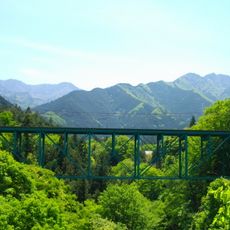
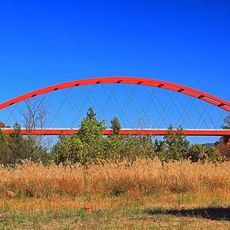
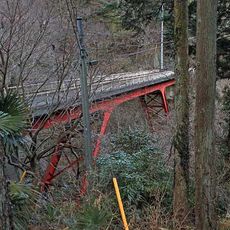
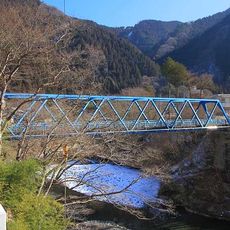
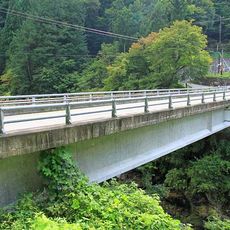
Arakawa Bridge consists of two parallel steel bridges over the Arakawa River in Chichibu, Saitama: the 1929 upstream bridge, a steel braced-rib balanced arch, carries one-way traffic toward Kumagai, while the 1986 downstream bridge, a steel deck truss arch, carries traffic toward Kofu. Each has a single lane and a sidewalk, on the downstream side of the old bridge and the upstream side of the new one. Both arch abutments are fixed directly to the rock, with no piers in the river.
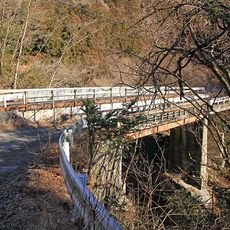
A first wooden-and-iron truss bridge opened here in 1898, about 100 m downstream, after two earlier attempts were destroyed by storms. The 1929 steel braced-rib balanced arch bridge, designed by Jun Masuda and built by Nippon Kyōryō, replaced it; a parallel truss-arch bridge for downhill traffic followed in 1986.
The bridge carries National Route 140 and is also on the route of the Seibu Kanko bus "Mitsumine Shrine Line" linking Seibu-Chichibu Station with Mitsumine Shrine. The old bridge, completed in 1929, is listed among the "100 Selected Iron Bridges" and as a B-rank modern civil engineering heritage by the Japan Society of Civil Engineers.
The two bridges are one-way: the 1929 bridge carries uphill traffic toward Kumagai, the 1986 bridge downhill traffic toward Kofu. Walkways differ too, on the downstream side of the old bridge and the upstream side of the new one. Both decks curve gently lengthwise, and the old bridge's four original name pillars and lamps still stand at the ends.
The 1929 bridge was designed by Jun Masuda and built by Nippon Kyoryo. Its dimensions come out in odd fractions because the design used yards and pounds, not metres. Concrete aggregate was taken from river gravel at the site, and the cement came from local Chichibu Cement, now Taiheiyo Cement.
The community of curious travelers
AroundUs brings together thousands of curated places, local tips, and hidden gems, enriched daily by 93,120 contributors worldwide.