Tenso Wakamiya Hachimangū, Shinto shrine in Japan
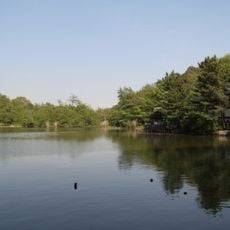
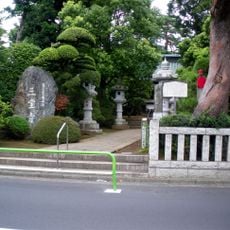
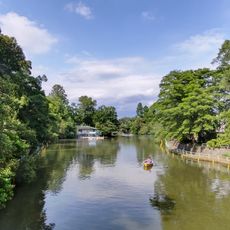
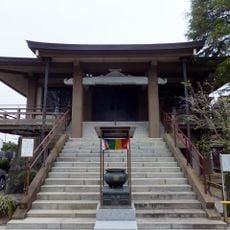
Tenso Wakamiya Hachimangū stands on a hill inside Musashi-Seki Park in Sekimachi-Kita, reached through dense woodland. The grounds hold the two shrines joined in 1974: Wakamiya Hachimangū and Tenso Shrine, which was called Banjin-sama until the Meiji separation of Shinto and Buddhism. The wooded hill forms part of the Musashino greenery together with the park's boating pond below.
The shrine originates from the Nara period when it was built to protect the area from dangers at a nearby border. During the Keicho era it became the local guardian for villagers, and in 1974 it was formally renamed Tenso Wakamiya Hachimangū to mark its connection to the protective deities.
The shrine's name dates from 1974, when Wakamiya Hachimangū and Tenso Shrine were combined. Tenso Shrine was formerly called Banshin-sama, as recorded in the Shinpen Musashi Fudokisho for Sekimura, and was renamed after the Meiji separation of Shinto and Buddhism. Its deities include Ōhirume-muchi no mikoto, Sayori-hime no mikoto and Uganomitama no mikoto; Wakamiya Hachimangū honours Hachiman Ōkami (Emperor Ōjin) and Emperor Nintoku. The annual festival is held on September 28.
The shrine is a five-minute walk west from Musashi-seki station on the Seibu Shinjuku line, making it easy to reach. Alternatively you can take a bus from Ogikubo or Mitaka stations which stops close to the site.
The shrine stands on a hill inside Musashi-Seki Park, whose boating pond lies a short walk away; together they form part of the Musashino greenery. The grounds are described as a dense forest. The shrine's festival is held on September 28.
The community of curious travelers
AroundUs brings together thousands of curated places, local tips, and hidden gems, enriched daily by 94,270 contributors worldwide.