El Khiam, Archaeological site in West Bank, Palestine
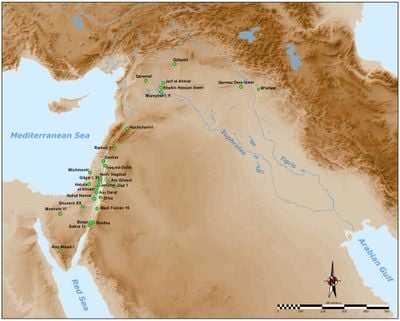
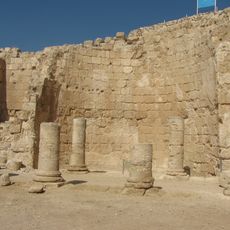
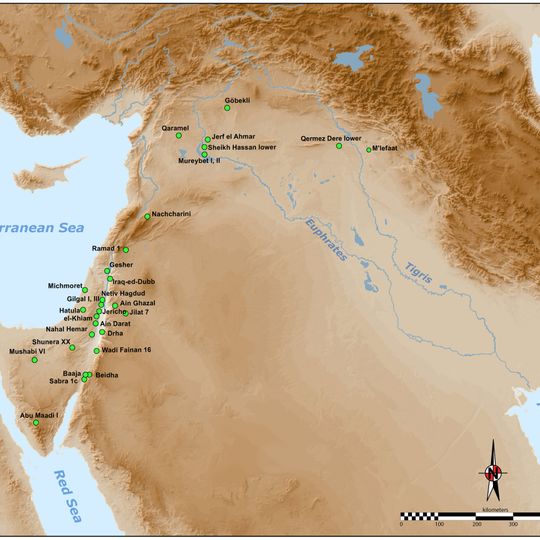
El Khiam is an archaeological site on the shores of the Dead Sea near Wadi Khureitun in the Judaean Desert, West Bank. Its flint finds, including the arrowheads called El-Khiam points, come from layers spanning the Mesolithic and early Neolithic; the site gave its name to the Khiamian period, about 10000–9500 BCE.
René Neuville, French consul in Jerusalem, excavated at El Khiam in 1934 and uncovered Mesolithic remains that defined the Khiamian culture, dated to about 10000–9500 BCE. Jean Perrot followed in 1951 and Joaquín González Echegaray in 1961. The site gave its name to this transitional period between the Epipalaeolithic and the Neolithic.
The Khiamian culture, dated to about 10000–9500 BCE, takes its name from this site. Its marker is the El-Khiam point, a flint arrowhead first found here and later identified at Levantine sites as far as Iraq. René Neuville, French consul in Jerusalem, unearthed the material in 1934.
The site is located in a remote desert area and is best reached with local knowledge or a guide. Visitors should prepare for hot, dry weather and bring plenty of water.
Researchers discovered specialized stone points at this location that they named after the site, showing how people made weapons about 10,000 years ago. These points are now seen in museums and help scholars understand an entire time period.
The community of curious travelers
AroundUs brings together thousands of curated places, local tips, and hidden gems, enriched daily by 93,458 contributors worldwide.