Solomon's Pools, Ancient Roman reservoir near Bethlehem, West Bank
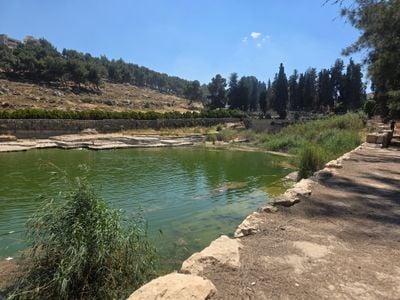
Solomon's Pools are three interconnected stone reservoirs near Bethlehem that functioned as water storage facilities. The largest basin extends approximately 180 meters in length and reaches about 23 meters in depth.
The oldest pool dates to the 2nd century BCE, and the complex may have been built by Herod the Great or an earlier Hasmonean ruler; the original rectangular excavations may have been stone quarries. Two aqueducts fed the pools from southern hills and springs, and three carried water onward: two north to Jerusalem, one east to Herodium. The Low-Level Aqueduct, thought built around the end of the Hasmonean period in the 1st century BCE, ran to cisterns beneath the Temple Mount.
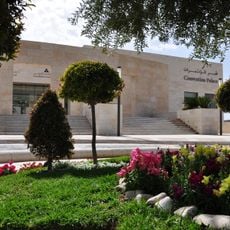
The pools are named for King Solomon, linked to Ecclesiastes 2:6, though the oldest masonry dates to the 2nd century BCE. A legend holds that Solomon built them for his wives to bathe in. Today the restored site draws school trips and families, and the Castle Museum beside the upper pool holds a large ethnographic collection of Palestinian history.
The three reservoirs lie just south of al-Khader, about 3.5 km southwest of Bethlehem on the road to Hebron, in Area A of the West Bank. The pools were drained in 1997 after drownings and later cleaned; the Ottoman castle beside the upper pool now houses a museum. The site is reached by road, and the stepped stone edge of the lower basin is visible from the bank.
Underground springs feed directly into the lower pool through ancient channels carved into the bedrock below the structure. This natural water source allowed the pools to remain active across many centuries.
The community of curious travelers
AroundUs brings together thousands of curated places, local tips, and hidden gems, enriched daily by 92,654 contributors worldwide.