Great Mosque of Nablus, Religious sanctuary in Old City, Nablus, Palestine.
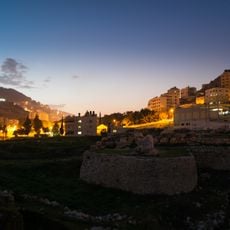
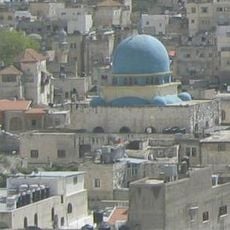
The Great Mosque of Nablus is a rectangular prayer hall crowned by a silver dome that stands at a key intersection in the Old City. The structure occupies a central location where several main pathways of the medieval district converge.
This structure originates from a Byzantine church that existed in the 3rd century and was later converted into a mosque during the early Islamic period. The building underwent major reconstruction following a 1927 earthquake that damaged the dome and minaret.
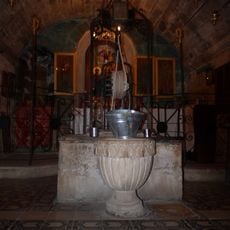
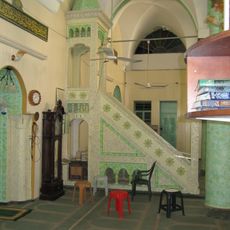
The mosque is known locally as Jami' Nablus al-Kebir and also as the Salahi Mosque, named after Saladin, who took the city in 1187. Five daily prayers are held inside. The mihrab is wide enough for twelve worshippers, and a small school once housed foreign students of religion.
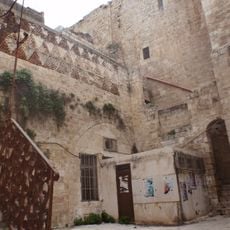
The mosque stands between the northern street leading to the old merchants' khan and al-Nasr Street, near the Aqaba and Qaysariyya quarters. Its main eastern entrance, composed of five stacked pointed arches on marble columns, resembles the door of the Church of the Holy Sepulchre in Jerusalem. The prayer hall is entered from this side.
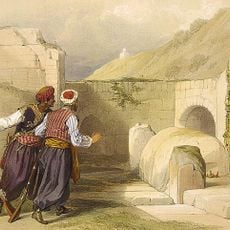
Local legend holds that Jacob's sons showed him Joseph's blood-stained coat at this spot, but the tradition is more closely tied to the nearby al-Khadra Mosque. The Great Mosque's own history reaches back to a basilica built under Philip the Arab in 244–249 CE, later replaced by a Byzantine cathedral depicted in the 600 CE Madaba mosaic map.
The community of curious travelers
AroundUs brings together thousands of curated places, local tips, and hidden gems, enriched daily by 93,135 contributors worldwide.