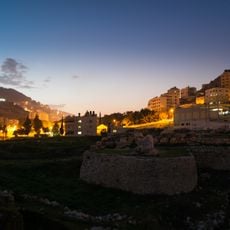
Al-Khadra Mosque, Mamluk mosque in Old City of Nablus, Palestine.
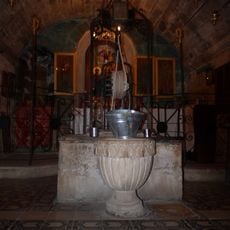
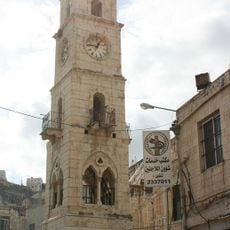
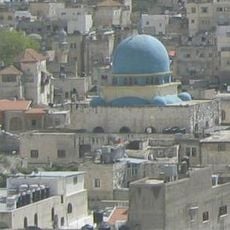
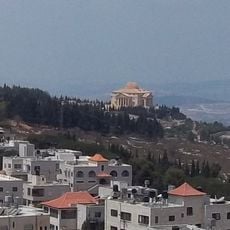
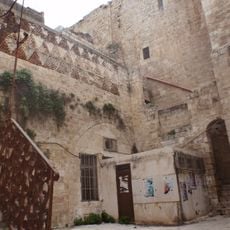
Al-Khadra Mosque is a rectangular mosque on the lower slopes of Mount Gerizim in the southwestern quarter of Nablus's Old City. Its square minaret, 30 metres tall, follows the Maghrebi style of the White Mosque in Ramla. The prayer hall covers 150 square metres, and the courtyard holds an octagonal marble fountain. The lower courses of the north wall are large, finely dressed Crusader-era stones.
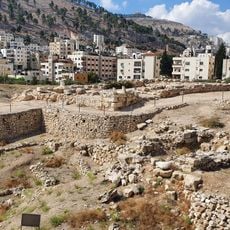
Samaritan tradition holds that a synagogue built by high priest Akbon in 362 CE stood here, rebuilt in 1137 by Ab Giluga of Acre. Western scholars link Gothic fragments to a Crusader church of the 1170s. The Mamluks converted the building into a mosque in 1290 under Sultan Qalawun, as a foundation inscription attests, adding a mihrab.
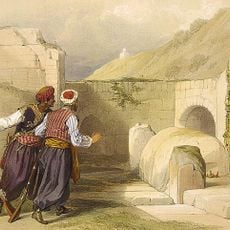
Local Muslim tradition holds that the mosque stands where Jacob wept after being shown Joseph's blood-stained tunic, giving it the name Hizn Sidna Yaq'ub, "Sadness of our Lord Jacob". A small room to the right of the courtyard is said to be where he sat and wept. Samaritan tradition instead links the name al-Khadra, "the Green", to their Mahallat Khadra.
The mosque sits at a crossroads in the Old City, making it easy to locate from major thoroughfares. Visitors should be aware of prayer times throughout the day, as these may affect access to the building.
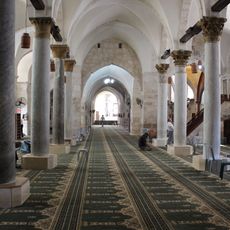
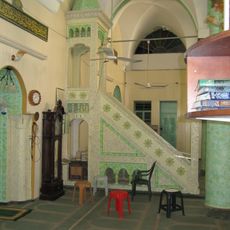
The minaret's square base reuses an Aramaic stone inscription, 80 cm by 50 cm, carved in ten lines with religious commandments; it was moved here from elsewhere. The prayer hall has no columns or stone supports: three intersecting arches rest directly on the four corners of the room.
The community of curious travelers
AroundUs brings together thousands of curated places, local tips, and hidden gems, enriched daily by 94,405 contributors worldwide.