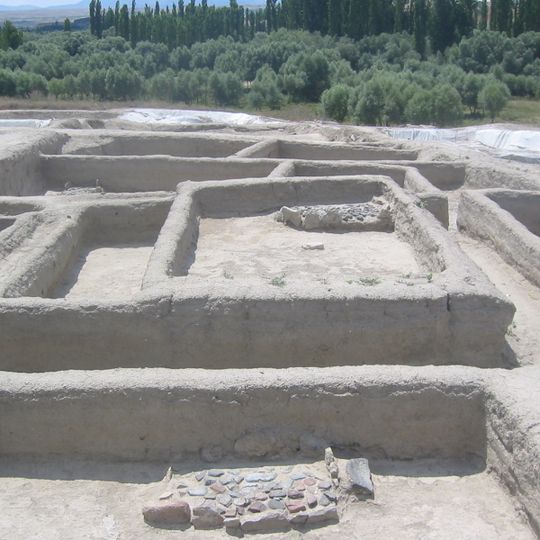
Aşıklı Höyük, Neolithic archaeological site in Gülağaç, Aksaray Province, Turkey
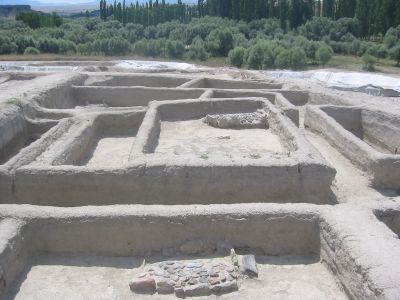
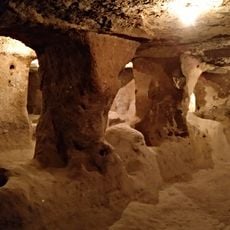
This settlement mound covers approximately 10 acres (4 hectares) and sits at an elevation of 3,673 feet (1,119 meters) near the Melendiz brook, featuring remains of rectangular mud-brick structures and early domestic architecture.
First inhabited around 8200 BC during the Pre-Pottery Neolithic period, the settlement was occupied for approximately 25 to 30 generations before residents migrated around 7300 BC, leaving behind evidence of one of Central Anatolia's earliest permanent communities.
Burial practices included placing deceased individuals beneath house floors in various postures, with approximately 70 burials discovered among over 400 excavated rooms, reflecting early communal traditions and social organization in Neolithic Anatolia.
The site was first discovered in the 1960s and systematic excavations began in 1989, with ongoing research revealing approximately 4,200 square meters of occupation area that documents the transition from nomadic life to settled agricultural communities.
Evidence of the world's earliest known brain surgery has been found at this site, with a human skull displaying trepanation performed using obsidian tools nearly 10,000 years ago, now displayed at Aksaray Museum.
The community of curious travelers
AroundUs brings together thousands of curated places, local tips, and hidden gems, enriched daily by 90,758 contributors worldwide.