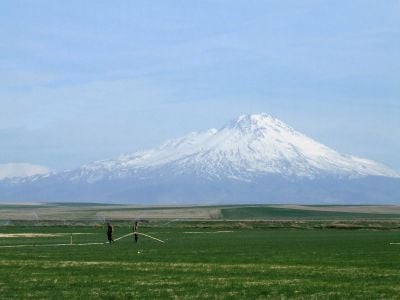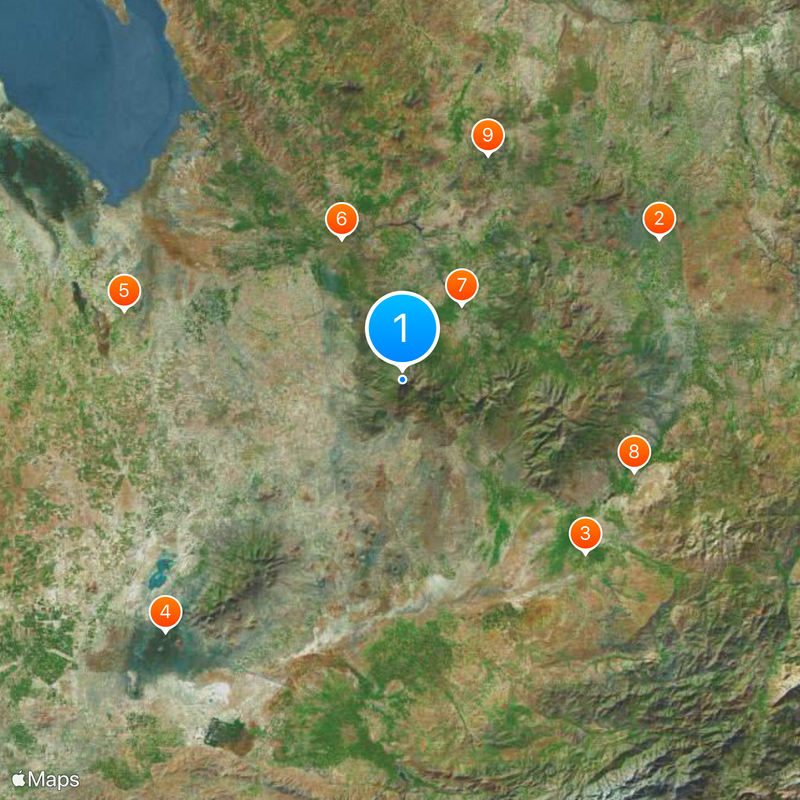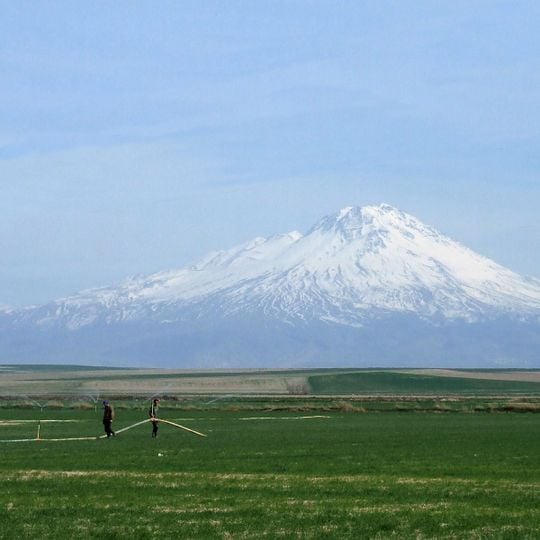
Mount Hasan, Stratovolcano in Central Anatolia, Turkey
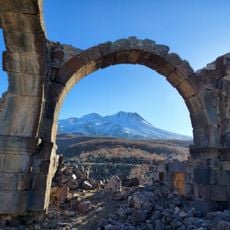
Mount Hasan is a stratovolcano in Central Anatolia with two main summits, Big Hasan rising to 3,253 meters and Small Hasan to 3,069 meters. The slopes show lava flows and ash deposits left by earlier eruptions.
The volcano erupted several times during antiquity, with the last known activity around 7,500 years ago. During Byzantine times, it served as a signal station in the warning system between the Arab frontier and Constantinople.
The peak takes its name from Hasan Dağı, a settlement on its southeastern slope. Shepherds bring livestock to the higher meadows during summer months, while farmers in the villages below grow crops that depend on the volcanic soil.
The hiking routes are best walked between October and May, when snow covers the summits in winter. The climb usually starts in Çukurbağ village and passes through the Eznevit plateau, requiring several hours.
A Neolithic wall painting from Çatalhöyük may show this volcano during an eruption around 8,000 years ago. This depiction could be one of the oldest visual records of volcanic activity by humans.
The community of curious travelers
AroundUs brings together thousands of curated places, local tips, and hidden gems, enriched daily by 91,531 contributors worldwide.