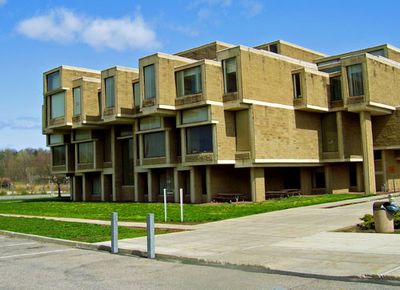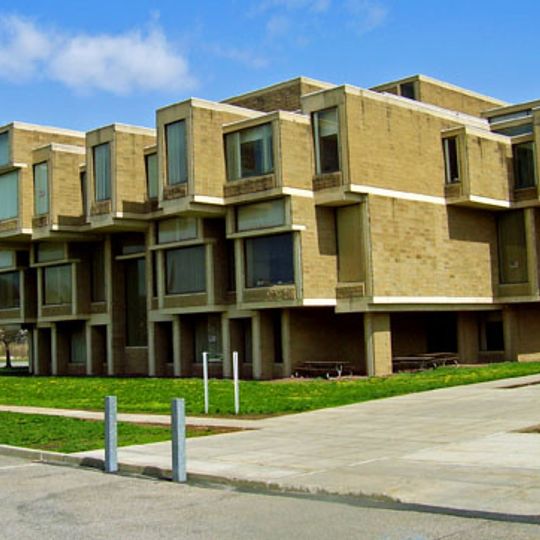
Orange County Government Center, Brutalist office building in Goshen, United States.
Three interconnected wings form the complex, constructed from textured concrete with 87 multilevel roof planes that incorporate glass elements throughout. The horizontal lines of the facade create geometric patterns while projecting concrete edges and recessed window bands add depth and shadow play. The modular structure connects different functional areas through internal corridors and stairwells on multiple floors.
Paul Rudolph designed the complex between 1963 and 1967 during his experimental phase with modular concrete structures. The building became a reference project for municipal administrative architecture of the 1960s. After decades of neglect and debate over demolition, comprehensive renovation work began in 2018 to preserve the original architecture while adapting the interior for contemporary safety codes and operational requirements.
The World Monuments Fund added the structure to its watch list of endangered cultural sites, recognizing its importance to the international Brutalist movement. The complex represents a formative period in American civic architecture when functional requirements merged with experimental design concepts that challenged conventional administrative building standards.
The complex houses county administration offices, legislative chambers and service departments including a DMV office on the ground floor. Exterior views are freely accessible from public streets surrounding the site. Interior tours are occasionally available during civic events or by prior arrangement with county administration. Free parking is available on the adjacent grounds. Ongoing renovation work may temporarily limit access to certain areas or sections of the building.
Clerestory windows along the 87 staggered roof planes create shifting light patterns throughout the interior spaces that change with the sun's position during the day. This natural lighting strategy significantly reduced the building's original energy requirements and demonstrated Rudolph's approach to combining functional efficiency with architectural expression. The concrete surfaces reflect and absorb daylight differently, creating spatial depth and dimensional variation across corridors and offices.
Location: Goshen
Inception: 1967
Architects: Paul Rudolph
Architectural style: brutalism
GPS coordinates: 41.40610,-74.31830
Latest update: December 1, 2025 09:13
Brutalist architecture emerged in the decades following World War II, producing buildings that challenged conventional design through their honest expression of materials and function. From Le Corbusier's Unité d'Habitation in Marseille to Louis Kahn's National Assembly in Dhaka, these structures define a global movement that prioritized raw concrete, bold geometric forms and exposed construction elements. The style reached across continents, shaping university libraries in Chicago, government buildings in Boston and Chandigarh, residential towers in London, and cultural centers in São Paulo. Each building reflects the architectural philosophy of its time, when architects sought to create functional spaces through direct expression of structure and material. This collection documents examples from Europe, Asia, North and South America, representing the full range of building types that defined the movement. You'll find administrative complexes that house parliaments and municipal offices, educational facilities serving major universities, residential towers providing urban housing, and cultural institutions including museums and theaters. The structures share common characteristics—concrete left exposed to show its texture and formwork patterns, geometric compositions that emphasize mass and volume, and architectural elements that reveal rather than conceal how buildings stand and function. These sites offer insight into a period when architects reimagined how modern cities could be built and how public spaces could serve their communities.
Legoland New York
3.1 km
Harness Racing Museum & Hall of Fame
245 m
Highland Lakes State Park
11.5 km
Dutchess Quarry Cave Site
6.1 km
Bull Stone House
5.4 km
Goosepond Mountain State Park
9.7 km
Historic Track
442 m
Webb Horton House
9.7 km
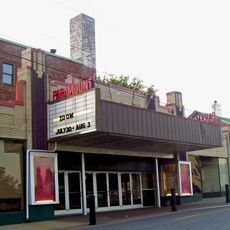
Paramount Theatre
9.6 km
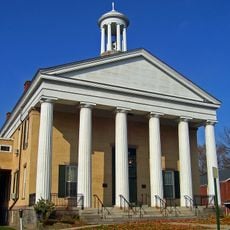
1841 Goshen Courthouse
518 m
African-American Cemetery
12.2 km
Moffat Library
12.8 km
First Congregational Church of Middletown
9.5 km
Church Park Historic District
595 m
Culver Randel House and Mill
7.8 km
District School No. 9
4.6 km
Blooming Grove United Church of Christ
10 km
Olivet Chapel
953 m
Dunning House
13.1 km
Bodine's Bridge
11.7 km
Sawyer Farmhouse
6.1 km
Everett-Bradner House
2 km
William Bull III House
7.9 km
Bull-Jackson House
7.7 km
Johannes Miller House
13 km
Grace Episcopal Church
9.6 km
Fury Brook Farm
9.5 km
Gideon Pelton Farm
12.7 kmReviews
Visited this place? Tap the stars to rate it and share your experience / photos with the community! Try now! You can cancel it anytime.
Discover hidden gems everywhere you go!
From secret cafés to breathtaking viewpoints, skip the crowded tourist spots and find places that match your style. Our app makes it easy with voice search, smart filtering, route optimization, and insider tips from travelers worldwide. Download now for the complete mobile experience.
A unique approach to discovering new places❞
— Le Figaro
All the places worth exploring❞
— France Info
A tailor-made excursion in just a few clicks❞
— 20 Minutes