Camel's Hump, Mountain summit in Chittenden County, Vermont, United States.
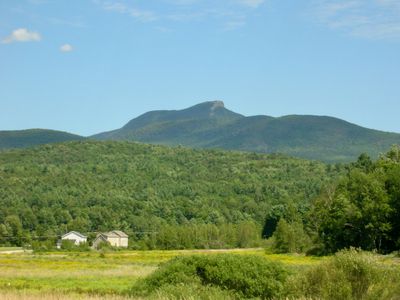
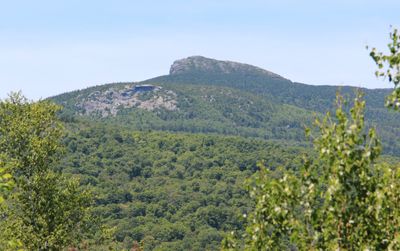
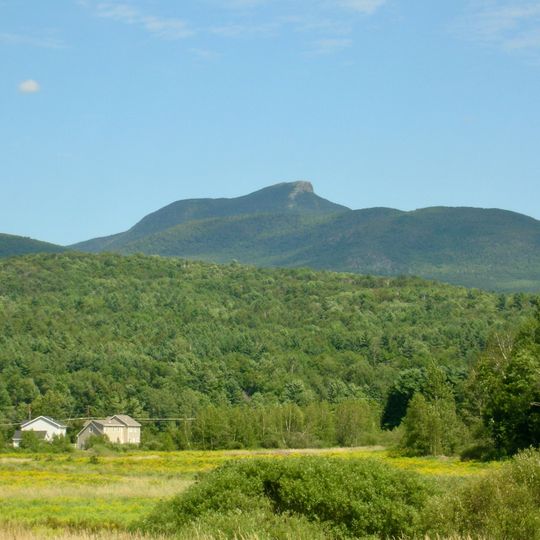
Camel's Hump is Vermont's third-highest mountain, rising to approximately 4,083 feet (1,244 meters) with two distinct peaks separated by a saddle-shaped valley. Glacial activity spanning millions of years sculpted the current formation, leaving a striking two-summit profile.
French explorers in the 1600s named the mountain 'Lion Couchant' based on its visual appearance. By 1798, Ira Allen's map introduced a different name that eventually became the standard designation.
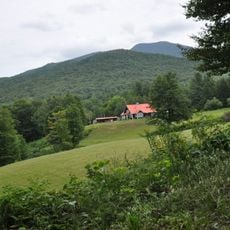
The saddle-shaped profile visible from various viewpoints across the region has shaped how locals and visitors perceive the mountain. People often use it as a landmark to orient themselves within the surrounding landscape.
The Burrows Trail and Monroe Trail offer the main direct routes to the summit, each with its own trailhead. Parking areas regularly fill to capacity during summer months, so arriving early in the day is advisable.
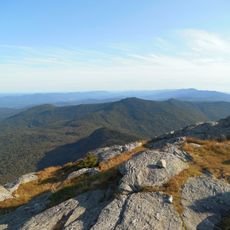
A rare alpine tundra ecosystem spans roughly 10 acres near the summit and harbors specialized plants like Bigelow's sedge found nowhere else at this latitude. This high-elevation vegetation is uncommon in the region and resembles ecosystems found much farther north.
The community of curious travelers
AroundUs brings together thousands of curated places, local tips, and hidden gems, enriched daily by 91,784 contributors worldwide.