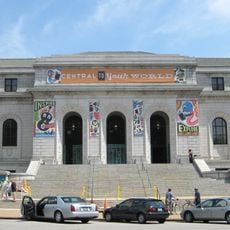
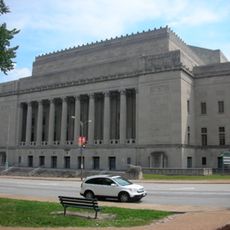
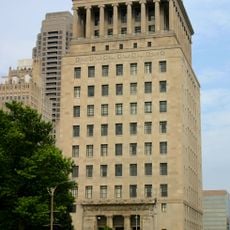
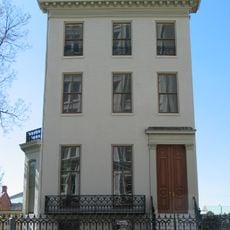
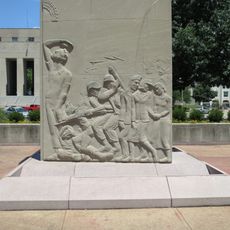
St. Louis Exposition and Music Hall, St. Louis, Missouri
The St. Louis Exposition and Music Hall was a large building with high ceilings and open floor plans, built in the late 1800s to serve many purposes. With over 3,500 seats plus standing room, a massive stage system, and modern electric lighting, the hall was equipped for all kinds of events.
The building was constructed in 1884 and was one of the country's largest halls at the time, designed by architect J.B. Legg. It disappeared in 1906 when the city decided to build the St. Louis Central Library on the same site, giving way to a new legacy.
The hall was where the St. Louis Symphony Orchestra regularly performed for the public, and where citizens could experience famous touring orchestras like the Sousa Band. Art exhibitions also took place here, drawing enthusiasts from across the region and making it a true center of cultural life.
The hall stood on Olive Street and was easy to access through three grand entrances, with local food vendors nearby for visitors. Because of its open floor plans and multiple entry points, navigating through the spaces was straightforward regardless of the type of event.
The hall was one of the first buildings to employ large-scale electric lighting, marking it as a remarkable technological innovation of its era. Particularly noteworthy was the Water Hippodrome, a spectacular water show where the hall's floors were flooded to provide audiences with a one-of-a-kind entertainment experience.
The community of curious travelers
AroundUs brings together thousands of curated places, local tips, and hidden gems, enriched daily by 60,000 contributors worldwide.