Stevns Klint, Coastal cliff and UNESCO World Heritage Site in Stevns Municipality, Denmark
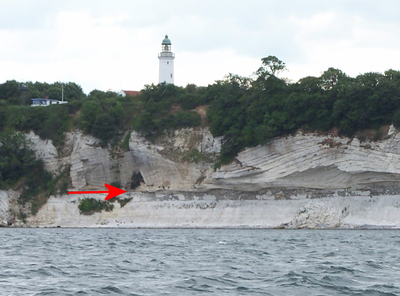
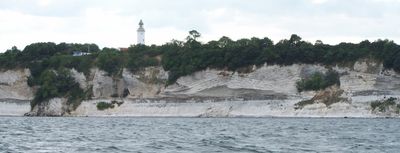
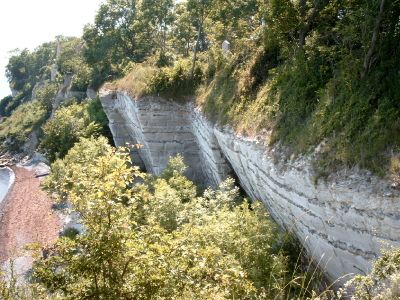
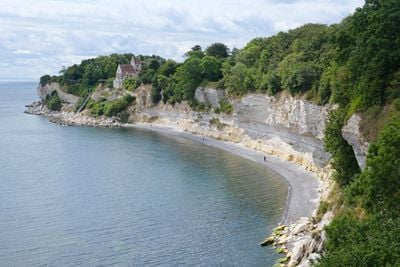
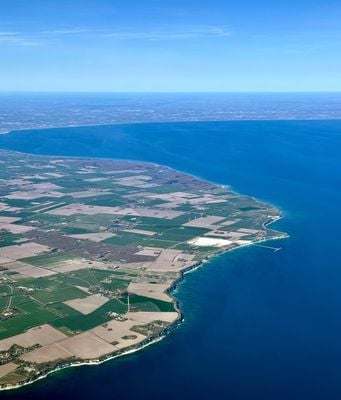
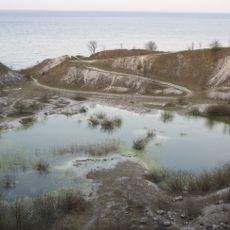
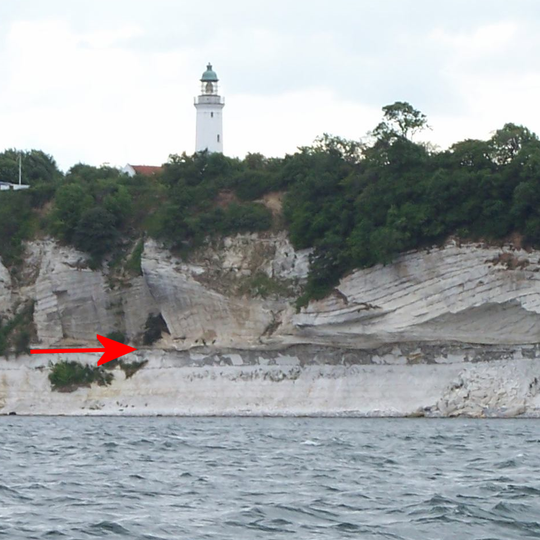
Stevns Klint is a coastal cliff of white limestone rising above the Baltic Sea on the eastern coast of Zealand, composed of distinct geological layers. The formation clearly displays the transition layers between different geological periods.
The cliff formed from deposits in an ancient sea that covered Denmark millions of years ago. The site documents one of the most important moments in Earth's history: the extinction of dinosaurs roughly 66 million years ago.
The location draws geologists and paleontologists studying the evidence of the asteroid impact that caused dinosaur extinction. This scientific importance has made the cliff a key meeting place for researchers from around the world.
The beach below the cliff is easily accessible and allows visitors to collect fossils from broken limestone blocks. However, chiseling or working directly on the cliff face itself is not permitted.
A thin gray-black clay layer separates the white chalk and limestone, marking the exact moment of the asteroid impact. This visible boundary is roughly the width of a pencil, yet holds the traces of this catastrophic event.
The community of curious travelers
AroundUs brings together thousands of curated places, local tips, and hidden gems, enriched daily by 90,829 contributors worldwide.