Beaghmore, Bronze Age archaeological site in County Tyrone, Northern Ireland
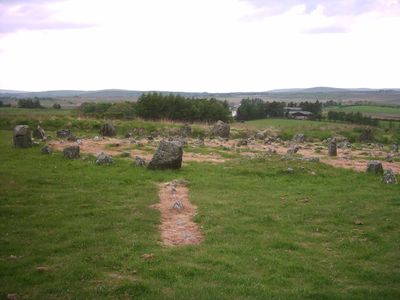
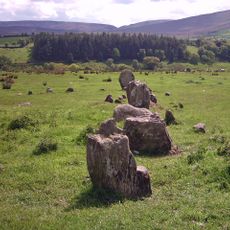
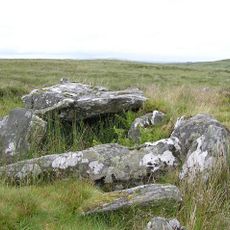
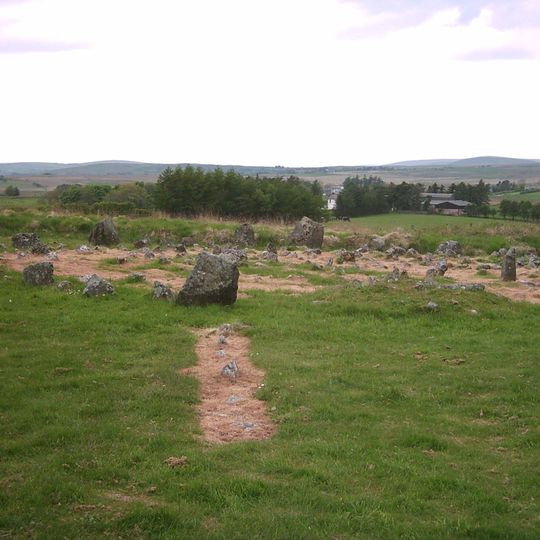
Beaghmore is an archaeological site on the southeastern edge of the Sperrin Mountains that contains seven stone circles, ten alignments of stones, and twelve cairns. The stones are arranged in tight formations, with the largest circle containing approximately 800 small stones.
The site was created by Bronze Age farmers between 2900 and 2600 BC and remained hidden for millennia. It was rediscovered in 1930 when peat cutting exposed the stones, leading to investigations that revealed the full extent of the complex.
The name comes from Irish 'an Bheitheach Mhór', meaning this area was once covered with birch trees before early farmers cleared the land. The stones mark a place that held meaning for gatherings and ceremonies in ancient times.
The site sits about 14 kilometers northwest of Cookstown and is freely accessible as a State Care Historic Monument. You can explore the grounds year-round, though the open landscape offers little shelter from weather.
A polished stone axe from the Tievebulliagh factory was found during excavations in one of the cairns, revealing trade connections to distant regions. This discovery shows that the community had links reaching far beyond its immediate surroundings.
The community of curious travelers
AroundUs brings together thousands of curated places, local tips, and hidden gems, enriched daily by 90,798 contributors worldwide.