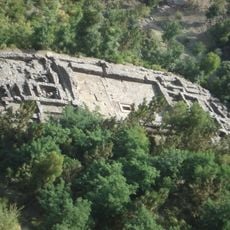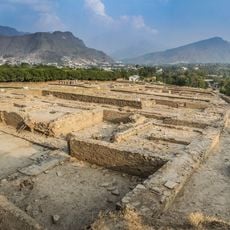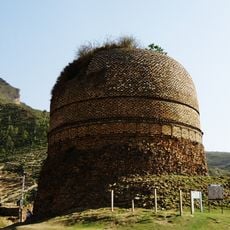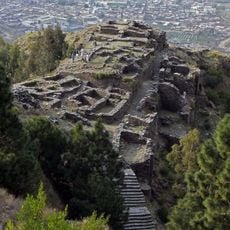
Butkara Stupa, Buddhist stupa in Swat District, Pakistan.
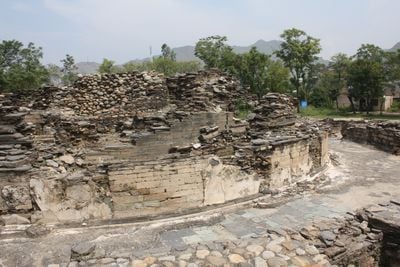
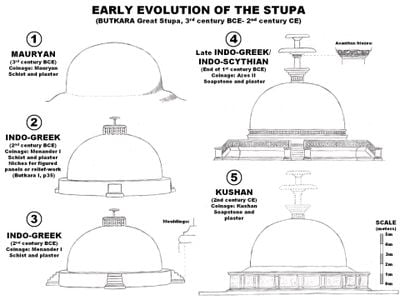
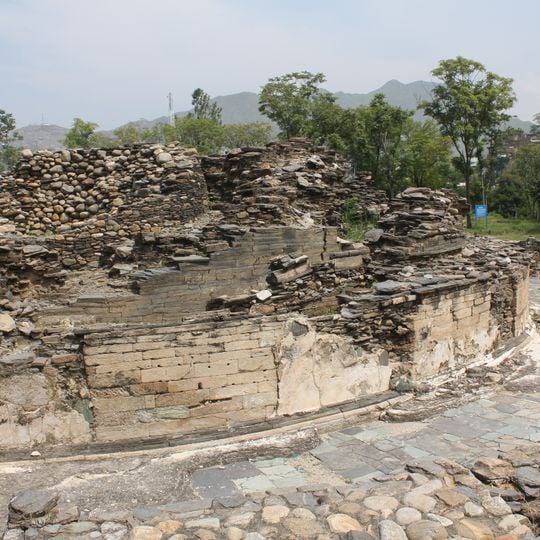
Butkara Stupa is a circular Buddhist monument in the Swat Valley, Pakistan, built in successive layers, with each new construction phase placed over the previous one. The exposed cross-section of the structure makes it possible to see how the monument grew in size and changed in form over the centuries.
The original construction dates to the 2nd century BCE, a date supported by Mauryan-period coins found at the site during excavations in 1956 led by Domenico Faccenna. The monument was then expanded repeatedly over the following centuries, each phase adding a new layer around the existing structure.
The stone carvings and decorations around the structure show a meeting of Greek and Buddhist artistic traditions that visitors can observe directly. The details in the reliefs reflect a style that developed in this region when Greek influence and Buddhist practice overlapped.
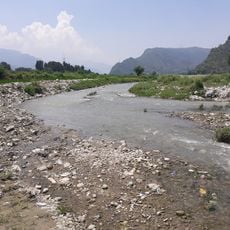
The site sits in a valley in northwestern Pakistan, and the cooler months of the year tend to make a visit more comfortable given the mountain setting. Walking around the full perimeter of the monument helps get a sense of how the different construction phases relate to each other.
A Buddha statue found at the site is among the earliest known Buddha images from the northwestern region, dating to the late 1st century BCE. Its discovery shifted how researchers understand the development of early Buddhist art in South Asia.
The community of curious travelers
AroundUs brings together thousands of curated places, local tips, and hidden gems, enriched daily by 91,265 contributors worldwide.