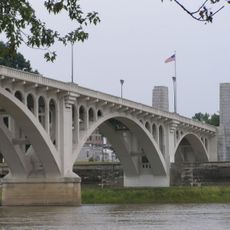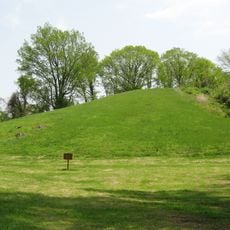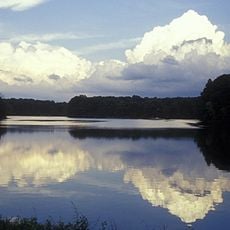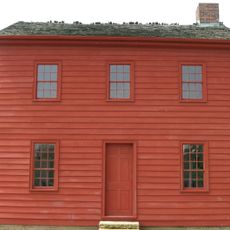
George Rogers Clark National Historical Park, National Historical Park in Vincennes, United States.
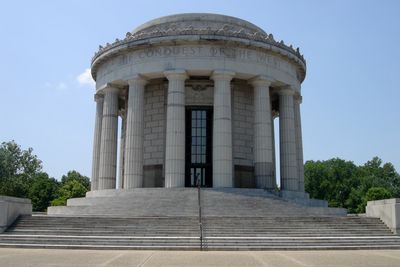
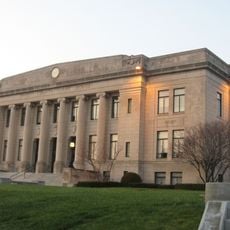
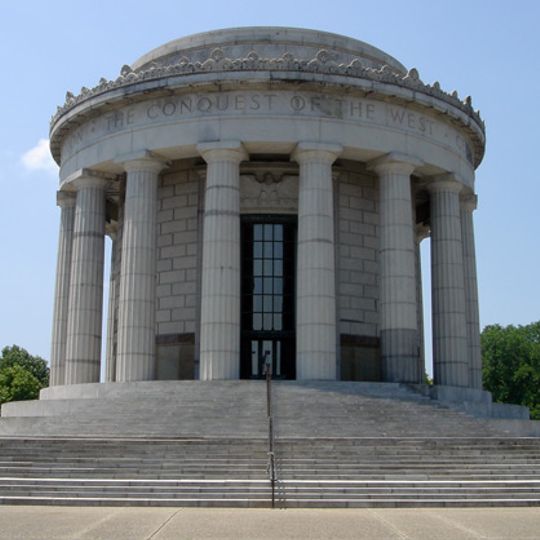
George Rogers Clark National Historical Park in Vincennes is a circular granite memorial structure topped with sixteen Greek Doric columns and a glass-paneled dome overlooking the Wabash River. Inside, the space features marble walls, terrazzo flooring, and educational exhibits about the region's military and settlement history.
Lieutenant Colonel George Rogers Clark captured the British-held Fort Sackville in 1779, a decisive victory that secured the Northwest Territory for the United States during the American Revolution. This military success prevented British control of the region during the war.
The memorial displays artifacts and exhibits that tell the story of military campaigns and regional settlement, showing how European colonists and Native Americans shaped this territory together. Visitors see how these different communities influenced the area's development.
The memorial is accessible by climbing granite steps and offers easy access to the interior exhibits and educational displays. Visitors should allow time to read the information and take in the river views from the surrounding grounds.
The memorial was dedicated by President Franklin Roosevelt in 1936 as the final major Classical style monument built in the United States. After this, American memorial design would take on entirely different artistic directions and styles.
The community of curious travelers
AroundUs brings together thousands of curated places, local tips, and hidden gems, enriched daily by 91,526 contributors worldwide.