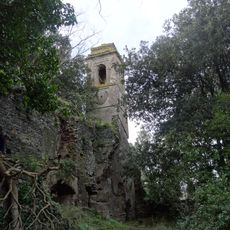
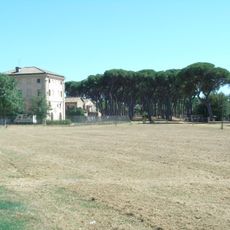
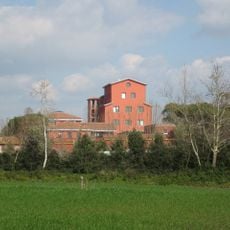
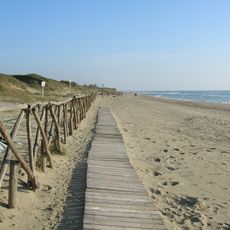
Polledrara di Cecanibbio, Archaeological site in Castel di Guido, Italy.
Polledrara di Cecanibbio is an archaeological excavation site in northwestern Rome with an ancient riverbed and numerous prehistoric remains. The area is covered and accessed via elevated walkways, allowing visitors to view the dig from above without disturbing the work.
The site dates to the Middle Pleistocene, roughly 325,000 to 310,000 years ago, when large animals including elephants and other megafauna roamed the area. Humans were already living by this river during that time and hunting these giant creatures.
The site shows traces of people who hunted here and made stone tools hundreds of thousands of years ago. The artifacts and animal bones tell a story of daily life centered around a river that was vital to survival.
The site is easy to navigate since everything is sheltered under a roof and elevated walkways make movement comfortable. A visit typically takes an hour or two to properly explore the excavation areas and displays.
When excavating an elephant skeleton trapped in ancient mud, archaeologists discovered a wolf skull wedged between its vertebrae. This rare combination shows that different animal species died at the same spot, likely caught in the same muddy riverbed.
The community of curious travelers
AroundUs brings together thousands of curated places, local tips, and hidden gems, enriched daily by 93,013 contributors worldwide.